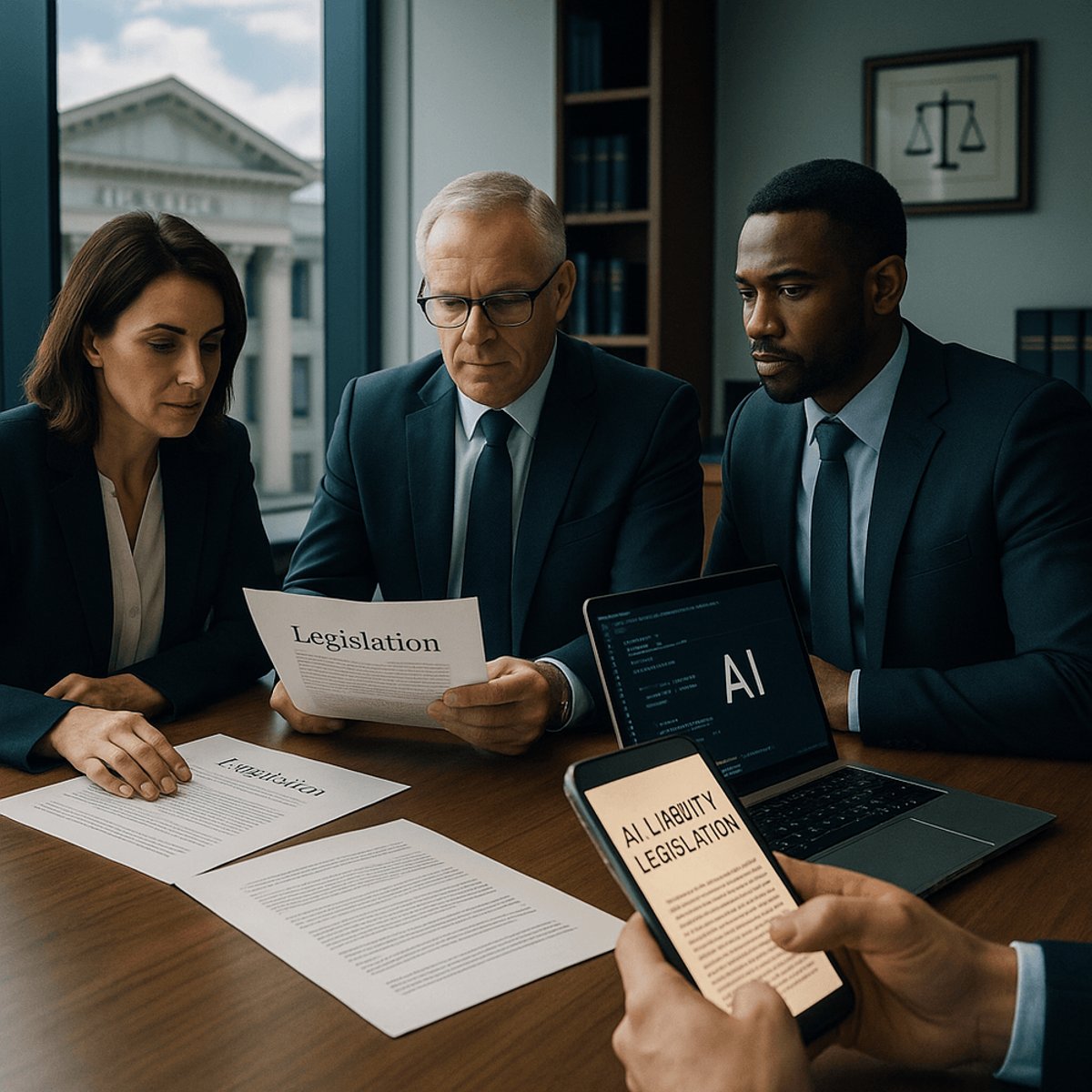
OpenAI is throwing its weight behind controversial Illinois legislation that would dramatically restrict when AI companies can be sued, even in cases involving mass deaths or catastrophic financial losses. The ChatGPT-maker's testimony in favor of the bill marks a pivotal moment in the tech industry's push to preempt legal accountability as AI systems become more powerful and enforcement actions intensify across the country.
OpenAI just made its most brazen regulatory play yet. The company behind ChatGPT testified before Illinois lawmakers in support of legislation that would sharply limit when AI developers can be held legally responsible for harm caused by their products - even when that harm reaches catastrophic proportions.
The bill, which is currently moving through the Illinois state legislature, would establish strict conditions under which AI companies could face liability for what it terms 'critical harm.' That definition includes scenarios like mass casualties, widespread infrastructure failures, or financial disasters that could theoretically be enabled or amplified by AI systems. But here's the catch - the proposed law would require plaintiffs to meet exceptionally high bars of proof, effectively shielding AI labs from most lawsuits.
OpenAI's support for the measure reveals how seriously the industry is taking the threat of legal exposure. As AI models become more powerful and integrated into critical systems - from healthcare to finance to infrastructure - the potential for catastrophic failures grows. The company's testimony signals a preemptive strike: establish favorable legal frameworks now, before any major incident triggers a regulatory crackdown.
The timing is striking. Just weeks ago, Florida prosecutors opened a criminal investigation into OpenAI over allegations that its AI systems could enable serious harm. That probe represents the flip side of this legislative battle - while enforcement agencies explore holding AI companies accountable under existing laws, the industry is racing to rewrite those rules in its favor.
Legal experts are divided on the Illinois proposal. Supporters argue that overly broad liability could stifle innovation in a strategically crucial technology sector. They point to the difficulty of attributing causation when AI systems are used in complex, multi-step processes. If a financial advisor uses an AI tool that produces flawed analysis leading to client losses, who bears responsibility - the AI developer, the advisor, or both?
But critics see something more troubling: a liability shield that would let AI companies externalize the risks of their products onto society. "This is tobacco industry playbook 101," one AI safety researcher told colleagues in private conversations. "Get favorable legislation in place before the bodies pile up, then point to those laws when people try to seek accountability."
The proposed Illinois framework would require plaintiffs to demonstrate not just that an AI system contributed to harm, but that the harm was both foreseeable and preventable through reasonable safety measures. That standard sounds reasonable until you consider how it might play out in practice. AI systems are notorious for producing unexpected behaviors, especially at scale. Proving that a developer should have foreseen a specific failure mode could be nearly impossible.
OpenAI's legislative strategy reflects broader shifts in how tech companies approach regulation. Rather than waiting for rules to be imposed after public backlash, leading AI labs are now actively shaping the regulatory environment. The company has ramped up lobbying efforts across multiple states and at the federal level, pushing frameworks that emphasize voluntary commitments and industry self-regulation over binding legal requirements.
The Illinois bill isn't happening in isolation. Similar measures are being considered in at least three other states, according to policy trackers who monitor AI legislation. If Illinois passes its version, it could trigger a race to the bottom as other states compete to attract AI companies with ever-more-favorable liability protections. That's exactly what happened with corporate law, where Delaware's business-friendly courts made it the incorporation destination of choice.
For OpenAI, the stakes extend beyond legal liability. The company is navigating an increasingly complex landscape where it must balance safety concerns, competitive pressures, and investor expectations. Its valuation depends partly on the assumption that AI development won't be hamstrung by crippling legal exposure. Securing favorable liability frameworks is thus crucial to maintaining that growth trajectory.
But the company's position creates an uncomfortable tension with its public messaging around AI safety. OpenAI has repeatedly emphasized its commitment to developing AI responsibly and has called for thoughtful regulation. Supporting legislation that limits accountability for critical harm sits uneasily alongside those stated values.
The Illinois measure also highlights a deeper question about AI governance: should AI systems be treated more like software products, where liability is typically limited, or more like pharmaceuticals, where companies face strict liability for harm? The bill pushes firmly toward the former model, despite AI's growing deployment in life-or-death decisions.
As the legislation advances, consumer advocates and AI safety groups are mobilizing opposition. They argue that without meaningful liability, AI companies will lack sufficient incentive to invest in safety measures that don't directly boost performance or profitability. The market alone won't price in tail risks like mass casualty events, they contend - only legal liability can do that.
The outcome in Illinois could reshape AI development across the country. If OpenAI and its allies succeed in establishing limited liability as the default framework, other states will likely follow. That would mark a major victory for the AI industry in the ongoing battle over who bears the risks of artificial intelligence.
OpenAI's support for Illinois liability limitations exposes the fundamental tension at the heart of AI governance: who pays when powerful systems fail catastrophically? The company's legislative push isn't just about protecting its bottom line - it's about establishing ground rules for an entire industry before real-world disasters force harsher regulations. As AI systems take on higher-stakes decisions, the gap between industry self-interest and public safety grows harder to ignore. What happens in Illinois won't stay in Illinois. This fight will determine whether AI developers face meaningful accountability for their most powerful creations, or whether society absorbs those risks while companies reap the rewards.