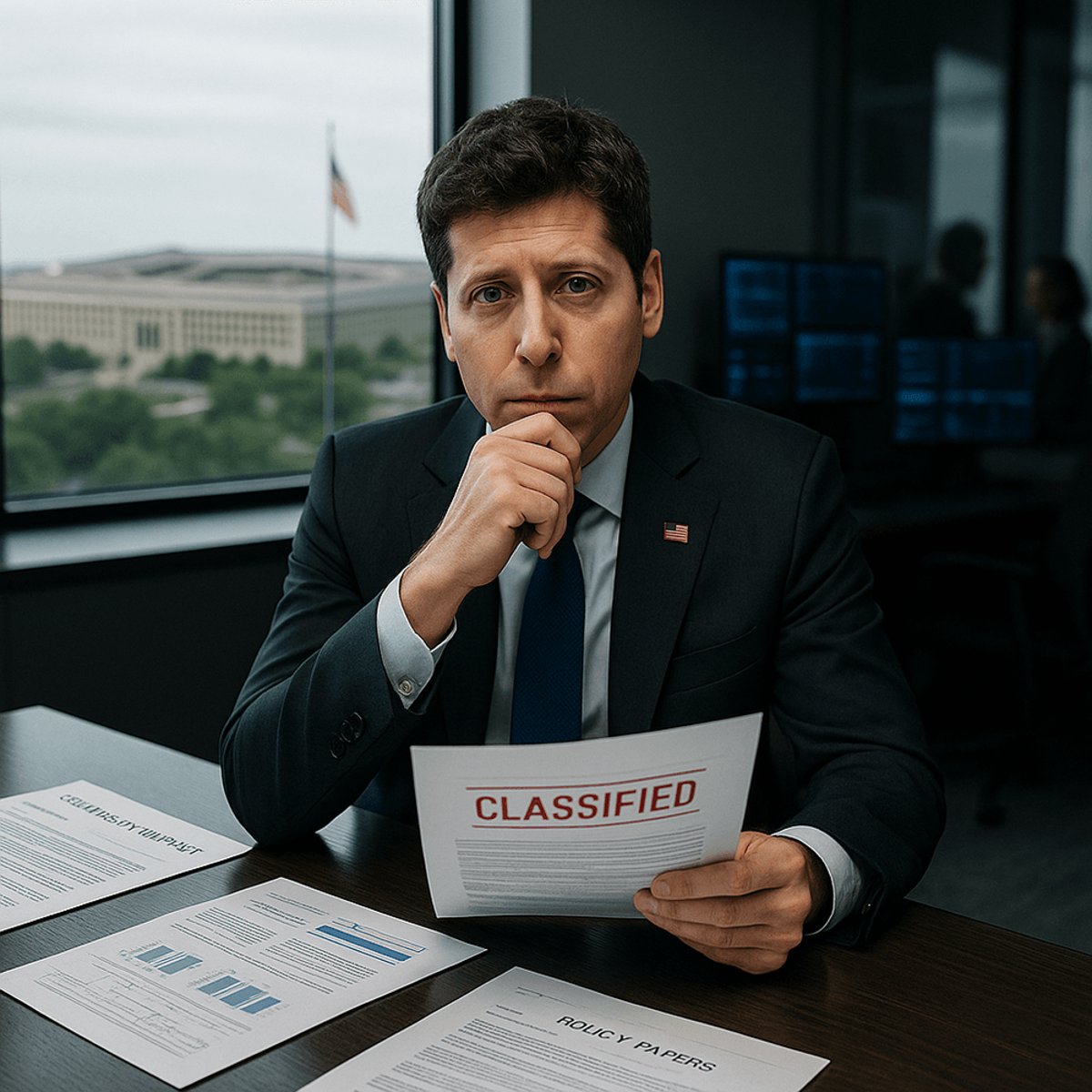
In a rare moment of public candor, OpenAI CEO Sam Altman admitted the company's partnership with the Department of Defense was "definitely rushed" with optics that "don't look good." The confession marks an unusual transparency pivot for the AI giant as it navigates mounting scrutiny over military applications of its technology, raising fresh questions about how quickly AI companies should move into defense contracting.
OpenAI just did something almost unheard of in Silicon Valley - its CEO admitted a major deal looked bad. Speaking about the company's new Department of Defense partnership, Sam Altman told TechCrunch the agreement was "definitely rushed" and conceded "the optics don't look good."
The admission comes as OpenAI faces growing pressure to explain its evolving relationship with military applications. The company, which launched in 2015 with a mission to ensure artificial general intelligence benefits all of humanity, has quietly shifted its stance on defense work over the past year. But Altman's blunt assessment suggests even internal teams recognize how jarring the pivot appears.
The Pentagon partnership represents OpenAI's first significant defense contract, though specific financial terms and technical scope remain undisclosed. Industry analysts estimate defense AI contracts typically range from $10 million to over $100 million depending on deployment scale and classified components. The deal reportedly involves adapting OpenAI's language models for military applications, though the company insists the technology won't be used for autonomous weapons.
That distinction matters less to critics who've watched OpenAI transform from a nonprofit research lab into a $90 billion commercial powerhouse. The company restructured in 2019 to create a "capped-profit" entity that could attract serious venture capital, bringing in billions from Microsoft and other investors. Each step away from its original charter draws fresh scrutiny, but direct military work crosses a line many supporters didn't expect.
"We're being more transparent about these partnerships because people deserve to understand what we're building and why," Altman said, according to the TechCrunch report. The comment suggests OpenAI recognizes its communication strategy around the Pentagon deal fell short. The company initially announced the partnership through a brief blog post that raised more questions than it answered, triggering immediate backlash from AI ethics researchers and former employees.
Competitors aren't sitting still while OpenAI navigates this controversy. Anthropic, founded by ex-OpenAI researchers who left over similar concerns about the company's direction, has explicitly ruled out defense contracts. Google famously backed away from Pentagon AI work in 2018 after employee protests, though it's since quietly returned to military projects through Google Cloud. The market dynamics create a tricky calculation - defense contracts offer massive revenue and strategic positioning, but risk alienating talent and public support.
The rushed timeline Altman referenced likely reflects competitive pressure and political urgency around AI capabilities. China's rapid advances in military AI have Washington scrambling to accelerate domestic development, creating lucrative opportunities for American AI companies willing to engage. Palantir and Anduril have built entire business models around defense AI, but they never claimed a mission focused on benefiting all humanity.
OpenAI's use policy still prohibits developing weapons or technologies that harm people, but defining those boundaries gets complicated fast. Is an AI system that helps military analysts process intelligence imagery a weapon? What about tools that improve logistics for armed forces? The company hasn't published detailed guidelines on how it evaluates these gray areas, leaving critics to wonder where the lines actually are.
Altman's transparency moment could signal a broader shift in how OpenAI handles controversial decisions going forward. The company's governance structure remains complex after last year's brief leadership crisis that saw Altman fired and reinstated within days. The board now includes more independent directors, but questions about accountability and mission drift persist.
The timing of these revelations matters too. OpenAI is reportedly considering another funding round that could value the company above $100 billion, making clear communication with investors and the public increasingly critical. Any major controversy around military work could complicate those conversations or trigger regulatory scrutiny as governments worldwide grapple with AI governance frameworks.
Other tech giants are watching closely to see how this plays out. Microsoft, which has invested over $13 billion in OpenAI, maintains extensive defense contracts through Azure cloud services. Amazon Web Services powers significant military infrastructure. The question isn't whether AI reaches defense applications - it's how transparently companies handle that reality versus their public positioning.
What's particularly striking about Altman's comments is the absence of defensive spin. He didn't claim the deal was misunderstood or taken out of context. Instead, he acknowledged the legitimate concerns about pace and presentation. Whether that candor translates into different decision-making processes remains unclear, but it's a departure from typical Silicon Valley crisis management.
Altman's admission that the Pentagon deal was rushed and poorly presented marks a rare moment of corporate vulnerability in an industry that typically doubles down when criticized. But transparency about past mistakes only matters if it changes future behavior. The real test comes with OpenAI's next controversial partnership - whether the company takes time to engage stakeholders, publishes clear guidelines, and wrestles publicly with the trade-offs involved. For now, the acknowledgment that optics matter represents progress, even if it doesn't resolve the fundamental tension between OpenAI's founding mission and its evolution into a defense contractor. The AI industry is watching to see if this moment of candor becomes a blueprint for handling similar controversies, or just an isolated attempt at damage control.