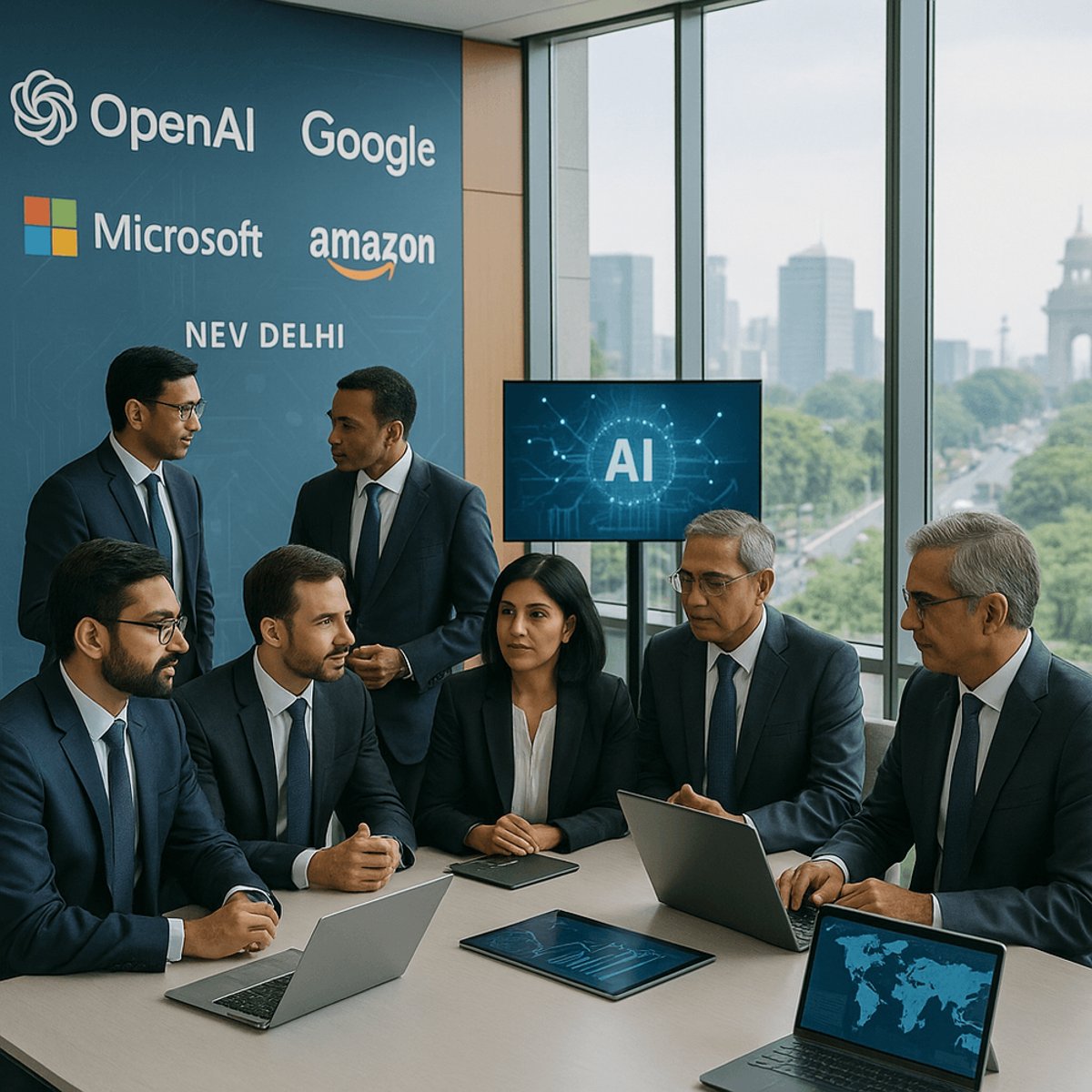
The world's most powerful AI executives are descending on India this week. OpenAI CEO Sam Altman and Google CEO Sundar Pichai are among the tech leaders heading to New Delhi for a major AI summit, signaling India's rising importance in the global AI race. The gathering comes as tech giants scramble to tap into India's 1.4 billion consumers and vast engineering talent pool, which could prove decisive in the next phase of AI development. It's a clear signal that India isn't just watching the AI revolution - it's becoming central to it.
OpenAI CEO Sam Altman and Google CEO Sundar Pichai are making the pilgrimage to India, and the timing couldn't be more telling. The two executives are heading to New Delhi for a major AI summit, joining what's shaping up to be one of the most significant gatherings of tech leadership focused on a single market in recent memory. The message is clear: India has officially entered the inner circle of AI power players.
The India AI Impact Summit represents more than just another conference on the packed tech CEO circuit. It's a recognition that India's combination of attributes - a population of 1.4 billion, hundreds of millions of young digital natives, and an enormous pool of engineering talent - makes it indispensable to anyone serious about winning the AI race. According to CNBC, the convergence of top executives underscores India's emerging role as a key market for continued AI development.
For Pichai, the trip is something of a homecoming - the Google chief grew up in Chennai before heading to the U.S. for graduate school. But this isn't a nostalgia tour. Google has been quietly building out its AI infrastructure in India for months, and the company views the country as critical not just for users but for the engineers who'll build the next generation of models. India produces more than 1.5 million engineering graduates annually, and tech companies are in an all-out war to recruit them.
Altman's presence is equally strategic. OpenAI has been expanding globally at breakneck speed since ChatGPT's explosive launch, but India represents a unique opportunity. The country's digital payments infrastructure is among the world's most advanced, and smartphone penetration continues to climb rapidly. That means millions of potential ChatGPT users who are already comfortable with digital services - exactly the kind of market that can drive the next phase of growth for AI applications.
The summit also comes at a moment when India's government is pushing hard to establish the country as an AI powerhouse in its own right. Prime Minister Narendra Modi's administration has been rolling out initiatives to boost domestic AI development, including funding for research centers and partnerships with global tech firms. The government sees AI as a way to leapfrog traditional development challenges in healthcare, education, and agriculture.
But there's a competitive edge to this gathering too. While Google and OpenAI are making their presence known, they're not alone. Microsoft has been aggressively investing in India through its partnership with OpenAI, and Amazon has been building out cloud infrastructure. The race to lock in talent and market position is intensifying, and no one wants to be left behind in a country that could supply both the brains and the users for the next decade of AI innovation.
The stakes extend beyond just market access. India's regulatory approach to AI is still taking shape, and having a seat at the table early could influence how the country approaches everything from data privacy to content moderation to AI safety standards. Tech CEOs learned from their experience in Europe - where they were often reacting to regulations rather than helping shape them - and they're not making the same mistake twice.
For Altman, the trip also serves another purpose: demonstrating OpenAI's commitment to global expansion at a time when the company faces increasing questions about its governance and long-term strategy. Being seen alongside other tech titans in a major emerging market sends a message that OpenAI is here to stay and thinking beyond just the U.S. and European markets that have dominated the AI conversation.
What makes India particularly attractive right now is the convergence of factors that rarely align. You have a young population that's digitally savvy, a government that's actively trying to promote tech development, relatively low labor costs for top engineering talent, and a massive market that's still largely untapped for advanced AI services. It's the kind of opportunity that doesn't come around often, and tech companies know it.
The convergence of AI's biggest names in India isn't just about a summit - it's a referendum on where the industry sees its future. As the global AI race intensifies, India's combination of talent, market size, and government support has transformed it from an outsourcing destination into a strategic priority. For companies like OpenAI and Google, winning in India could mean the difference between leading the next phase of AI development and playing catch-up. The executives heading to New Delhi this week aren't just making courtesy calls - they're placing bets on what could become one of the world's most important AI ecosystems. What happens in India over the next few years might just determine who dominates AI for the next decade.