Oway just closed a $4 million seed round to tackle a $100 billion problem hiding in plain sight: America's semitrucks are running half-empty across highways. The Y Combinator-backed startup promises to slash shipping costs by 50% using AI-powered cargo matching that turns trucking's biggest inefficiency into its next gold rush.
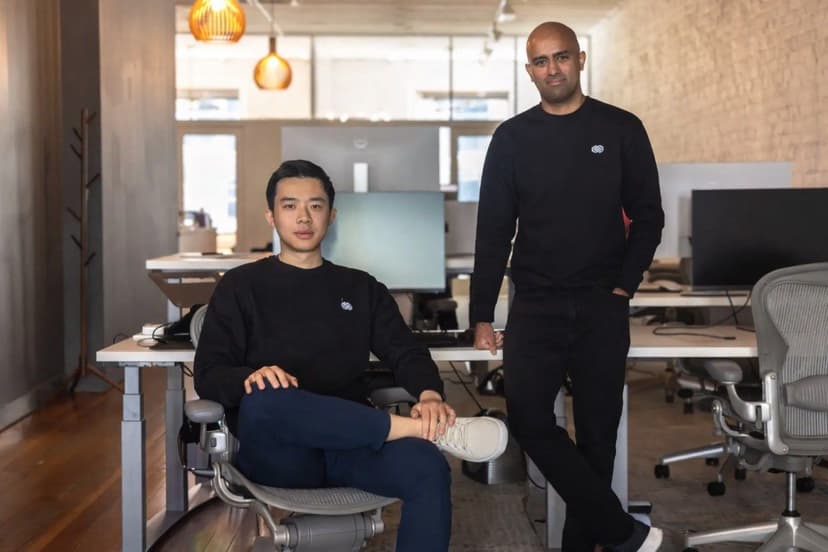
America's highways are hiding a trillion-dollar secret in plain sight. Oway founder Phillip Nadjafov knows exactly what it is: thousands of semitrucks rolling across the country with trailers only about half full.
That massive inefficiency just landed the San Francisco startup a $4 million seed round from Y Combinator and General Catalyst, with investors betting big on Nadjafov's promise to transform freight shipping into something resembling Uber for cargo. The company's already proving the concept works, slashing the cost of moving a pallet from Los Angeles to Dallas from $220 down to just $60.
"You shouldn't need to buy a whole 50-something-foot truck to move [something] across the country in order to get good pricing," Nadjafov told TechCrunch in an exclusive interview. "If you have a single box over 100 pounds you want to move across the country, you should be able to, now, with current technology, do that."
The timing couldn't be better. While competitors like Uber Freight and Flock Freight chase broader freight-matching models, Oway's laser focus on filling empty trailer space is resonating with major fleet operators who've been quietly partnering with the 12-person team. Nadjafov won't name names yet – the partnerships remain confidential – but says companies with "thousands of vehicles" are already integrating Oway's platform.
The secret sauce isn't just artificial intelligence, though Oway's machine learning algorithms do the heavy lifting of matching cargo with available trailer space and convenient destinations. The real breakthrough comes from leveraging electronic logging devices (ELDs) that became federally mandated a decade ago. Originally designed to eliminate paper logbooks and reduce driver fatigue, these devices now provide real-time truck location data that makes Oway's cargo-sharing model possible.
"The empty space phenomenon itself is a $100 billion problem," Nadjafov explains, framing the opportunity against trucking's trillion-dollar industry size. That inefficiency doesn't just cost money – it drives up consumer prices, increases emissions, and creates more idle time for truckers who could be moving profitable cargo instead of empty air.
Oway's approach cleverly bridges the gap between trucking's two dominant models. Traditional "full truckload" shipping offers speed but costs more, while "less-than-truckload" shipping saves money but takes longer as cargo bounces between multiple trucks and warehouses. Nadjafov promises the speed of the former with the cost savings of the latter, plus reduced damage since goods stay on direct routes.
The decentralized model sets Oway apart from competitors trying to own entire trailer loads. Instead, the startup works with existing brokers, carriers, and shippers, positioning itself as infrastructure rather than replacement. "We want Oway to be flexible so that one day new businesses and industries could be built on the novel applications of this infrastructure," Nadjafov said.
Investor excitement stems from Oway's early traction despite being founded just two years ago. The company's already automating shipping and insurance documentation while its AI continues learning from each successful cargo match. International interest is pouring in, but Nadjafov keeps the team focused on America's uniquely truck-dependent economy.
The $4 million war chest positions Oway to scale beyond its current 12 employees as the freight industry faces mounting pressure to optimize operations. With supply chains still recovering from pandemic disruptions and sustainability concerns growing, Oway's promise of turning waste into profit arrives at the perfect moment. The question isn't whether trucking needs optimization – it's whether a small San Francisco startup can execute on a vision bold enough to reshape how America moves goods.
Oway's $4 million seed round signals investor confidence in tackling one of America's most visible yet overlooked inefficiencies. With major fleet operators already signing on and costs dropping by 50%, Nadjafov's vision of Uber-like freight optimization could reshape the trillion-dollar trucking industry. As supply chains demand greater efficiency and sustainability, turning empty trailer space into profit represents both an environmental win and a massive business opportunity that extends far beyond traditional logistics.