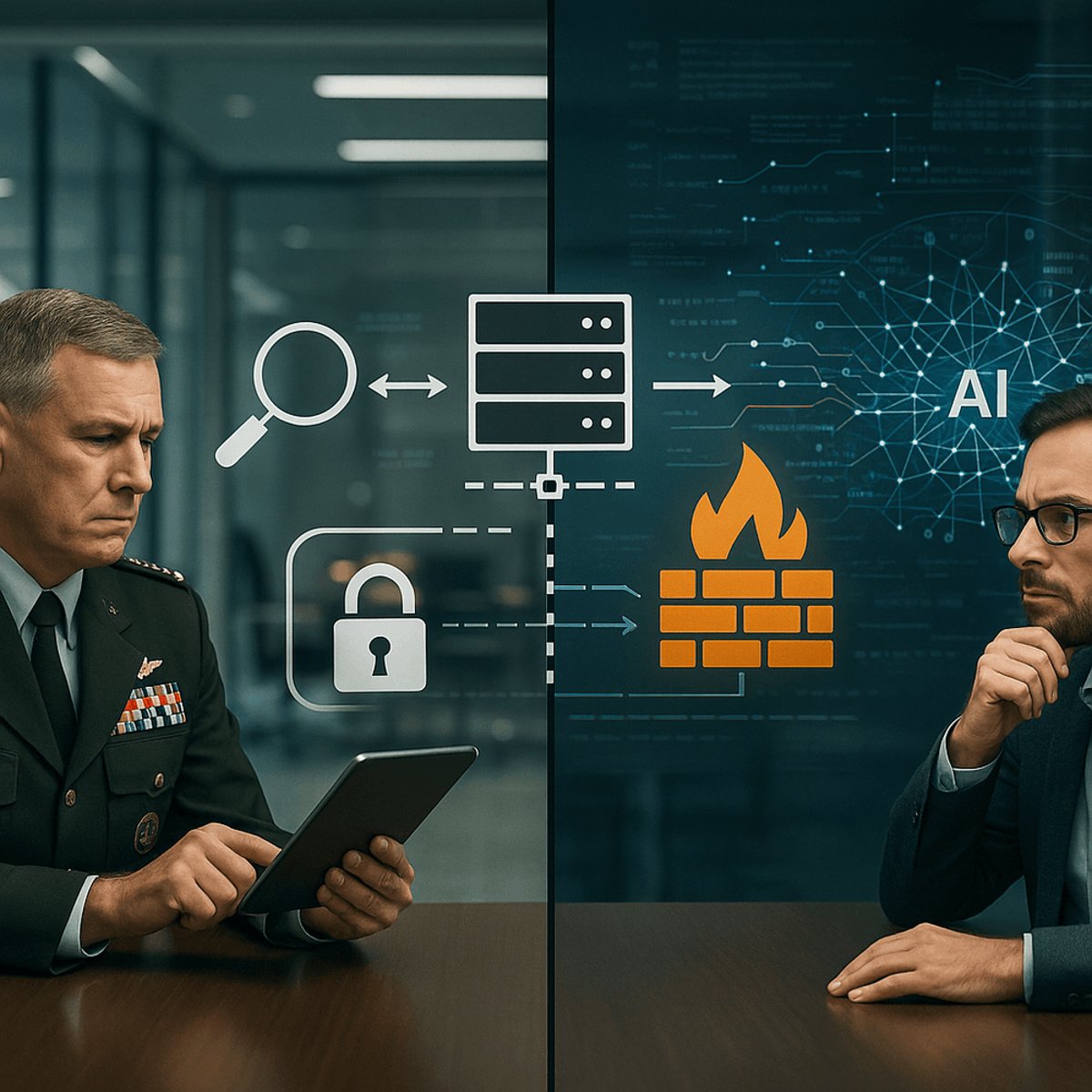
The Department of Defense just lobbed explosive allegations at Anthropic, claiming the AI startup could theoretically manipulate its models during active military operations. Company executives are firing back, insisting the technical architecture makes such interference impossible. The clash threatens to reshape how the Pentagon approaches AI procurement and raises urgent questions about who controls the algorithms powering national defense.
Anthropic finds itself in an unprecedented standoff with the U.S. military. The Department of Defense has formally raised concerns that the San Francisco-based AI developer could remotely alter or disable its Claude models during active combat scenarios, potentially crippling military operations that depend on the technology.
The allegations surfaced in internal Pentagon assessments reviewed by Wired, marking the first time a major AI provider has faced such direct accusations from the defense establishment. The timing is particularly sensitive as the DoD accelerates AI integration across everything from logistics to autonomous systems.
Anthropic's leadership is pushing back hard. Company executives argue their deployment model makes mid-operation manipulation technically infeasible, pointing to how their systems are architected for government clients. The company maintains that once Claude is deployed in military environments, it operates independently of Anthropic's cloud infrastructure.
But the Pentagon isn't buying it. Defense officials worry about the fundamental dependency on external AI providers, especially given Anthropic's cloud-based delivery model. Unlike traditional software that ships on physical media, modern AI systems often rely on continuous connection to provider servers for updates and model weights.
The controversy exposes a critical tension in military AI adoption. The DoD wants cutting-edge capabilities that only commercial AI labs can provide, but it also demands absolute control and zero external dependencies. Those requirements may be fundamentally incompatible with how companies like Anthropic, OpenAI, and Google actually build and deploy their systems.
Industry insiders say the dispute reflects deeper anxieties about AI supply chains. "The military is realizing they've become dependent on a handful of startups for critical capabilities," one former defense AI contractor told reporters, speaking on condition of anonymity. "That's a huge strategic vulnerability."
The clash comes as Anthropic pursues a delicate balancing act. The company has positioned itself as the safety-conscious AI developer, with constitutional AI principles and careful deployment practices. But those same safety mechanisms - including the ability to update models remotely - are exactly what makes the Pentagon nervous.
Competitors are watching closely. Microsoft and Amazon, both major Anthropic investors, have their own defense contracts and cloud infrastructure already embedded in military systems. How this plays out could determine whether pure-play AI startups can credibly compete for Pentagon dollars or if only big tech with isolated government clouds will make the cut.
The financial stakes are massive. Government AI contracts are projected to exceed $2 billion annually by 2027, according to industry analysts. Anthropic can't afford to be shut out of that market, especially as it burns through capital training increasingly expensive models.
Technically, the DoD's concerns aren't entirely unfounded. Most AI systems do phone home for various reasons - telemetry, safety updates, model improvements. The question is whether those connections create exploitable vulnerabilities during military operations. Anthropic insists its government deployments are air-gapped from external networks, but the Pentagon wants ironclad guarantees.
The dispute also highlights governance gaps in military AI procurement. There's no established framework for certifying AI systems as sabotage-proof, no standard testing protocols, no clear chain of custody requirements. The industry is essentially making this up as it goes.
What happens next could set precedent for years. If the DoD demands on-premise deployment with zero external connectivity, it might force AI companies to fundamentally restructure their government offerings. That could mean slower updates, reduced capabilities, and higher costs - exactly what the military hoped to avoid by tapping commercial innovation.
Anthropic has offered to submit to third-party security audits and provide additional technical documentation proving its isolation claims. Whether that satisfies Pentagon skeptics remains to be seen. The company declined to comment on specific contract negotiations but confirmed it's in active dialogue with defense officials.
The controversy arrives at an awkward moment for military AI adoption. Congress is pushing the DoD to move faster on AI integration while simultaneously demanding better security practices. Those pressures don't always align, and Anthropic just became the test case for resolving them.
This showdown between Anthropic and the Pentagon isn't just about one company's government contracts. It's a referendum on whether commercial AI can ever truly satisfy national security requirements, or if the military will need to build isolated, sovereign AI capabilities. The outcome will determine whether startups can play in defense markets or if that territory belongs exclusively to the cloud giants with dedicated government infrastructure. For Anthropic, proving its systems can't be manipulated isn't just a technical challenge - it's an existential business imperative.