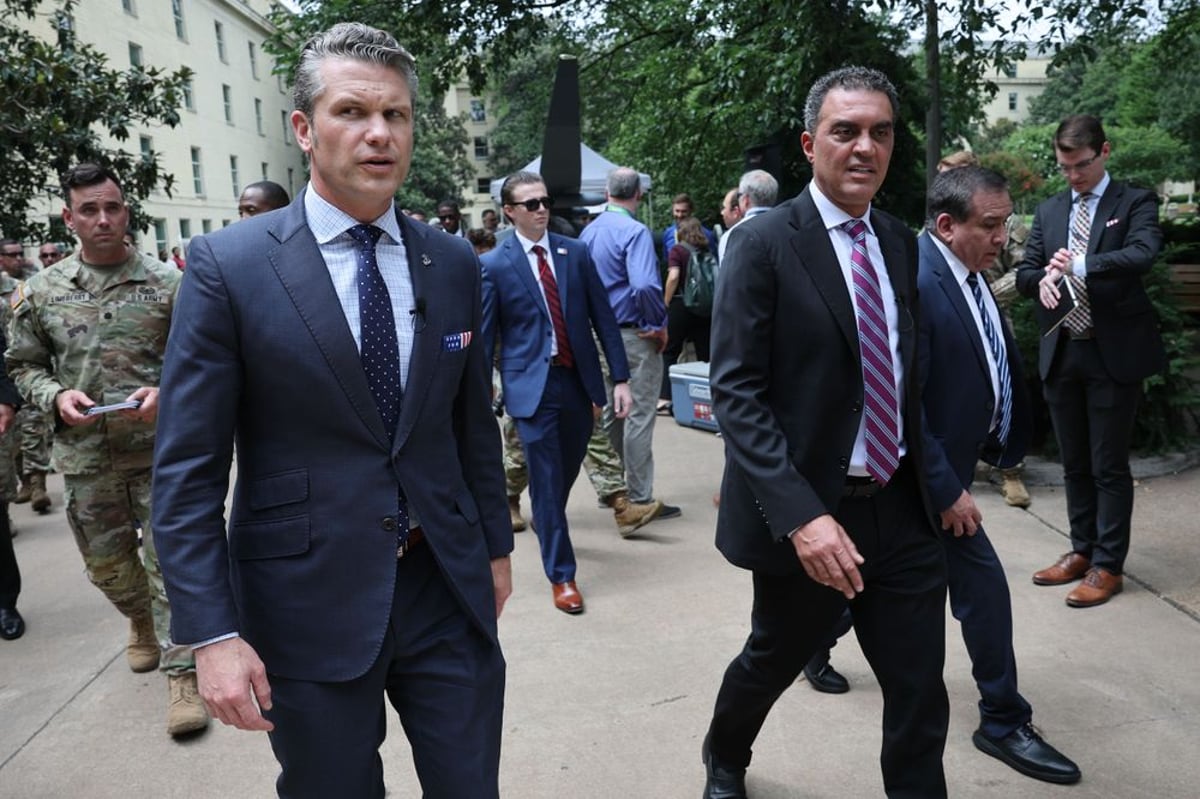
The Pentagon's AI ambitions just got a Silicon Valley upgrade. Defense Secretary Pete Hegseth is assembling what insiders are calling an "AI bro squad" - a team of tech executives and private equity heavyweights tasked with supercharging military AI adoption. Leading the charge is Emil Michael, the former Uber COO turned Under Secretary of Defense for Research and Engineering, who's now spearheading partnerships with AI labs including Anthropic. The move signals Washington's most aggressive push yet to bring cutting-edge commercial AI into defense operations.
Defense Secretary Pete Hegseth isn't wasting time. According to The Verge, he's tapped Emil Michael - the executive who helped scale Uber from startup to global powerhouse - to lead the Pentagon's AI transformation as Under Secretary of Defense for Research and Engineering. Photos from July 2025 show the two walking through exhibits of Multi-Domain Autonomous systems at the Pentagon, a visible signal that military AI is no longer a future concept but a present-day priority.
Michael's appointment represents a stark departure from traditional defense bureaucracy. During his tenure at Uber, he was known for aggressive expansion tactics and a willingness to break regulatory norms - traits that made him controversial in Silicon Valley but exactly the kind of operator Hegseth appears to want. Now he's applying that same velocity to military AI, working to establish partnerships with leading AI companies including Anthropic, the startup behind the Claude language model.
The Anthropic partnership is particularly noteworthy. While competitors like OpenAI have faced internal debates about defense contracts, Anthropic has quietly positioned itself as the enterprise AI provider willing to work with government. The company's focus on AI safety and "constitutional AI" principles may actually make it more palatable to defense officials concerned about deploying unpredictable systems in military contexts. Michael's team is reportedly exploring how Claude could be used for intelligence analysis, logistics optimization, and strategic planning.
But Michael isn't working alone. Private equity billionaire Steve Feinberg is also part of Hegseth's inner circle on AI strategy, according to sources familiar with the initiative. Feinberg, who built Cerberus Capital Management into a $60 billion empire, brings a different skill set - expertise in defense contracting, government procurement, and the art of navigating bureaucratic bottlenecks. His involvement suggests the Pentagon is thinking beyond just technology adoption to the thorny questions of how to actually buy and deploy AI at scale.
The team's formation comes as the U.S. faces mounting pressure to match China's military AI investments. Beijing has made no secret of its ambition to lead in autonomous weapons systems and AI-powered warfare by 2030. American defense officials have spent years warning about this gap, but bureaucratic inertia and risk-averse procurement processes have slowed progress. Hegseth's solution appears to be bypassing traditional channels entirely by importing Silicon Valley's move-fast mentality directly into the Pentagon.
Critics worry about the implications. Tech executives don't always understand military culture, operational constraints, or the life-and-death stakes of defense systems. Michael's controversial tenure at Uber - which included a notorious incident where he suggested digging up dirt on critical journalists - raises questions about judgment and ethics in a defense context. And the rush to deploy AI systems before they're fully tested could create catastrophic risks on the battlefield.
Yet supporters argue that's precisely the point. "The old way wasn't working," one former Pentagon official told reporters. "We were spending five years to procure technology that was already obsolete. If we want to compete with China, we need people who know how to ship products fast." The tension between Silicon Valley speed and military caution will define the next chapter of defense AI - and Michael's tenure will be the test case.
What happens next depends largely on whether this private-sector approach can deliver results. The Pentagon has tried various innovation initiatives before, from the Defense Innovation Unit to partnerships with tech companies, with mixed outcomes. The difference this time is direct top-level backing from Hegseth and explicit mandates to move quickly. Michael's team is expected to announce specific AI deployment milestones within months, not years. Whether that timeline proves ambitious or reckless remains to be seen, but the defense AI race just accelerated significantly.
The Pentagon's bet on Silicon Valley leadership could reshape how America develops military AI - for better or worse. Emil Michael's appointment signals a fundamental shift from cautious incrementalism to rapid deployment, with Anthropic partnerships and private equity expertise accelerating the timeline. If this approach succeeds, it could give the U.S. a decisive edge in the AI arms race with China. If it fails, the consequences could extend far beyond Washington's bureaucratic politics into actual battlefield risks. Either way, the fusion of tech industry velocity with military power is now official policy, and the rest of the defense establishment will have to adapt or get left behind.