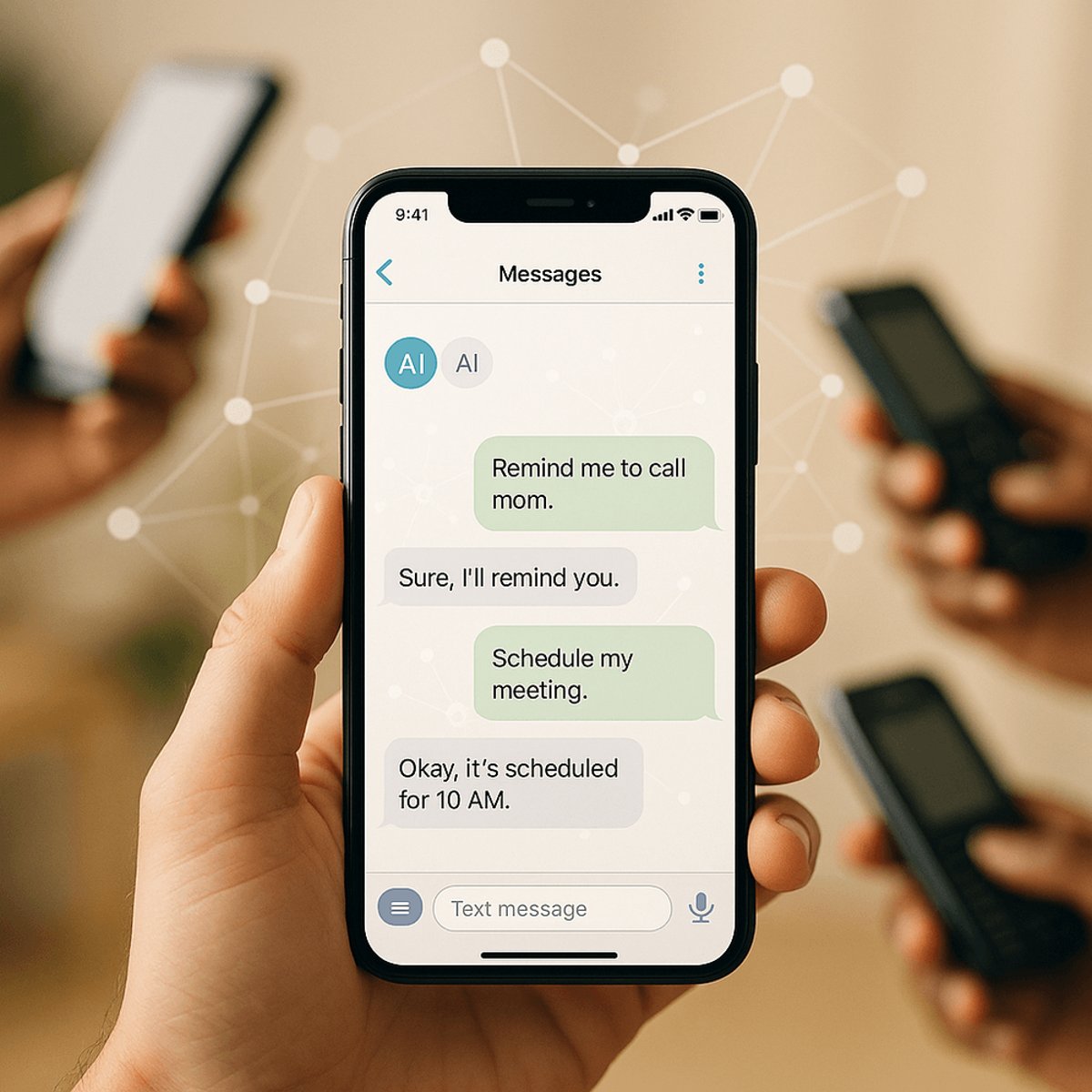
A new startup called Poke is stripping away the complexity of AI agents and delivering them through the most accessible interface imaginable: text messages. The platform lets everyday users automate tasks and deploy AI assistance without downloading apps, learning technical skills, or wrestling with complicated setup processes. It's a bold bet that the future of AI agents isn't in slick apps or enterprise dashboards, but in the humble SMS inbox that billions already know how to use.
Poke just launched with a radical premise: AI agents shouldn't require apps, accounts, or technical expertise. Instead, the startup is betting everything on text messages, the universal interface that works on every phone from smartphones to basic feature phones.
The timing couldn't be more deliberate. While tech giants like OpenAI, Google, and Microsoft race to build increasingly sophisticated AI agent frameworks, they're also building increasingly complex user experiences. Poke is zigging where the industry zags, according to TechCrunch's exclusive coverage.
Here's how it works: users text Poke like they'd text a friend. Want to automate a reminder? Schedule a task? Set up a recurring workflow? Just describe it in plain language via SMS. The AI agent handles the rest, no coding or configuration screens required. It's the kind of friction-free experience that's been promised by voice assistants for years but never quite delivered.
The approach tackles a massive accessibility gap in the AI agent market. Current solutions from companies like Anthropic with Claude or OpenAI's GPT-based agents require users to navigate apps, understand prompts, and often possess baseline technical literacy. Poke's SMS-first design works for anyone who can send a text message, which means it works for basically everyone with a phone.
This democratization play comes as the AI agent space heats up dramatically. The market for AI automation tools is projected to hit $47 billion by 2028, but most of that growth has been concentrated in enterprise and developer-focused products. Consumer AI agents remain largely trapped in walled gardens like Siri, Alexa, or Google Assistant, none of which offer the customization and task automation that power users crave.
Poke's pitch is simple but potentially transformative: bring that automation power to the masses through the lowest common denominator interface. No app stores, no onboarding flows, no learning curves. Just text a number and get an AI agent that learns your preferences and handles repetitive tasks.
The technical architecture behind this simplicity is anything but simple. The platform needs to parse natural language requests via SMS, understand context across multiple messages, execute tasks across various third-party services, and handle authentication and permissions without traditional app-based OAuth flows. That's a significant engineering challenge, especially when operating within the constraints of SMS character limits and the asynchronous nature of text messaging.
But if Poke pulls it off, they're tapping into a market that existing AI companies have largely ignored. Consider that globally, SMS still handles over 23 billion messages daily, and not everyone owns a smartphone capable of running the latest AI apps. Feature phones remain dominant in emerging markets, and even in developed countries, millions prefer simple phones or have accessibility needs that make app-based solutions challenging.
The launch also reflects a broader reckoning in consumer AI. After years of hype around AI assistants, actual usage remains disappointingly low. Studies show that most people use voice assistants for basic tasks like timers and music, not the complex automation that AI agents promise. The interface might be the problem, not the capability.
Competitors in the consumer AI automation space have tried different approaches. Zapier and IFTTT offer visual workflow builders, but they're still too technical for mainstream users. Apple's Shortcuts provides iOS automation but requires understanding logic flows. Poke is betting that the solution isn't better interfaces, it's the interface everyone already knows.
The startup enters a market where consumer expectations for AI are simultaneously sky-high and deeply skeptical. The AI agent narrative has been dominated by demos of futuristic assistants that can handle complex multi-step tasks, but real-world implementations often disappoint. Poke will need to manage expectations while proving that SMS-based agents can actually deliver value beyond novelty.
There are obvious questions about monetization, data privacy, and how far an SMS-based agent can really go in terms of sophisticated automation. But the core insight, that accessibility matters more than features for mass adoption, feels increasingly relevant as AI tools proliferate but actual consumer adoption lags industry expectations.
Poke's SMS-first approach to AI agents represents a genuine innovation in accessibility, targeting the vast majority of users left behind by increasingly complex AI tools. Whether text messages can handle the full promise of AI automation remains to be seen, but the startup is asking the right question: what good is powerful AI if people can't figure out how to use it? In a market obsessed with capabilities, Poke is making a contrarian bet on simplicity. If they're right, they won't just build a successful product, they'll reshape how we think about consumer AI interfaces entirely. The real test isn't whether power users adopt it, it's whether your parents do.