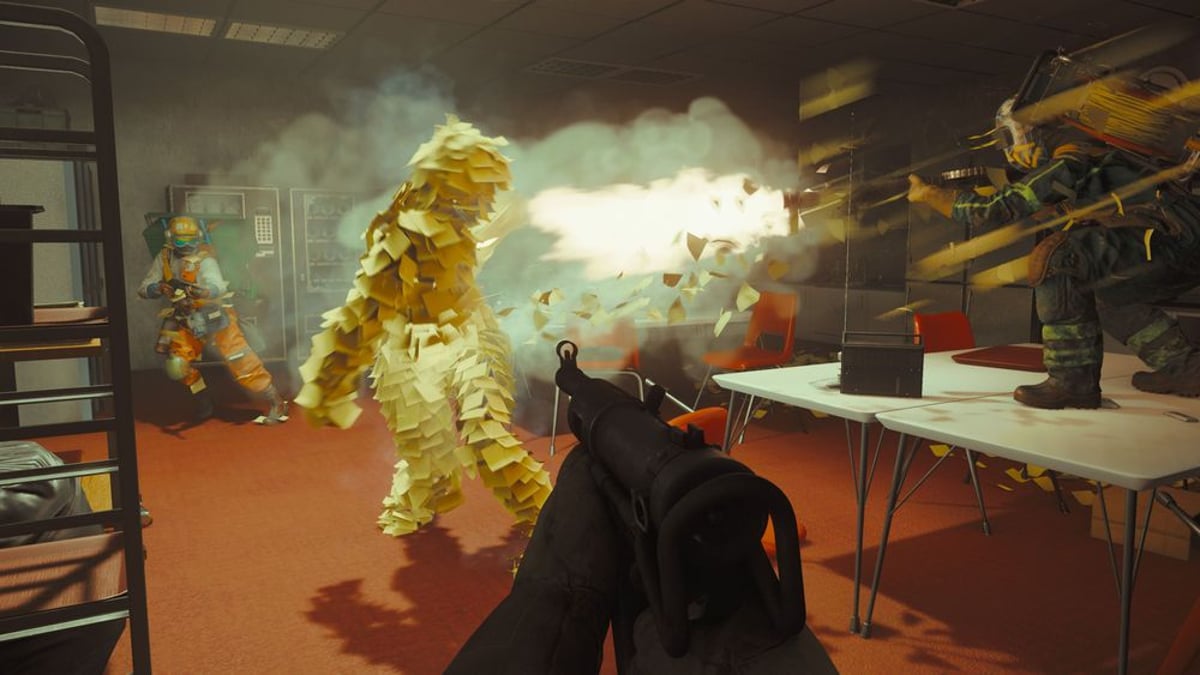
Tero Virtala, CEO of Remedy Entertainment for nearly a decade, stepped down immediately today following the commercial failure of FBC: Firebreak, the Finnish studio's ambitious but unsuccessful attempt to break into multiplayer gaming. The departure marks the end of an era for the acclaimed developer behind Control and Alan Wake 2.
The leadership shake-up at Remedy Entertainment comes just weeks after the Finnish studio issued a stark profit warning citing "weak sales" of their multiplayer debut, FBC: Firebreak. Virtala's immediate departure signals just how badly the game's commercial performance has damaged the studio's financial outlook.
Virtala took the reins at Remedy in 2016 and orchestrated what seemed like an impossible transformation. He shifted the studio from a traditional work-for-hire operation into an independent powerhouse capable of owning and publishing its own intellectual property. Under his leadership, Remedy delivered two of the most critically acclaimed games of recent years - Control in 2019 and the long-awaited Alan Wake 2 in 2023.
But Firebreak was meant to be the crown jewel of this transformation. The game represented Remedy's bold attempt to merge their signature atmospheric storytelling with the lucrative live-service multiplayer market. Set in the Control universe, it promised to deliver the studio's trademark supernatural thriller elements within a cooperative shooter framework that could generate ongoing revenue streams.
Instead, the combination fell flat with players. Despite launching a major update in September aimed at addressing player feedback, the game failed to generate the sales momentum Remedy desperately needed. The studio's multi-project strategy - which also includes Control 2, Max Payne remasters, and an unannounced mystery title - was specifically designed to insulate against exactly this kind of failure.
"Every single game is highly important for us," Virtala told The Verge in a recent profile. "There is no question that we are not fully insulated. But we are less dependent on any single game than we used to be." Those words now carry a bitter irony as his departure suggests Firebreak's failure was more devastating than anticipated.
Markus Mäki, one of Remedy's co-founders and current chief product officer, steps in as interim CEO while the board initiates a search for a permanent replacement. Mäki brings deep institutional knowledge, having been with the company since its early days developing the original Max Payne series for Rockstar Games.
The timing couldn't be worse for Remedy's broader ambitions. The studio had positioned itself as a premium independent developer capable of competing with major publishers. Control's success demonstrated their ability to create original IP that resonated globally, while Alan Wake 2's critical acclaim proved they could revive dormant franchises with modern sensibilities.
Firebreak's failure exposes the inherent risks in chasing live-service revenue models, even for studios with proven single-player expertise. The game's attempt to blend Remedy's atmospheric storytelling with multiplayer mechanics created an identity crisis that neither longtime fans nor new players embraced.
For the broader gaming industry, Virtala's departure serves as a cautionary tale about diversification strategies. While his vision of transforming Remedy into a multi-project studio made strategic sense, the execution around Firebreak reveals how even well-planned pivots can backfire spectacularly when market timing and player expectations misalign.
Virtala's departure marks the end of Remedy's most transformative period, leaving the studio at a crossroads as it attempts to recover from Firebreak's failure while maintaining momentum on its other projects. The new leadership will need to quickly reassure investors and fans that Remedy's core strengths in atmospheric single-player experiences remain intact, even as the studio learns hard lessons about the risks of chasing multiplayer trends.