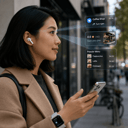
Snap is turning your coffee shop habit into a digital badge of honor. The company just launched Place Loyalty badges on Snap Map, a new feature that ranks users based on how frequently they visit specific locations and lets them broadcast their regular status to friends. If you're in the top 25% of visitors to a spot, you'll now see your ranking and can choose whether to share it - a move that turns routine into social currency and pushes Snap deeper into location-based competition with apps like Foursquare and even Instagram.
Snapchat is betting that your daily Starbucks run deserves recognition. The app's latest update to Snap Map introduces Place Loyalty badges, a ranking system that identifies power users at specific venues and gives them the option to share their frequent-visitor status with friends.
The mechanic is straightforward but deliberately social. Visit a coffee shop, gym, or restaurant enough times to crack the top 25% of all Snapchat users who frequent that spot, and you'll see your ranking appear on the Snap Map. From there, you control whether to broadcast that loyalty badge to your friend list or keep it private. It's gamification meets location tracking, with a privacy toggle thrown in for good measure.
The feature arrives as Snap continues hunting for engagement hooks beyond disappearing messages. Snap Map, first launched in 2017, has evolved from a simple friend-finder into a local discovery platform with Stories, business listings, and now competitive status markers. The loyalty badges feel like a direct nod to Foursquare, which built an entire social network around check-ins and mayorships before pivoting to enterprise location data.
But unlike Foursquare's manual check-in system, Snap's approach runs automatically in the background for users who've enabled location sharing. That convenience could drive adoption, though it also raises questions about surveillance capitalism and just how closely Snap is tracking movement patterns. The company hasn't detailed the exact algorithm behind the 25% threshold or how frequently the rankings update, leaving users to guess whether yesterday's visit counts more than last month's.
The privacy angle matters here. Snap's been walking a tightrope between social features and user control ever since Snap Map launched to immediate concerns about stalking and unwanted location exposure. By making the loyalty badges opt-in for sharing, Snap's trying to have it both ways - harvest the location data for engagement and advertising targeting, but let users control the social visibility.
This update also signals where Snap sees its competitive moat. While TikTok dominates short video and Instagram owns visual sharing, Snap's betting on ephemeral messaging plus hyperlocal features as its differentiation. The loyalty badges turn passive location data into active social content, giving users something new to talk about beyond streaks and filters.
For businesses, the feature could become a guerrilla marketing channel. Coffee shops and gyms might start incentivizing customers to share their top-visitor status, effectively turning regulars into brand ambassadors. Snap hasn't announced any monetization plans around loyalty badges yet, but the infrastructure is there for sponsored challenges or rewards programs tied to visit frequency.
The timing is notable too. Meta has been pushing hard on location features across Instagram and Facebook, while Google Maps continues adding social layers like reviews and photo sharing. Snap's loyalty badges are a defensive play as much as an offensive one, staking claim to location-based social before the big players fully wake up to it.
The feature's success will depend on whether Snapchat's core audience - still heavily skewed toward Gen Z despite years of trying to age up - actually cares about broadcasting their regular haunts. Early Foursquare users were motivated by mayorships and unlock badges, but that was 2010. Today's teens and twenty-somethings grew up with location sharing as a default, not a novelty. The question is whether ranking your coffee shop loyalty feels fun or just creepy.
Snap hasn't shared rollout details beyond the initial announcement, but the feature appears to be launching globally across iOS and Android. Users who've kept location services disabled won't see the badges, which could limit adoption if privacy-conscious users opt out en masse.
Snap's Place Loyalty badges represent a calculated gamble that location data can become social content if packaged right. The feature walks the line between useful discovery tool and surveillance concern, banking on user curiosity about rankings to overcome privacy hesitation. Whether it becomes the next Snapchat streak or a forgotten experiment depends on execution and whether younger users still find check-in culture compelling in 2026. For now, Snap's making a clear statement - in the battle for engagement, your coffee shop routine is fair game for gamification.