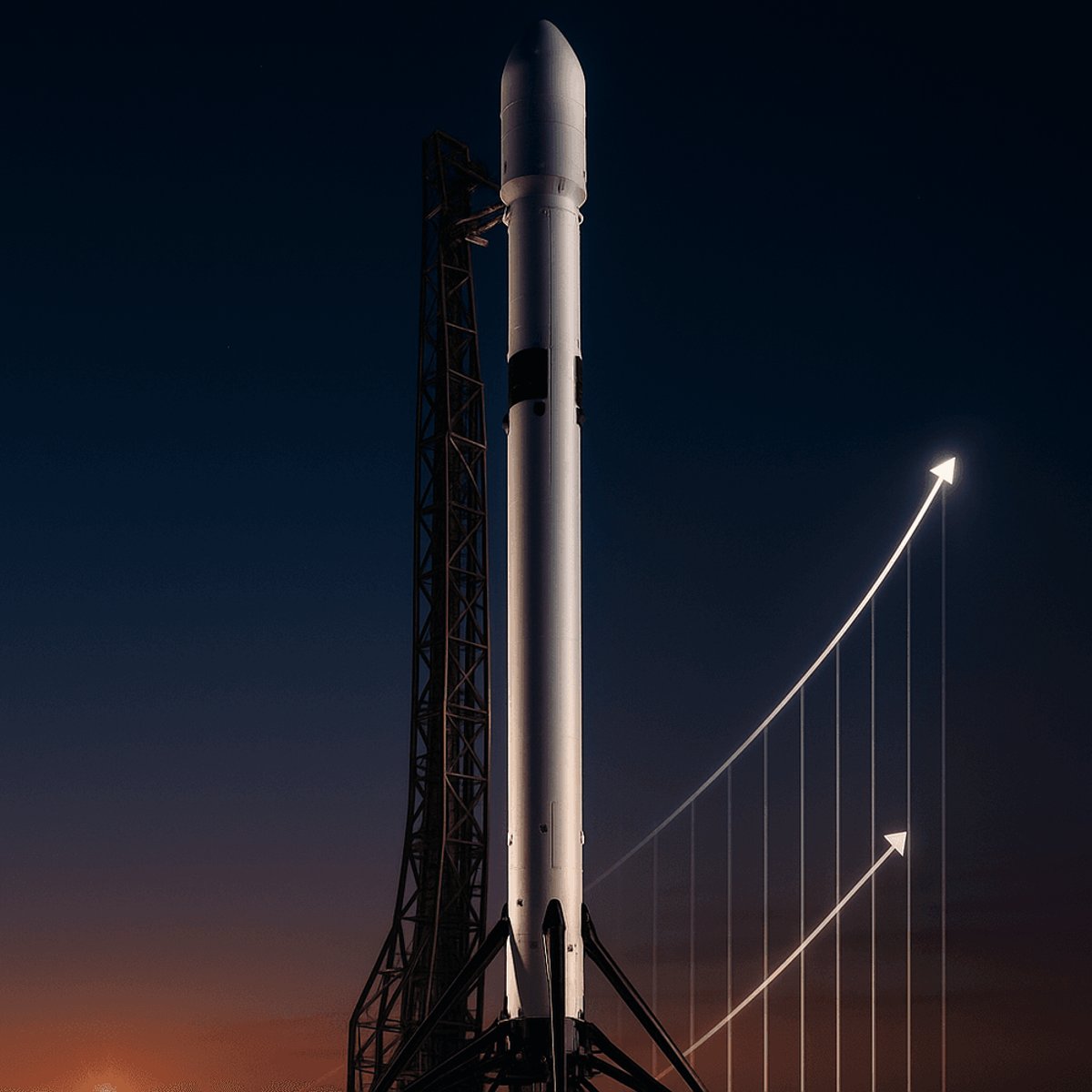
SpaceX is reportedly negotiating a secondary share sale that would rocket its valuation to $800 billion - doubling from $400 billion and making it America's most valuable private company, according to the Wall Street Journal. The eye-popping figure would vault Elon Musk's space venture past OpenAI's $500 billion mark, cementing how routine mega-valuations have become in today's private markets.
SpaceX just made private market history look routine. The company is negotiating what could be the largest secondary share sale ever, targeting an $800 billion valuation that would instantly double its worth from the $400 billion mark it hit earlier this year, according to Wall Street Journal reports.
The astronomical figure would catapult Elon Musk's rocket maker past OpenAI, currently valued at $500 billion, to claim the crown as America's most valuable private company. It's a stunning leap that reflects just how dramatically the private market landscape has shifted - companies can now achieve public-market-scale valuations while staying completely out of the public eye.
Neither SpaceX nor the WSJ reported details about the scale of the offering, leaving investors to speculate about how much liquidity the company plans to provide to employees and early backers. But the sheer size of the valuation tells the story - this isn't just about employee stock options anymore.
The move puts SpaceX in rarified air alongside the AI giants driving today's private market frenzy. OpenAI sits at that $500 billion mark, while Anthropic reportedly surged to $350 billion last month following major investments from Microsoft and Nvidia, up from just $183 billion months earlier according to industry reports.
What's striking is how these companies can now achieve valuations that rival public tech giants without any of the quarterly earnings pressure or regulatory scrutiny that comes with being listed. Secondary sales provide the perfect escape valve - giving employees and investors liquidity while keeping the companies private and focused on long-term growth.
For SpaceX, the valuation reflects a business that's firing on multiple cylinders. The company, founded back in 2002, completely dominates the commercial rocket launch market and has built Starlink into a satellite internet juggernaut with over 8 million customers globally as of November. That's real revenue backing up the astronomical numbers.
The timing couldn't be better for Musk's space venture. Government contracts keep flowing in, Starlink subscriptions are growing internationally, and the Starship program continues hitting development milestones. Meanwhile, traditional aerospace players like Boeing have struggled with their own space programs, leaving SpaceX with even more market share to capture.
But the $800 billion figure also signals something bigger about where private markets are heading. When a rocket company can command the same valuation as some of the world's largest public companies, it shows how much capital is chasing growth stories outside traditional stock exchanges. Secondary markets have become the new IPO, offering liquidity without the regulatory headaches.
For employees and early investors, these secondary sales represent life-changing liquidity events. But they also create a two-tier market where only accredited investors get access to the highest-growth companies, while retail investors are left watching from the sidelines until companies eventually go public - if they ever do.
The $800 billion valuation represents more than just another mega-round - it's a signal that private markets have fundamentally changed. Companies like SpaceX can now achieve public-company scale while avoiding public-company constraints, creating a new class of private giants that may never need to go public. For the broader market, it raises questions about access, transparency, and whether this trend toward permanent private status serves investors and innovation well. What's certain is that SpaceX has positioned itself at the center of multiple growth industries, from satellite internet to space exploration, making that eye-popping valuation look less astronomical and more inevitable.