The price tag for America's most ambitious AI infrastructure project just doubled. OpenAI and Oracle revealed today that the Stargate Michigan data center buildout will require an additional $30 billion to $40 billion in component costs alone, pushing the total investment well beyond initial projections. The disclosure came during a live briefing with Related Digital, marking one of the largest single infrastructure commitments in tech history as the AI arms race enters its capital-intensive phase.
The math behind artificial intelligence just got more expensive. OpenAI, Oracle, and Related Digital dropped a financial bombshell today during a live briefing on the Stargate Michigan project, revealing that data center components alone will require $30 billion to $40 billion in additional investment. That's on top of the already staggering infrastructure commitments that were announced when the project first broke.
The disclosure puts Stargate in rarefied territory. We're talking about investment levels that rival entire national infrastructure programs, all dedicated to building the computational backbone for next-generation AI models. According to details shared during the live updates, the companies are planning for scale that goes beyond anything the tech industry has attempted.
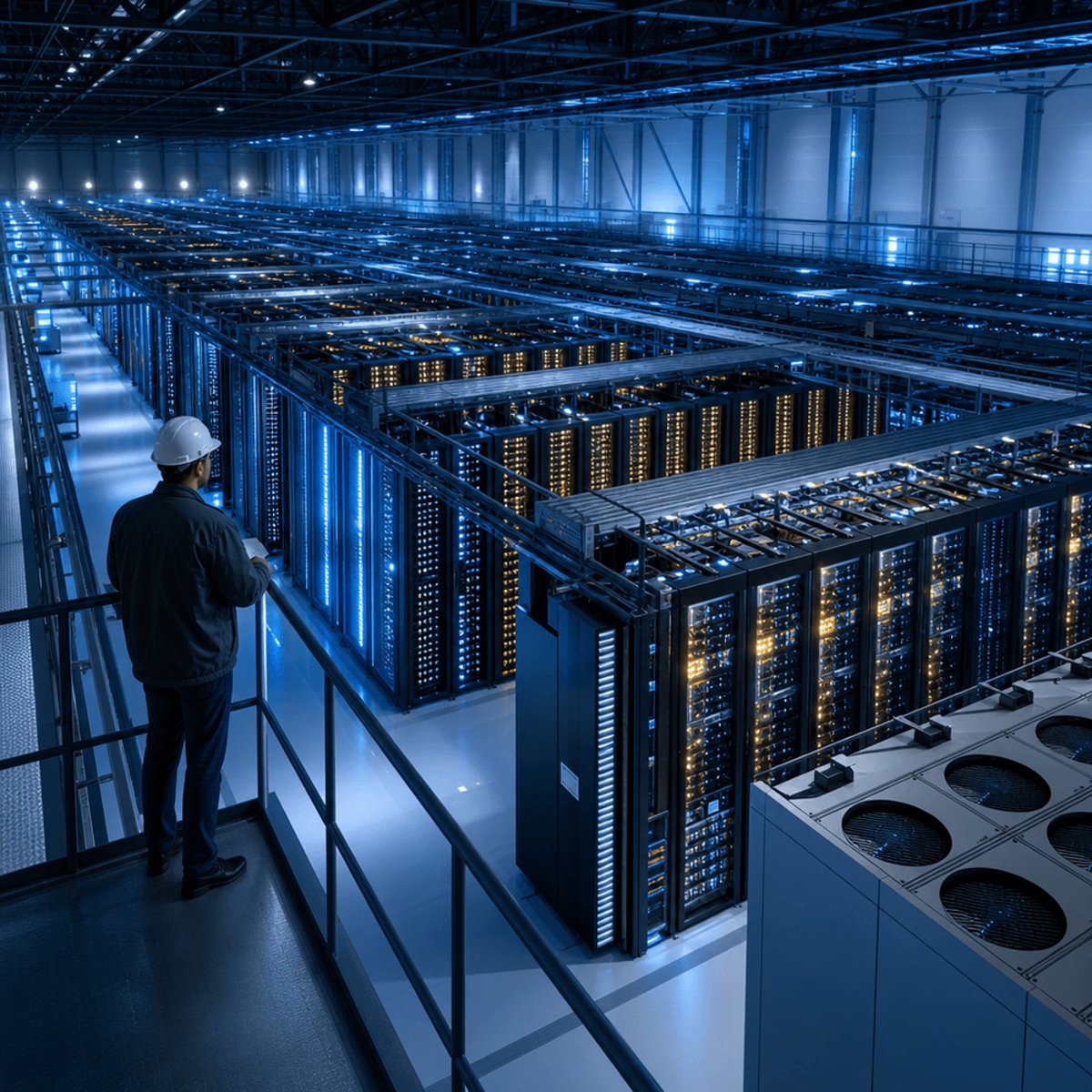
What's driving these numbers? The answer lies in the brutal economics of AI infrastructure. Training and running large language models requires exponentially more computing power than previous generations of cloud services. Each data center needs cutting-edge GPUs, massive cooling systems, redundant power supplies, and networking equipment capable of handling unprecedented data throughput. When you're building at Stargate's scale, those component costs multiply fast.
Oracle brings decades of enterprise infrastructure experience to the table, but even for them, this represents a quantum leap. The company's been pivoting hard into AI cloud services, competing directly with Microsoft Azure, Amazon Web Services, and Google Cloud. Partnering with OpenAI on Stargate gives Oracle a chance to leapfrog competitors in the AI infrastructure race.
For OpenAI, the stakes couldn't be higher. The company's burning through compute resources at a staggering rate, with ChatGPT and its enterprise offerings demanding ever-more processing power. Building dedicated infrastructure through Stargate reduces dependence on third-party cloud providers and potentially cuts long-term operational costs, assuming the models keep scaling as expected.
The Michigan location isn't accidental. The state's been aggressively courting tech infrastructure projects with tax incentives and workforce development programs. Today's briefing included discussions about job creation and community impact, though specific employment numbers weren't disclosed. What's clear is that Michigan is positioning itself as a hub for AI manufacturing and operations, not just traditional automotive production.
Related Digital's involvement adds another dimension. The real estate and infrastructure developer brings expertise in large-scale construction projects, but managing a $70+ billion data center buildout tests even their capabilities. The logistics alone are staggering - sourcing components during ongoing chip shortages, coordinating construction across multiple phases, and ensuring power infrastructure can handle massive energy demands.
The timing of this cost disclosure matters. It comes as the AI industry faces growing questions about sustainability and return on investment. Microsoft, Google, and Amazon have all announced massive AI infrastructure spending, but none at Stargate's scale. If this project succeeds, it validates the thesis that AI requires entirely new categories of investment. If it struggles, it could trigger a broader reassessment of AI infrastructure economics.
Wall Street will be watching the component suppliers closely. Nvidia stands to benefit enormously if Stargate's GPU orders materialize as expected. Server manufacturers, cooling system providers, and networking equipment makers are all eyeing what could be the largest single infrastructure order in their histories. The $30-40 billion component figure suggests procurement on a scale that will reshape supply chains.
But there are risks. Cost overruns on projects this size are common, and the technology landscape could shift before construction completes. If more efficient AI architectures emerge, or if the current scaling paradigm hits limitations, Stargate could end up as expensive infrastructure built for yesterday's technology. That's the bet OpenAI and Oracle are making - that AI will continue demanding more compute, not less.
The community discussion during today's briefing hints at broader questions about AI's physical footprint. Data centers this size require enormous amounts of electricity and water for cooling. Michigan's infrastructure will need upgrades to support Stargate's energy demands, raising questions about grid capacity and environmental impact that the companies will need to address.
What happens next depends partly on regulatory approvals and community buy-in. But the financial commitment is now public, and it's massive. OpenAI and Oracle aren't just building a data center - they're betting that whoever controls AI infrastructure at scale will control the industry's future.
The Stargate project just became real in the most expensive way possible. With component costs alone hitting $30-40 billion, OpenAI and Oracle are making a bet that will either validate the AI infrastructure thesis or serve as a cautionary tale about overbuilding for uncertain demand. For Michigan, it represents a chance to become an AI powerhouse. For the industry, it's a signal that the AI arms race has entered its capital-intensive era, where winning requires not just better algorithms but massive physical infrastructure. The question now isn't whether AI needs scale - it's whether anyone can afford to build at this level without OpenAI and Oracle's deep pockets.