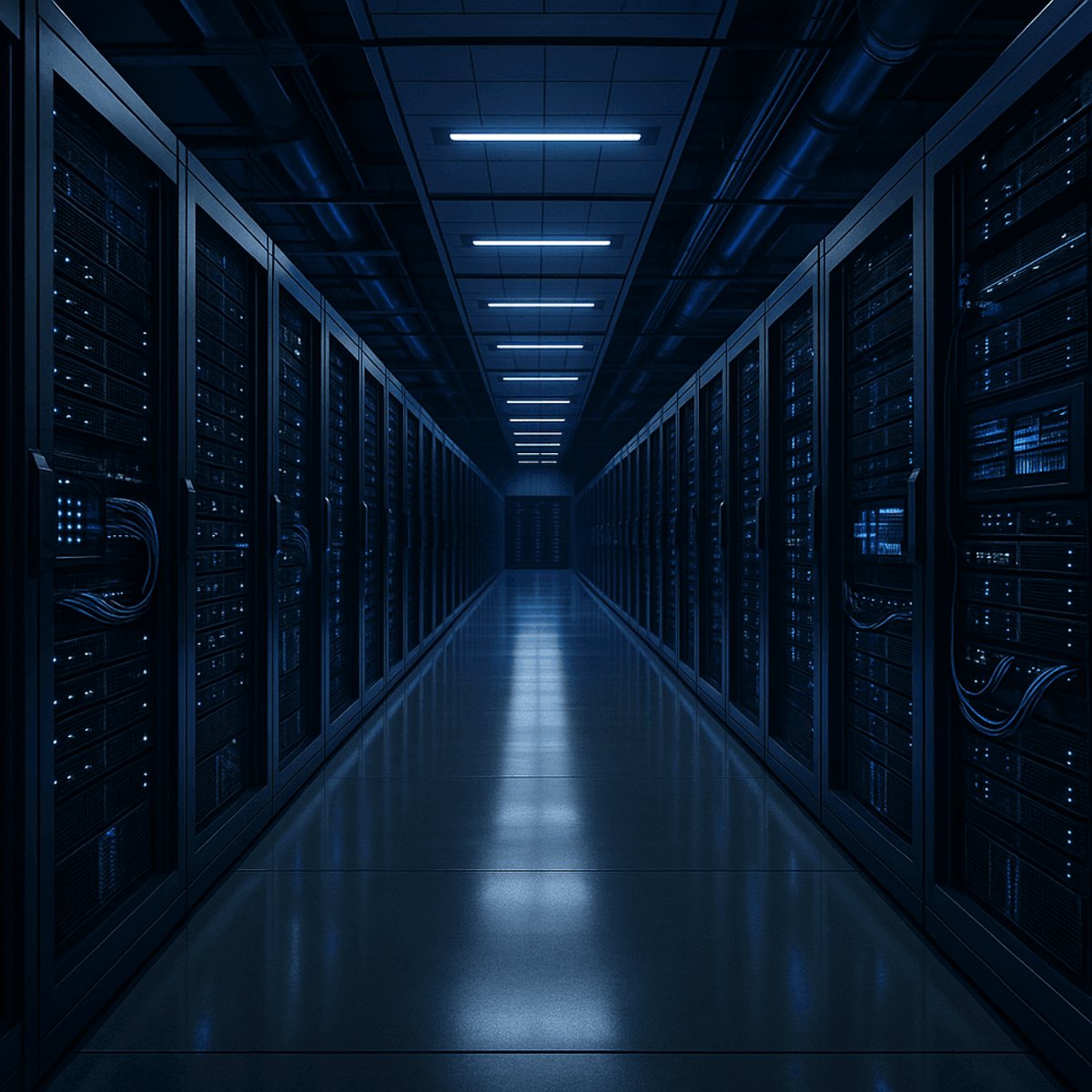
The AI arms race just got a whole lot more expensive. Tech's biggest players are committing unprecedented capital to data center infrastructure, with Meta, Microsoft, Google, Oracle, and OpenAI leading a multi-billion dollar buildout that's reshaping the industry's competitive landscape. The spending spree reflects a stark reality: training and deploying advanced AI models requires massive computing power that existing infrastructure simply can't support.
The scale of investment now flowing into AI infrastructure represents one of the largest capital deployment cycles in tech history. While companies have been tight-lipped about exact figures, industry analysts estimate the collective spending could exceed $200 billion over the next three years.
Meta has emerged as one of the most aggressive spenders, pivoting massive resources toward AI infrastructure after CEO Mark Zuckerberg declared 2024 the company's "year of efficiency." The company's capital expenditure guidance has consistently surprised Wall Street, with infrastructure spending now consuming a larger share of the budget than traditional product development. Meta's approach differs from competitors by building much of its infrastructure in-house, a strategy that provides more control but requires heavier upfront investment.
Microsoft, meanwhile, leverages its existing Azure cloud infrastructure while rapidly expanding capacity to support its partnership with OpenAI. The company's multi-billion dollar commitment to OpenAI includes not just cash but computing credits, essentially guaranteeing access to Microsoft's growing data center footprint. This arrangement gives OpenAI the infrastructure needed to train increasingly large models without the capital burden of building its own facilities.
Google finds itself playing catch-up after initially underestimating the infrastructure requirements for competing in the generative AI race. The company has accelerated data center construction and reportedly secured priority access to Nvidia chips, though exact allocations remain closely guarded secrets. Google's advantage lies in its extensive existing infrastructure and custom TPU chips, which provide some independence from Nvidia's H100 and H200 GPUs that power most AI training.
Oracle has taken a different approach, positioning itself as infrastructure provider to AI companies that don't want to build their own facilities or rely solely on hyperscale cloud providers. The company has announced several partnerships that leverage its data center expertise, targeting the growing market of AI startups and enterprises that need reliable, high-performance computing without massive capital outlays.
The infrastructure boom extends beyond traditional tech hubs. New data centers are sprouting across the American Midwest and South, drawn by lower energy costs and available power capacity. AI training consumes enormous amounts of electricity - a single large model training run can use as much power as several thousand homes over months. This energy demand has sent companies scrambling to secure power purchase agreements and, in some cases, invest directly in renewable energy generation.
Nvidia's dominance in AI chips means much of this infrastructure spending ultimately flows through the chipmaker. The company can barely keep up with demand for its latest GPUs, which sell for $25,000 to $40,000 each and are often deployed by the thousands in single installations. Lead times stretch months, forcing companies to place massive orders well in advance and creating a secondary market where chips sometimes trade at premiums.
But the spending raises difficult questions about return on investment. While AI capabilities continue improving, many companies still struggle to monetize their AI products at levels that justify this infrastructure investment. The gap between spending and revenue has some analysts worried about a potential overcapacity scenario if AI adoption doesn't accelerate as quickly as infrastructure buildout.
The competitive dynamics are fascinating. Companies that control infrastructure gain significant advantages in model training speed, data privacy, and cost efficiency. Meta can iterate on Llama models faster with dedicated infrastructure. Microsoft can offer preferential access to customers who commit to Azure. Google can leverage infrastructure costs as a competitive weapon through aggressive cloud pricing.
Stargate, the ambitious joint venture between OpenAI, SoftBank, and others, represents perhaps the most ambitious infrastructure play. The project aims to build AI-specific data centers optimized from the ground up for model training and inference, rather than retrofitting existing facilities. If successful, it could establish new benchmarks for efficiency and capability.
The infrastructure race also creates dependencies that ripple across the industry. Smaller AI companies and researchers increasingly rely on cloud credits or partnerships to access necessary computing power. This concentration of infrastructure in the hands of a few giant companies raises concerns about competition and access, particularly as AI capabilities become more central to economic competitiveness.
Energy efficiency has become a key battleground. Companies investing in liquid cooling, custom chip designs, and optimized data center architectures can train models faster and cheaper than competitors stuck with older infrastructure. Google's custom TPUs and Microsoft's Azure Maia chips represent attempts to break free from complete dependence on Nvidia while improving performance per watt.
The timing of these investments matters enormously. Companies building now are betting that current AI architectures will remain dominant for years to come. If a breakthrough enables dramatically more efficient training or if model sizes plateau, billions in infrastructure spending could become stranded assets. But delay means falling behind competitors who can train larger models faster and serve more users with lower latency.
The multi-billion dollar infrastructure buildout underway represents more than just capital spending - it's a bet on AI's trajectory and each company's ability to monetize those capabilities. The winners won't just be the companies with the best models, but those who most efficiently translate infrastructure investment into sustainable competitive advantages. As the buildout continues, the gap between infrastructure haves and have-nots will likely widen, potentially reshaping the entire AI landscape for the next decade. The question isn't whether this spending will continue, but whether the returns will justify what's already becoming one of tech's most expensive races.