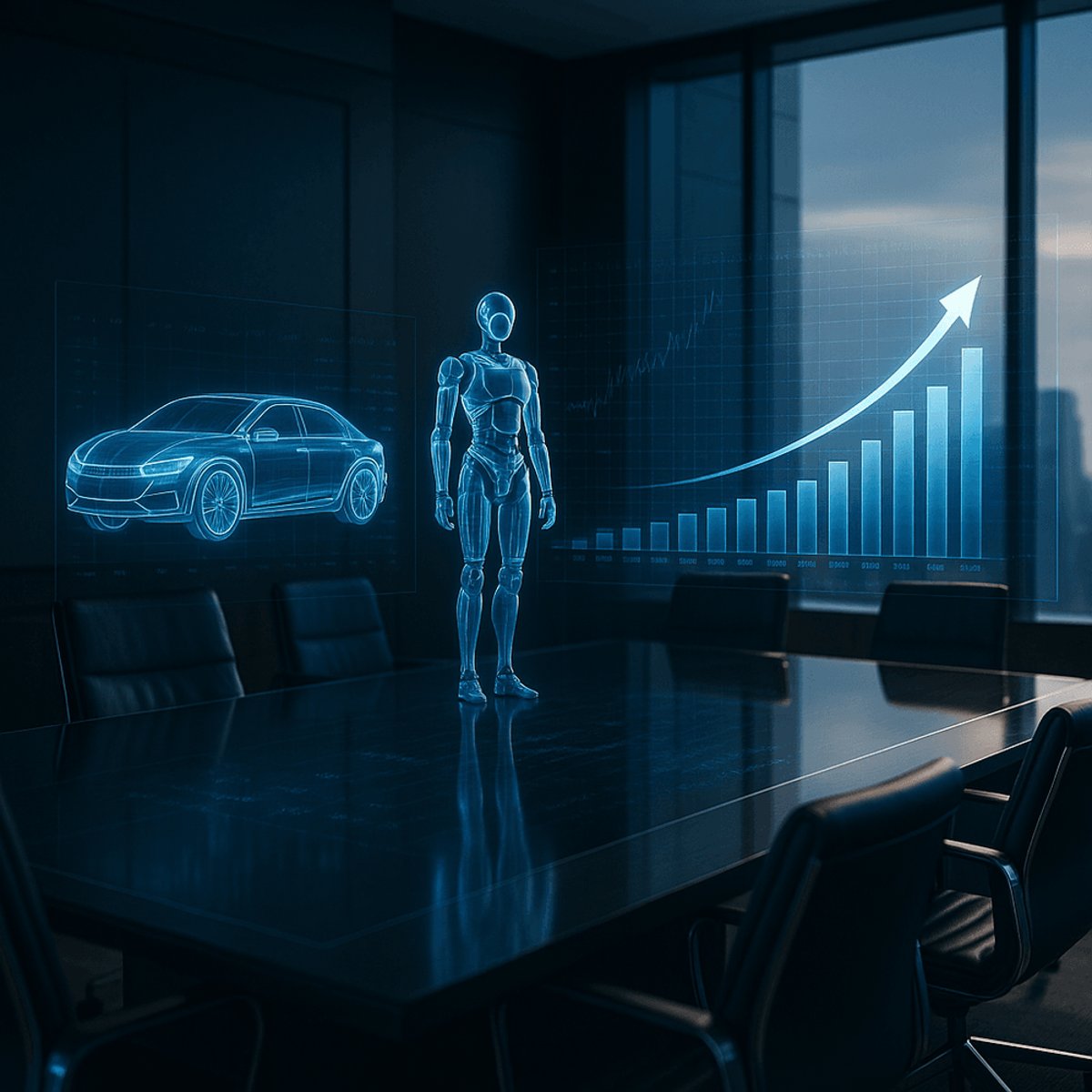
Tesla just dropped the boldest corporate bet in history: a $1 trillion pay package for CEO Elon Musk that hinges entirely on turning the company's AI robotics promises into reality. The proposal requires Musk to deliver 1 million commercial robotaxis, 1 million Optimus robots, and propel Tesla to an $8.5 trillion valuation within a decade to earn the full payout.
Tesla just made the most audacious corporate wager in business history. The company's board proposed a $1 trillion compensation package for CEO Elon Musk that transforms him from a distracted political operative back into a focused robotics visionary—or costs him everything.
The proposal, detailed in an SEC filing Thursday evening, sets eight financial milestones and four product targets that would require Musk to revolutionize autonomous vehicles and humanoid robotics within the next decade. To earn the full trillion-dollar payout, Tesla must reach an $8.5 trillion valuation—more than double Nvidia's current market cap and eight times Tesla's present worth.
The timing couldn't be more strategic. Musk's recent years have been consumed by buying and rebranding Twitter, bankrolling Trump's presidential campaign, and launching the Department of Government Efficiency. Meanwhile, Tesla's vehicle deliveries have slumped over 10% across two consecutive quarters as Chinese EV competitors flood global markets.
"For Musk to receive the full pay package, Tesla will need to be the leader of autonomous vehicles and humanoid robots in a number of countries," Seth Goldstein, senior equity analyst at Morningstar, told WIRED. The package goals include delivering 20 million vehicles, securing 10 million Full Self-Driving subscriptions, operating 1 million commercial robotaxis, and shipping 1 million Optimus robots.
But Tesla faces massive execution challenges. The company has delivered just 8 million vehicles since 2008, and internal reports suggest Optimus production has stalled at "a few hundred" units versus the 5,000 target for this year. The humanoid robot program lost its nine-year veteran VP in June, with teams reportedly struggling with basic hand functionality.
Even Tesla's limited robotaxi service launched in Austin this summer relies on human safety monitors in passenger seats—potentially disqualifying those vehicles from the "no human driver" requirement in Musk's compensation milestones.
The proposal doubles down on Tesla's "Master Plan Part IV," posted exclusively to X this week with grandiose promises like "Autonomy must benefit all of humanity." The plan features renderings of Optimus robots serving cocktails and watering plants, but lacks the technical detail of Musk's earlier master plans that accurately predicted Tesla's EV trajectory.
Investors face a November shareholder vote on the package, which follows Musk's previous $50+ billion compensation deal currently tied up in Delaware courts. Tesla's board granted Musk an interim $29 billion stock award last month while the legal battle continues, demonstrating their commitment to keeping him focused on the company rather than political ventures.
The board-run compensation committee met with Musk 10 times since February and secured "assurances that Musk's involvement with the political sphere would wind down in a timely manner," according to the SEC filing. This suggests Tesla directors view Musk's recent political activities as counterproductive to the company's AI ambitions.
"This new pay package should keep Elon Musk at Tesla for at least the next decade," Goldstein noted. The structure mirrors Musk's performance-based approach—no annual salary, just massive payouts tied to long-term milestones that have historically driven Tesla's market value from near-zero to over $1 trillion.
The robotics bet reflects broader industry trends, with OpenAI, Google, and Amazon all pushing into AI-powered automation. But Tesla's timeline appears aggressive given current production realities and regulatory hurdles facing autonomous vehicle deployment.
Tesla's trillion-dollar gamble represents either visionary leadership or spectacular overreach. If Musk delivers on autonomous vehicles and humanoid robots at the scale promised, he becomes the world's first trillionaire while transforming global labor markets. If he fails, shareholders get a stark reminder that even the most ambitious CEO compensation packages can't guarantee execution. The November vote will reveal whether investors still believe in Musk's ability to turn science fiction into market-dominating reality.