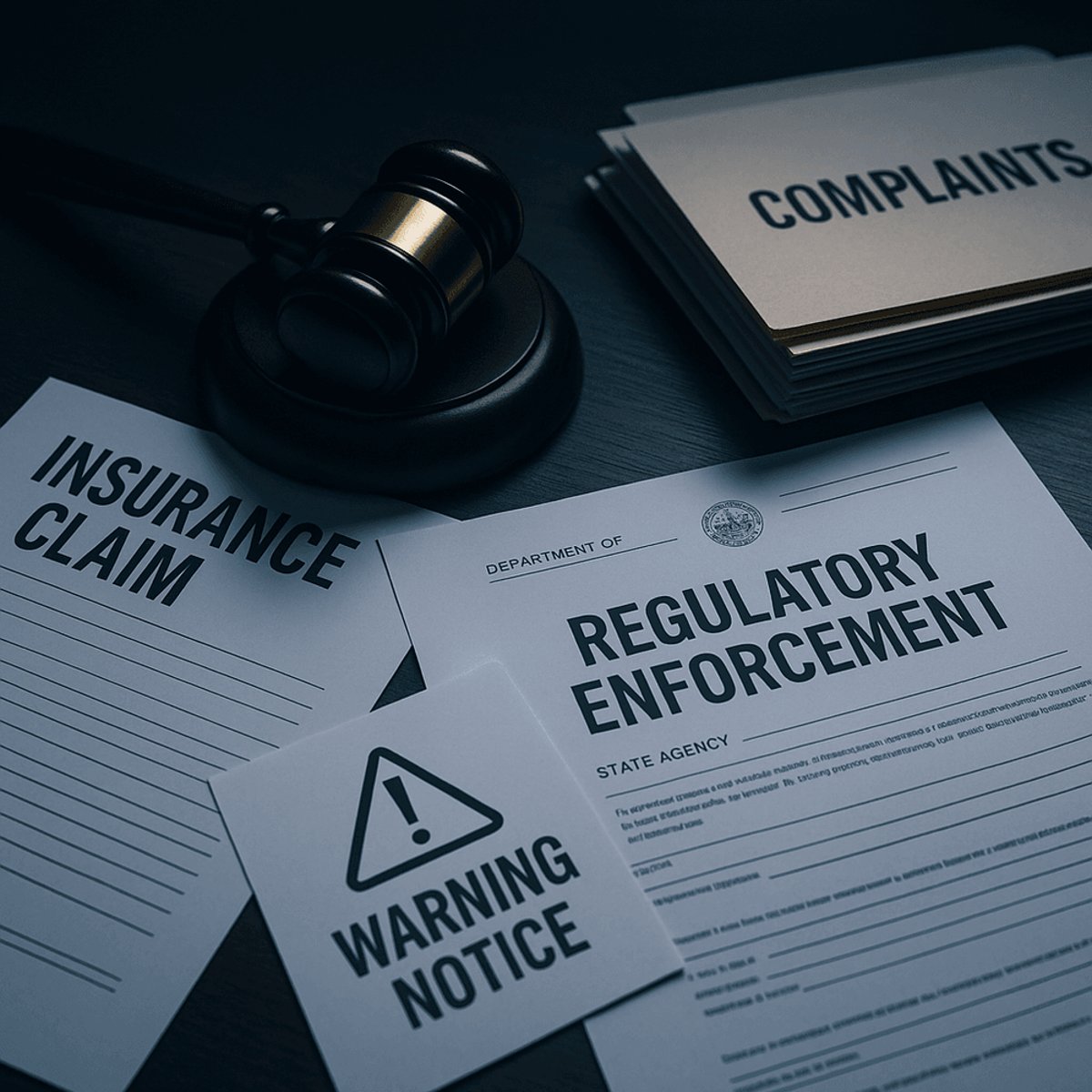
California's Department of Insurance just slapped Tesla with an enforcement action for what it calls "egregious delays" and "systemic failures" in handling customer insurance claims. Despite three years of warnings, consumer complaints against Tesla's insurance arm have exploded from 83 in 2022 to over 1,400 this year - a staggering 1,600% increase that's now triggering regulatory penalties and potential class-action exposure.
Tesla thought it could revolutionize car insurance the same way it disrupted electric vehicles. Instead, California regulators are now calling the company's insurance operation a systematic failure that's harming thousands of customers.
The California Department of Insurance delivered a scathing enforcement action Friday, accusing Tesla and its partner State National Insurance Company of "willful unfair claims settlement practices" that include "egregious delays in responding to policyholder claims" and "unreasonable denials." The official CDI filing doesn't mince words about the financial harm and distress caused to policyholders.
The numbers tell a brutal story of operational breakdown. In 2022, CDI received just 83 consumer complaints against Tesla's insurance arm. By 2024, that number had exploded to 829 complaints, with 775 cases where CDI found actual violations of state insurance law. This year through September, complaints have hit 1,481 with nearly 2,000 violations identified.
"In 2025, the Tesla Companies have already had more complaints, more justified complaints, and committed more violations than in the three previous years combined," the regulator wrote in language that reads like a regulatory death sentence.
The enforcement action puts Tesla on the hook for penalties up to $5,000 per "unlawful, unfair, or deceptive act" and up to $10,000 for each "willful" violation. With nearly 3,000 violations since 2022, the potential financial exposure runs into tens of millions. Tesla and State National have just 15 days to respond.
But the regulatory heat might be the least of Tesla's problems. In July, the company was hit with a proposed class-action lawsuit over allegations that it purposely delayed and minimized claim payouts. CDI's enforcement action now creates "potential third-party liability exposure" that could strengthen that case significantly.
The insurance venture started with such promise back in 2019. Elon Musk pitched it as a "revolutionary" product that would offer cheaper premiums and faster service by cutting out traditional insurers. The idea made sense - Tesla knew its cars better than anyone, had all the telemetry data, and could theoretically streamline everything.
Instead, it became a cautionary tale about operational execution. The website repeatedly crashed at launch, and when it worked, it offered quotes far higher than owners expected. But Musk doubled down on the revolutionary promise.
By December 2022, CDI noticed a "marked uptick in claims-related consumer complaints" and started meeting with Tesla and State National. What regulators found was stunning - Tesla's "Head of Claims" position had been vacant for months. The companies hadn't even been reporting their claims-handling problems to the state.
CDI put the companies on a six-month probationary period. Tesla and State National "conceded" they had underestimated both claim volume and staffing requirements, promising to beef up hiring. It took until April 2023 - nearly two years after problems started - for Tesla to hire a new Head of Claims.
For a brief moment in late 2023, things seemed to improve. Tesla and State National "reported improvements in the quality" of their claims handling. But Reuters published an investigation that same year showing the problems ran deeper than public reports suggested.
CDI's data backs that up. The majority of violations involve Tesla failing to respond to customers within the mandatory 15-day period - a basic operational requirement. The regulator identified 166 cases where Tesla failed to conduct "thorough, fair, and objective" investigations into claims.
"CDI repeatedly notified [Tesla] of its claims-mishandling issues and violations of law," the regulator wrote. "While [Tesla] repeatedly committed to improvements, the number of justified complaints and violations continued to mount, demonstrating [Tesla's] failure to correct its practices."
The enforcement action represents more than regulatory theater. It signals that California - Tesla's largest market - has lost patience with the company's insurance experiment. For Tesla investors, it raises questions about the company's ability to execute beyond core vehicle manufacturing and whether side ventures are becoming costly distractions.
Tesla's insurance debacle shows how operational execution can undermine even the most compelling tech disruption story. What started as Musk's promise to revolutionize insurance has become a regulatory nightmare that could cost tens of millions in penalties while strengthening class-action lawsuits. The 1,600% surge in complaints since 2022 isn't just a customer service problem - it's a fundamental breakdown that raises serious questions about Tesla's ability to manage complex service operations beyond manufacturing cars. For investors, this enforcement action serves as a reminder that Tesla's diversification bets carry real operational and financial risks that can't be solved with software updates.