TL;DR
- - Tesla partly blamed in Florida crash; $329M awarded
- - Autopilot's intended use vs. real-world application
- - Trial highlights legal risks for driver assist tech
- - Potential impact on Tesla's reputation and market value
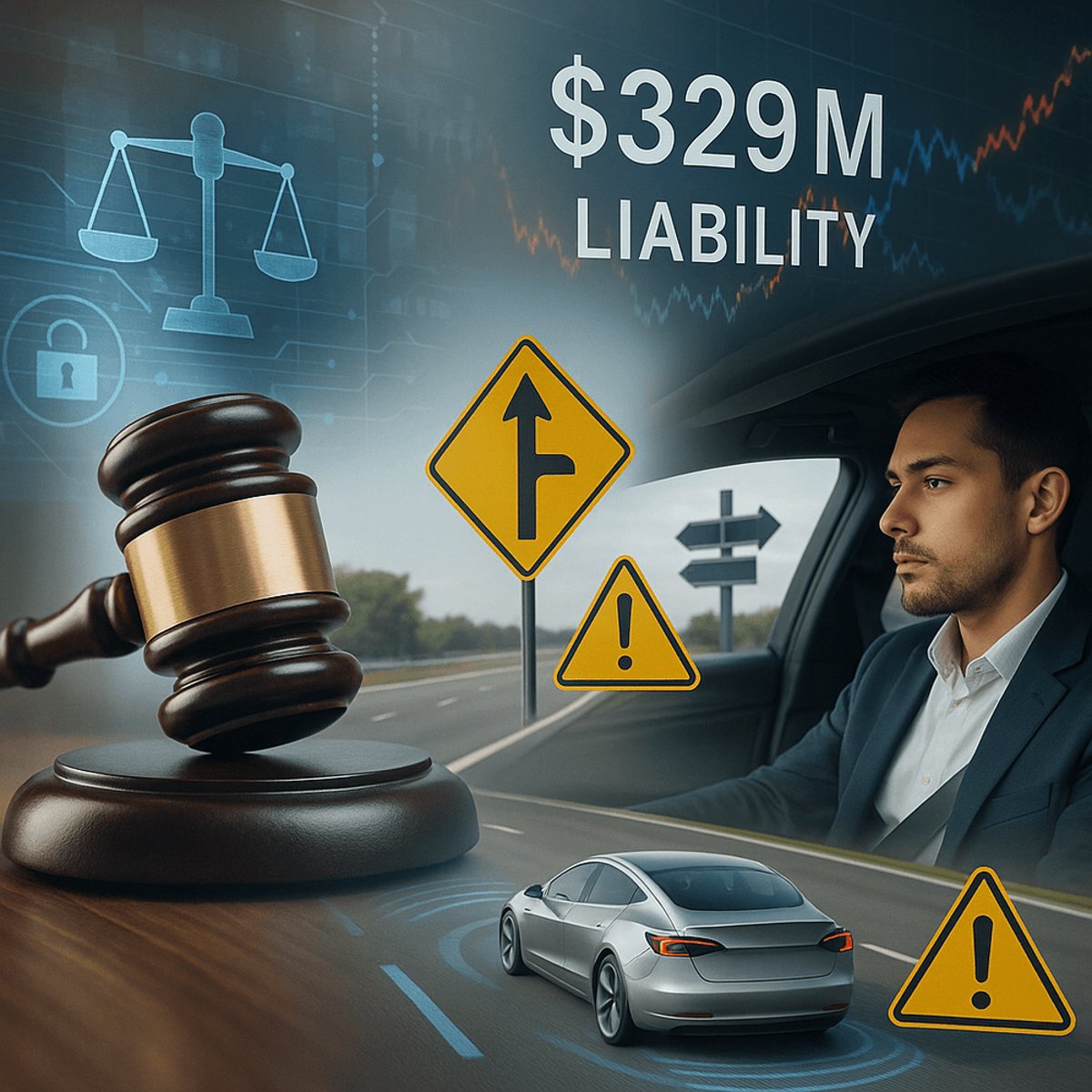
A jury in Miami recently found Tesla partly responsible for a fatal 2019 crash involving its Autopilot driver assistance system, awarding $329 million in damages. This decision marks a pivotal moment in the legal landscape of driver assistance technology and raises concerns about overconfidence in such systems.
Opening Analysis:
In what is regarded as a landmark legal event, Tesla was held partly accountable for a fatal accident in 2019, raising the stakes around the automaker's much-debated Autopilot system. The verdict delivered $329 million in damages, significantly impacting Tesla's liability record and highlighting broader industry challenges relating to driver assistance technologies.
Market Dynamics:
The implications for the automotive industry, particularly those invested in driver assistance systems, are profound. This case sets a precedent by illustrating the legal vulnerabilities that OEMs might face if their systems are perceived as deficient or misleadingly marketed. With Tesla's Autopilot under intense scrutiny, competitors could exploit this as an opportunity to differentiate their systems with heightened safety assurances.
Technical Innovation:
Autopilot, originally designed for controlled highway use, was implicated because it failed in an uncontrolled environment. This judgment underscores the critical need for manufacturers to clearly delineate system capabilities and operational boundaries. Technological safeguards like mandatory location-based usage restrictions could emerge as industry standards to prevent misuse.
Financial Analysis:
Following this verdict, Tesla's market position might experience fluctuations. Although financial analysts are reserved in making immediate forecasts, there is speculation that this ruling could influence Tesla's stock volatility and shake investor confidence in the short-term. As the company plans to appeal, legal expenses and ongoing scrutiny will potentially burden its financials, demanding strategic realignments.
Strategic Outlook:
In the next few months, Tesla may face intensified pressure to adjust its marketing tactics, focusing more on consumer education to mitigate overconfidence issues. Competitively, while this poses short-term risks, it also presents an opportunity for Tesla to reaffirm its commitment to safety and innovation. Meanwhile, other players might leverage enhanced safety narratives to gain competitive advantage.
Key Takeaways:
- Improved consumer education is vital to mitigate misuse of driver assistance technologies.
- Legal scrutiny of driver assist systems could escalate across the industry, prompting technology re-evaluation.
- Future opportunity lies in establishing more transparent operational guidelines to regain public trust in autonomous systems.