SpaceX just pulled back the curtain on what could be the largest IPO in history. The company's freshly public S-1 filing, dropped late Wednesday, reveals an unexpected strategic pivot toward AI infrastructure, deep ties to Elon Musk's xAI, and a governance structure that keeps Musk firmly in control as CEO, CTO, and Chairman. The filing lands weeks before the rocket maker hits public markets in a deal that could reshape both the space industry and AI compute landscape.
SpaceX has finally made its IPO filing public, and the document reveals a company that's evolved far beyond launching rockets. The S-1 filing, released Wednesday evening, shows SpaceX positioning itself at the intersection of space infrastructure and artificial intelligence - a strategic shift that ties directly to Elon Musk's broader tech empire.
The filing confirms what insiders have been whispering about for months: SpaceX has been quietly building AI infrastructure partnerships, with particular emphasis on supporting xAI, Musk's AI startup that's been competing with OpenAI and Anthropic. The synergies are obvious - Starlink's satellite network could provide the distributed computing backbone that next-generation AI models desperately need.
What's expected to be the largest IPO ever - potentially eclipsing Saudi Aramco's $29.4 billion debut - comes at a moment when space technology and AI are converging in unexpected ways. SpaceX's dual bet on both sectors positions it uniquely among public companies, though it also raises questions about focus and execution.
The governance revelations are equally striking. Musk will serve simultaneously as CEO, Chief Technology Officer, and Chairman of the board - a concentration of power that corporate governance experts are already flagging. It's a structure that gives him near-total control even as public shareholders come aboard, reminiscent of the dual-class share arrangements at Meta and Google.
Starship, the company's fully reusable super-heavy lift vehicle, dominates the growth narrative in the filing. SpaceX outlines ambitious timelines for Mars cargo missions and hints at a point-to-point Earth transportation network that would use Starship to move cargo and eventually passengers anywhere on the planet in under an hour. It's classic Musk - audacious promises backed by genuine technical progress, but with timelines that Wall Street will scrutinize heavily.
The Starlink business unit, already generating significant revenue from its satellite internet service, gets positioned as more than just a consumer broadband play. The filing describes Starlink as critical infrastructure for AI training and inference, mobile connectivity, and enterprise applications. With over 5,000 satellites in orbit and counting, it's the revenue engine that could fund Musk's Mars ambitions.
But the xAI connections are what set this filing apart from typical space company IPOs. While details remain sparse - likely deliberately so - the document acknowledges "strategic partnerships" and "shared infrastructure initiatives" between SpaceX and xAI. For investors, it's a signal that buying SpaceX means buying into Musk's entire tech ecosystem, not just rockets.
The AI infrastructure angle makes strategic sense. Training large language models requires massive compute resources, and Starlink's low-latency satellite network could enable distributed training across remote data centers. It's the kind of vertical integration that Musk has mastered at Tesla, applied to an entirely new domain.
Financial details in the filing show a company that's finally profitable, driven primarily by Starlink subscriptions and NASA contracts. Launch services revenue has grown steadily, but it's the recurring revenue from satellite internet that has analysts excited. The company reportedly generated over $8 billion in revenue last year, though exact figures remain redacted in the preliminary filing.
Risk factors take up dozens of pages, as expected for a company trying to colonize Mars while simultaneously building AI infrastructure. Regulatory concerns span multiple agencies - the FAA for launch licenses, the FCC for spectrum allocation, and now potentially AI safety regulators as those frameworks develop. International tensions, particularly with China's growing space capabilities, get highlighted as potential headwinds.
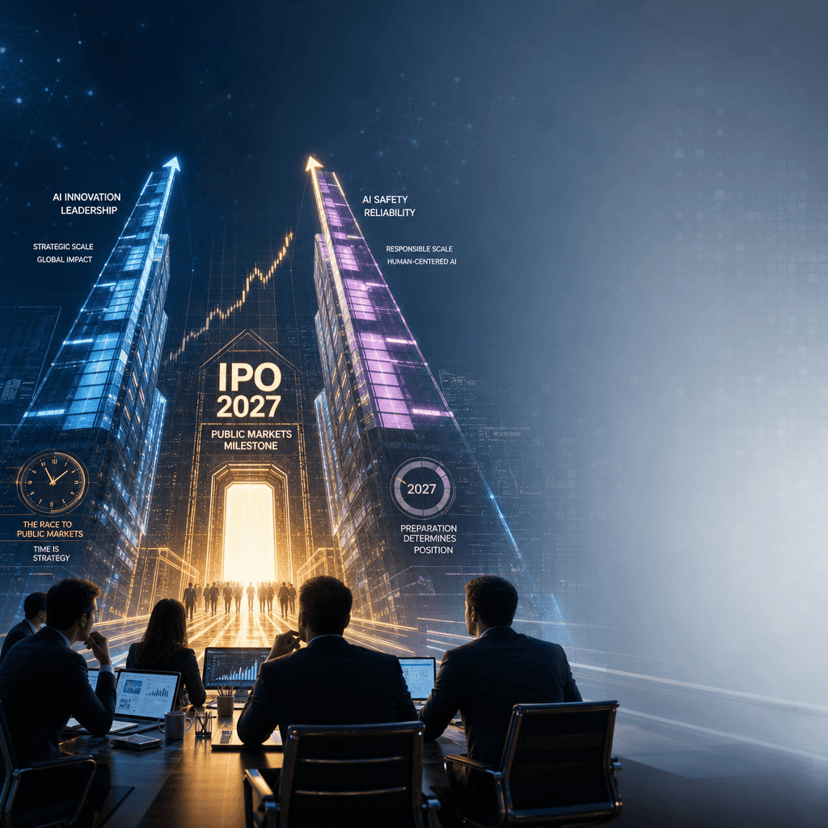
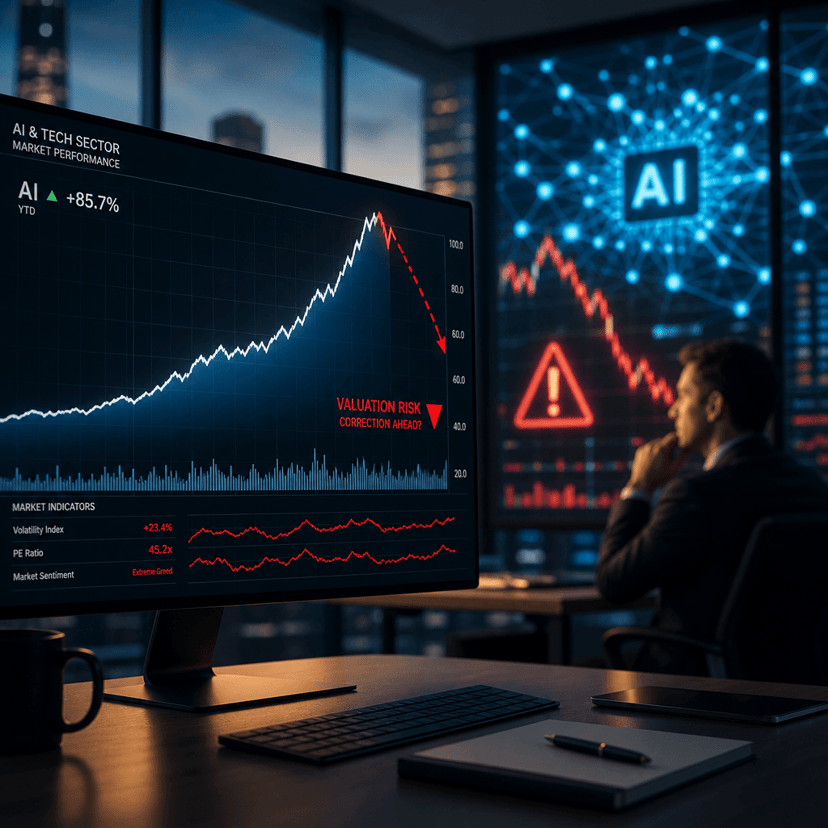
The timing of the IPO is deliberate. SpaceX is going public from a position of strength, with proven reusable rocket technology, a growing satellite constellation, and now AI infrastructure optionality. It's also hitting markets during a moment of peak enthusiasm for both space technology and artificial intelligence, though market conditions can shift quickly.
Competitors are named throughout the filing - Blue Origin, Rocket Lab, OneWeb, and traditional satellite operators. But the AI infrastructure angle puts SpaceX in indirect competition with cloud providers like Amazon Web Services, Microsoft Azure, and Google Cloud - a much larger addressable market.
The filing also addresses the elephant in the room: Musk's attention span. With leadership roles at Tesla, SpaceX, xAI, Neuralink, and The Boring Company, the risk factor section acknowledges that "our CEO's time is divided among multiple ventures." It's corporate speak for a legitimate concern that public market investors will need to price in.
What the filing makes clear is that this isn't your typical aerospace IPO. SpaceX is positioning itself as a foundational infrastructure company for the next era of computing and space exploration, with Musk's other ventures creating a web of strategic interdependencies that could either amplify returns or concentrate risk.
SpaceX's IPO filing reveals a company that's evolved far beyond its rocket-launching roots into something more complex and potentially more valuable - a vertically integrated infrastructure play spanning space, communications, and AI. The xAI connections and Starship ambitions show Musk weaving his various ventures into a unified strategy, though whether that concentration creates value or risk will be the defining question for public market investors. With the largest IPO ever on the horizon and Musk maintaining iron-fisted control, Wall Street is about to get its first real chance to bet on - or against - the Mars vision. The filing's emphasis on AI infrastructure suggests SpaceX sees its future as much in the cloud as in the cosmos.