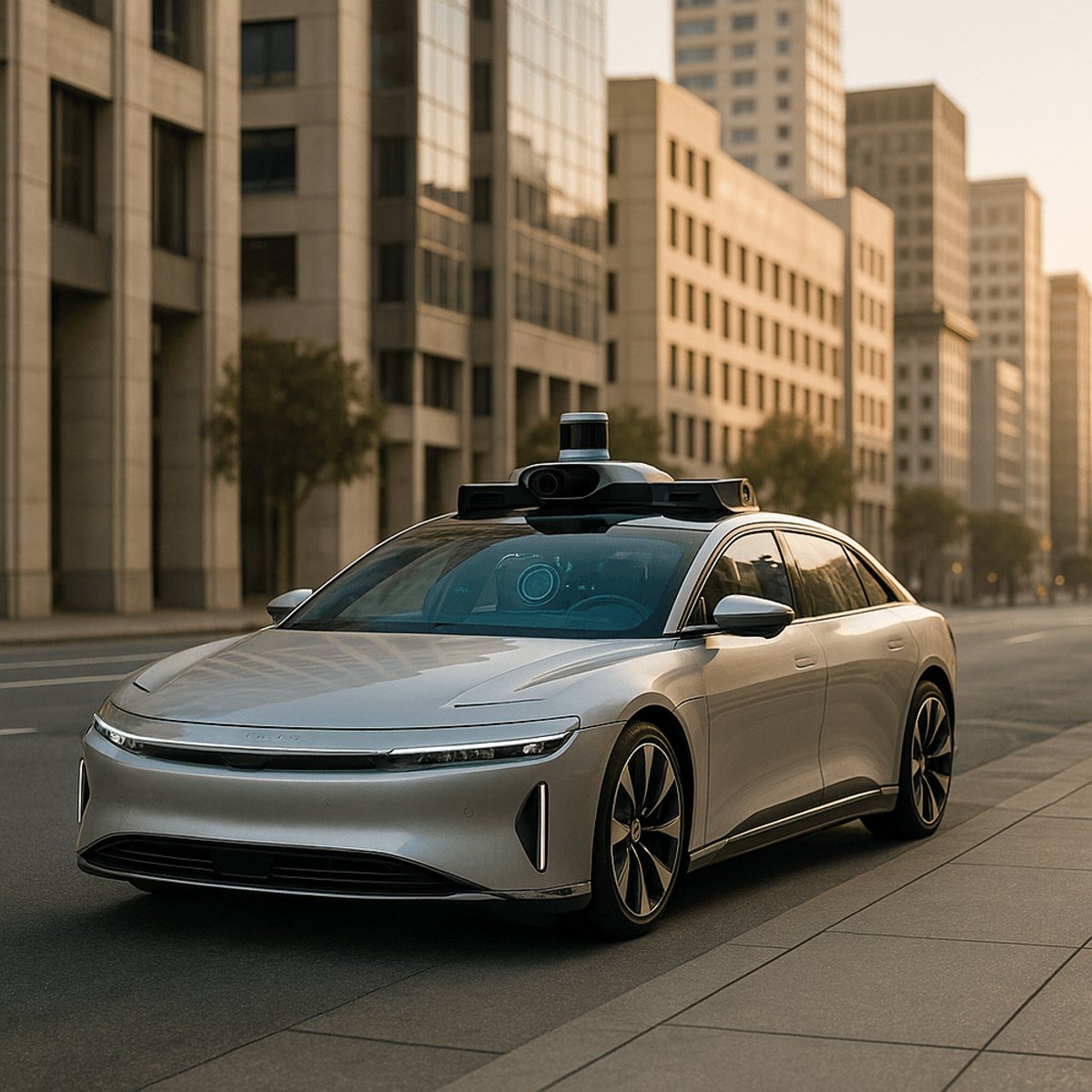
Uber just launched an exclusive robotaxi pilot that signals where the ride-hailing giant is placing its autonomous bets. Starting today, Uber employees in San Francisco can hail self-driving Lucid vehicles powered by Nuro's autonomous technology, marking the company's first premium robotaxi partnership. The move puts Uber in direct competition with Waymo and Cruise while testing whether riders will pay extra for luxury autonomous rides.
Uber is making its premium robotaxi play official. The company confirmed it's testing self-driving Lucid sedans in San Francisco, powered by Nuro's autonomous technology and available exclusively to Uber employees for now. The partnership represents a significant shift in Uber's autonomous strategy - betting on luxury hardware paired with third-party software rather than developing its own self-driving tech.
The timing couldn't be more deliberate. Waymo currently dominates San Francisco's robotaxi landscape with over 100,000 paid rides per week, but its Jaguar I-PACE fleet occupies the premium-but-not-luxury tier. By deploying Lucid's high-end electric sedans, Uber is testing whether there's a market willing to pay even more for autonomous rides wrapped in genuine luxury packaging.
Nuro, best known for its compact autonomous delivery vehicles, has been quietly expanding into passenger transportation. The company's partnership with Uber marks its first major ride-hailing integration and validates the scalability of its autonomous driving stack beyond last-mile delivery. Nuro's technology leverages Nvidia's Drive platform for real-time processing, the same foundation powering most major AV deployments today.
The employee-only pilot follows Uber's established playbook. Before opening any autonomous service to the public, the company runs extensive internal testing to work out routing issues, pickup logistics, and app integration. Uber employees who opt into the program can request a Lucid robotaxi through the standard Uber app, with the autonomous option appearing alongside regular UberX and Uber Black.
What makes this deployment particularly interesting is the hardware choice. Lucid builds some of the most expensive production electric vehicles on the market, with its Air sedan starting around $70,000. That's a dramatic departure from the cost-optimized approach most robotaxi operators take. Cruise uses the Chevy Bolt. Waymo stuck with Jaguars before announcing plans to switch to more affordable platforms. Uber and Nuro are betting that premium interiors and cutting-edge EV technology justify premium pricing.
The San Francisco testing ground is no accident. California's Department of Motor Vehicles has issued autonomous vehicle permits to more than 30 companies, but only a handful operate passenger services in the city. The regulatory environment is mature, the streets are mapped extensively, and early adopters are everywhere. It's the perfect laboratory for proving out technology before expansion.
But this isn't just about San Francisco. Uber CEO Dara Khosrowshahi has repeatedly stated the company views autonomous vehicles as complementary to human drivers, not replacements. By offering tiered autonomous options - from budget to premium - Uber can capture different market segments while maintaining its driver network for areas where AVs aren't yet viable. The Lucid pilot tests the high end of that strategy.
The partnership also reveals how the autonomous vehicle industry is consolidating around platform plays. Instead of every company building complete vertical stacks, we're seeing specialization. Nuro focuses on autonomy software. Lucid builds premium hardware. Uber provides the marketplace and customer base. Nvidia supplies the compute foundation. It's an ecosystem approach that mirrors how the broader tech industry evolved.
Financial pressures are accelerating these partnerships. Nuro raised over $2 billion in funding but has faced challenges monetizing its delivery-focused vehicles. Expanding into passenger robotaxis through an established platform like Uber provides immediate market access without the cost of building consumer-facing operations. For Uber, partnering avoids the billions Waymo and Cruise have burned developing proprietary technology.
The testing phase timeline remains unclear, but Uber's past autonomous pilots typically run three to six months before expanding beyond employees. If the Lucid program follows that pattern, public availability could arrive by late 2026, just as competitors ramp up their own San Francisco operations. Waymo recently announced plans to triple its fleet size in the city, while Cruise is working to resume operations after last year's regulatory suspension.
What happens next depends largely on rider response. Will customers pay a significant premium for a Lucid interior over a standard autonomous sedan? Does the luxury experience overcome any lingering anxiety about driverless vehicles? And can Nuro's technology handle San Francisco's chaotic streets as reliably as Waymo's more mature system? The answers will determine whether this partnership expands or remains a niche experiment.
The Uber-Nuro partnership represents a clear bet on market segmentation in the emerging robotaxi industry. While competitors race to prove autonomous vehicles can be cheap enough to undercut human drivers, Uber is testing whether a segment of riders will pay more for premium autonomous experiences. If successful, it validates a tiered approach to self-driving deployment - budget AVs for price-sensitive trips, luxury options for those willing to pay extra. For Nuro, it's a crucial pivot from delivery robots to passenger transportation. For Lucid, it's a new revenue stream for its premium EVs. And for San Francisco riders, it might soon mean choosing between a Waymo Jaguar or an Uber Lucid when they want to go driverless. The real test begins when this moves beyond Uber employees and everyday riders decide if autonomy plus luxury equals a fare they're willing to pay.