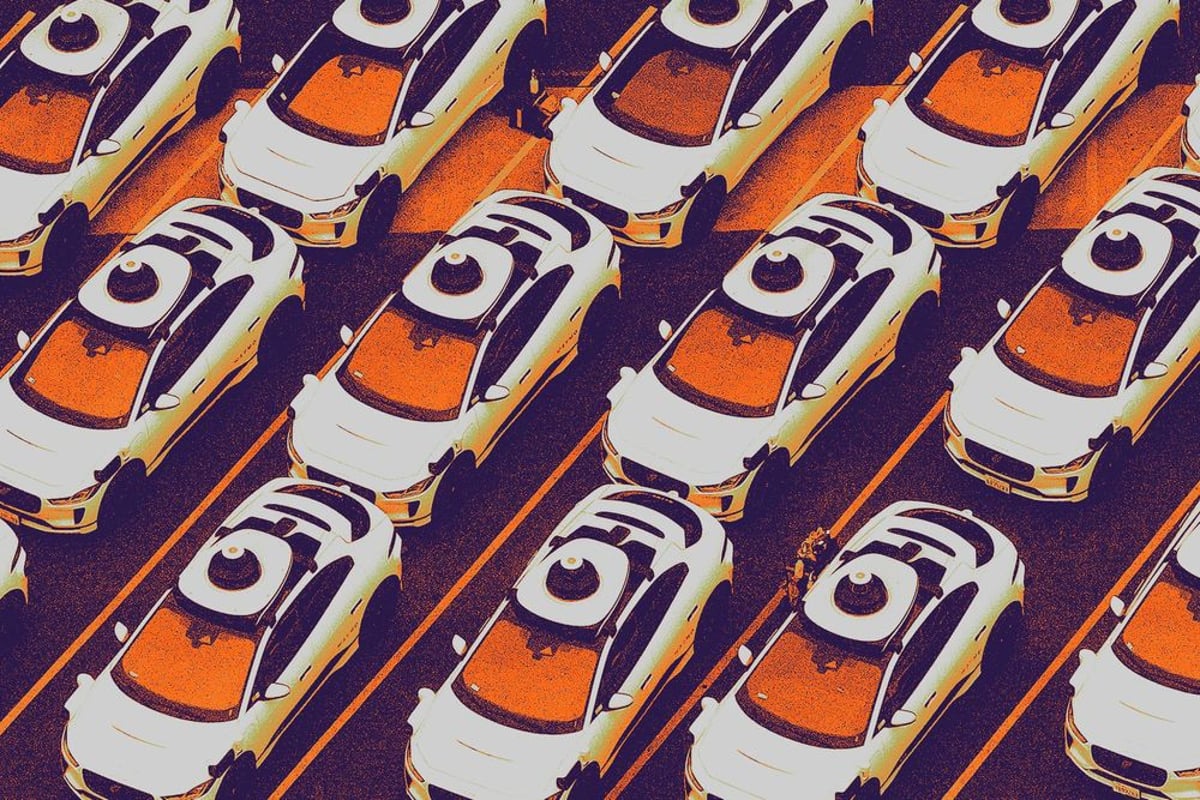
Waymo robotaxis are developing peculiar parking habits in Los Angeles, repeatedly returning to the same residential spots like homing pigeons. The behavior has left residents puzzled and reveals a troubling opacity in how Google's autonomous vehicles make decisions about public space usage.
The mystery began with 10-year-old Morgan's excited announcement: "The Waymo is home!" For months, Google's autonomous vehicles have been parking in the exact same spot outside her West Los Angeles home, day after day, sometimes lingering for hours between rides. What started as a family curiosity has revealed a broader pattern that's unfolding across LA's residential neighborhoods.
Lisa Delgin and Zach Tucker, Morgan's parents, initially found the behavior endearing. But as the pattern persisted, they began documenting license plates and realized multiple different Waymo vehicles were selecting their curb with laser precision. The robotaxis won't settle for nearby spots – if their preferred locations are occupied, they slow down but move on entirely rather than park across the street or a few spaces away.
"It would always come back here, like a beacon," Delgin told The Verge. "Like it knew there was a spot here that it could take." The specific targeting has residents across LA neighborhoods posting on Nextdoor and Reddit, asking why their blocks have become unofficial Waymo staging areas.
The phenomenon extends beyond LA. In Phoenix, where Waymo has operated since 2020, residents have documented similar patterns. One Scottsdale family reports a robotaxi consistently parking around their corner near a shopping center. Reddit threads are filled with befuddled homeowners asking "How do you stop Waymo from storing cars in front of your house between trips?"
Google's explanation reveals the black box nature of modern AI decision-making. Vishay Nihalani, Waymo's director of product management, acknowledges that vehicles "find appropriate parking spots to wait for short periods between trips" but admits the company can't explain why specific locations are chosen repeatedly. "Our vehicles will find appropriate parking spots to wait for short periods between trips, either in Waymo's parking facilities or on-street parking locations," Nihalani said in a statement to The Verge.
The parking behavior differs dramatically from human rideshare drivers. Uber driver Josh Myra typically heads home between rush periods or practices "deadheading" – driving around high-traffic areas to catch rides. Waymo vehicles, by contrast, optimize for energy conservation and traffic reduction by parking strategically when demand is low. The AI considers local parking regulations, the number of nearby Waymos, and historical demand patterns.
But the specificity suggests something more complex. Carnegie Mellon autonomous vehicle expert Phil Koopman believes Waymo is using machine learning for parking decisions, creating optimized solutions that lack human flexibility. "A computer just doing exactly the same thing the same way every time should not be a surprise to anyone," Koopman explained. "That's how computers are."
The implications extend beyond parking etiquette. "Machine learning looks at statistical information and comes up with an answer, and nobody has any idea how it got there," Koopman noted. If Google can't explain parking choices, what other autonomous vehicle behaviors operate beyond human understanding? The opacity becomes concerning when applied to safety-critical driving decisions.
Residents report mixed reactions to their robotic neighbors. Some find the constant surveillance cameras unsettling, while others are simply annoyed by reduced parking availability. Delgin once made a U-turn to reclaim her spot when she spotted an approaching Waymo. The Los Angeles Department of Transportation confirmed that commercial passenger vehicles under 22 feet must follow the same three-hour parking limits as personal vehicles, though enforcement appears minimal.
Waymo can manually blacklist specific locations when residents complain, and the company claims it has "made adjustments accordingly" based on neighborhood feedback. But the reactive approach doesn't address the underlying algorithmic behavior that creates these parking patterns in the first place.
The mystery deepens when considering Waymo's stated criteria for parking selection. The AI weighs local regulations, existing vehicle density, and demand patterns – but none of these factors explain why certain addresses become robotaxi magnets while nearby spots remain ignored. UC Irvine researcher Michael Hyland, currently studying Waymo's parking behavior, notes that street parking generally reduces wait times and congestion, even as it consumes more curb space.
As Waymo expands its 500-vehicle LA fleet, the loitering phenomenon may naturally decrease. Higher demand means fewer idle periods and less neighborhood parking. But the episode highlights a fundamental challenge in AI transparency: when machines make decisions based on pattern recognition rather than explicit programming, even their creators can't always explain the results.
"Companies like to use, 'Well, the computer just did what it did, we don't know,' as an excuse for shirking accountability for decisions that might be somewhat harmful," Koopman warned. While parking disputes remain relatively low-stakes, the same opacity could apply to more consequential autonomous vehicle behaviors.
For now, the Delgin family's Waymo visits have decreased as demand surges. Morgan still rushes to the window when she spots the distinctive white vehicles, though the regular homecomings have become less frequent. Whether Google's AI will develop new mysterious habits as the service expands remains an open question – one that neither the company nor residents may be able to predict or explain.
Waymo's parking patterns reveal the double-edged nature of AI optimization – systems can find solutions humans never considered, but those solutions may be impossible to explain or predict. As autonomous vehicles become more prevalent, the industry needs better frameworks for algorithmic transparency, especially when AI decisions affect public spaces and community life. The mystery of why robotaxis choose certain curbs may seem trivial, but it foreshadows larger questions about accountability when machines make choices that even their creators can't decode.