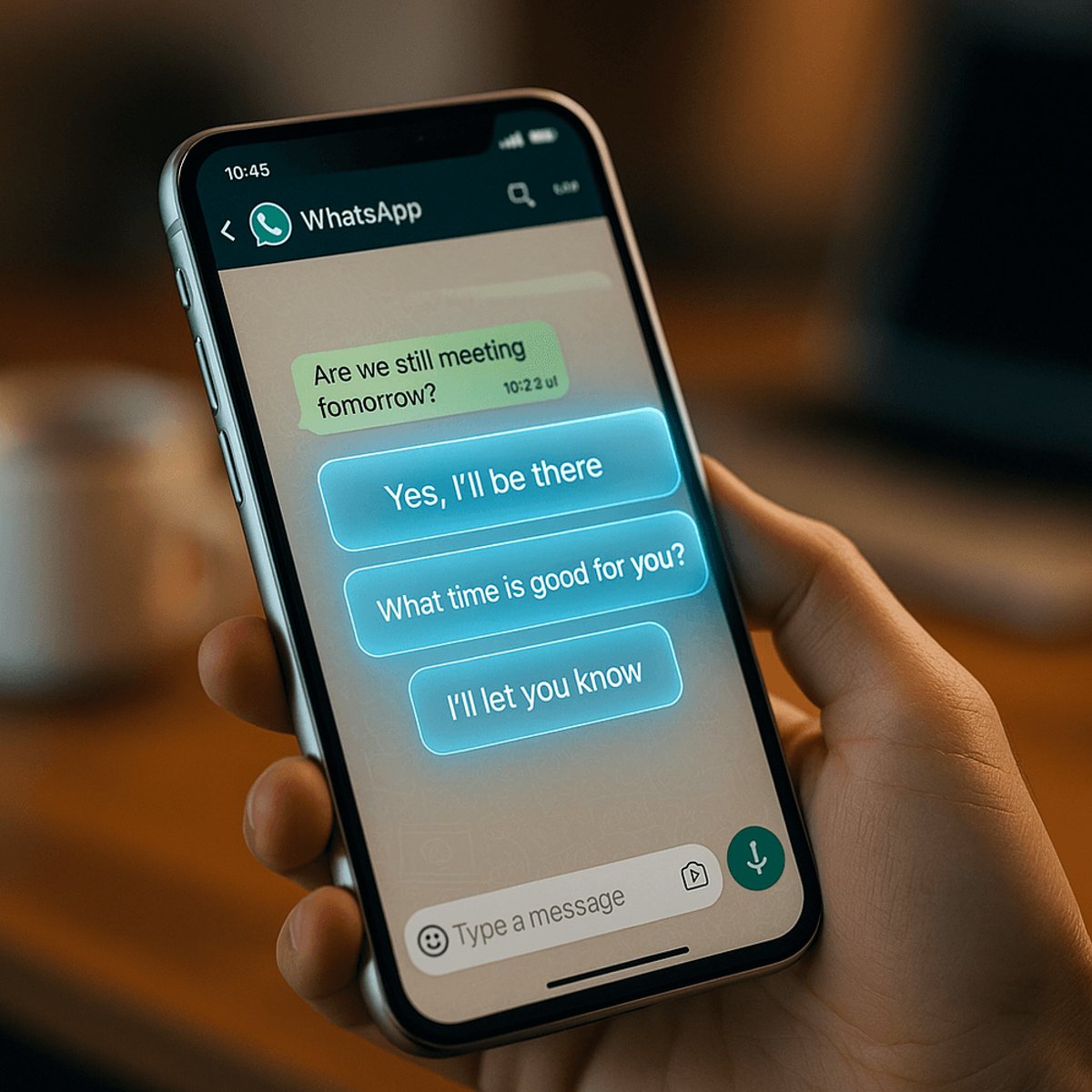
WhatsApp is bringing AI deeper into your daily conversations. The Meta-owned messaging app just launched AI-generated response drafting that analyzes your chat history to suggest contextually relevant replies, marking the platform's most aggressive push yet to embed its AI assistant directly into private messaging. The update arrives alongside new photo editing capabilities and storage management tools, all powered by Meta AI.
WhatsApp just crossed a new threshold in AI-assisted communication. The platform's latest update introduces AI-generated response suggestions that read your conversation history and draft contextually appropriate replies, bringing Meta's AI ambitions directly into the most intimate digital space - your private messages.
The feature represents a significant escalation in how AI permeates everyday communication. Unlike simple autocomplete or canned responses, this system analyzes the flow and content of your conversations to generate replies that supposedly match your communication style and the specific context of each chat. It's Meta betting that users will trade convenience for allowing AI to parse their private discussions.
According to the TechCrunch report, the AI response drafting arrives as part of a broader Meta AI integration push across WhatsApp. The update bundles several features designed to make the AI assistant indispensable - from suggesting what to say, to cleaning up your photos before you send them.
The photo editing capability lets users touch up images directly within WhatsApp using Meta AI, eliminating the need to jump to external editing apps before sharing. It's a play straight from Google Photos' playbook, where AI-powered enhancement tools have become table stakes for photo apps. Meta is essentially turning WhatsApp into a more capable content creation platform, not just a messaging pipe.
The company is also tackling one of WhatsApp's most persistent user complaints - storage bloat. A new space management feature leverages AI to identify and suggest deletion of large files, redundant media, and conversation threads eating up device memory. For users with years of chat history and thousands of shared photos, this could provide meaningful relief without manual hunting through conversations.
But the response drafting feature raises immediate privacy questions that Meta will need to address head-on. WhatsApp built its reputation on end-to-end encryption and privacy-first messaging. Now it's asking users to let AI read their conversations to generate helpful suggestions. The company hasn't detailed whether this processing happens on-device or requires sending conversation data to Meta's servers, and that distinction matters enormously.
If the AI analysis happens locally on your phone, privacy concerns diminish significantly. But if conversation context needs to reach Meta's cloud infrastructure to power these suggestions, that's a fundamental shift in WhatsApp's privacy model - even if the data remains technically encrypted in transit. Users deserve clarity on exactly how their messages are being processed to fuel these AI features.
The timing aligns with Meta's broader strategy to position its AI assistant as a cross-platform utility that follows users everywhere across its family of apps. We've already seen Meta AI integration in Instagram, Facebook, and Messenger. WhatsApp represents the final frontier - and potentially the most valuable one given its 2+ billion user base and position as the primary communication tool in many global markets.
For Meta, embedding AI deeply into WhatsApp serves multiple strategic goals. It creates habitual AI usage among billions of users, generates massive amounts of conversation data to improve language models (privacy policies permitting), and differentiates WhatsApp from competitors like Telegram and Signal that haven't yet integrated AI assistants.
The challenge is execution. If the AI suggestions feel generic, off-tone, or contextually wrong, users will ignore them and the features become bloatware. But if Meta can nail the contextual understanding and make these drafts genuinely useful, it could change how people interact with messaging apps entirely. The difference between helpful assistant and creepy interloper is razor-thin.
What remains unclear is whether these features are opt-in or enabled by default, and how granular the controls are. Can users disable AI response suggestions while keeping photo editing? Is there transparency into which conversations the AI is analyzing? These details will determine whether this update enhances WhatsApp or triggers user backlash over privacy erosion.
WhatsApp's AI response drafting marks a pivotal moment for messaging privacy and AI integration. If Meta can demonstrate that these features genuinely help users while maintaining the encryption and privacy standards WhatsApp users expect, it could redefine what messaging apps do. But if the implementation feels invasive or the privacy tradeoffs aren't worth the convenience, it risks eroding the trust that made WhatsApp the world's dominant messaging platform. The coming weeks will reveal whether users embrace AI-assisted conversation or push back against algorithms reading their private chats - even when those algorithms claim to be helping.