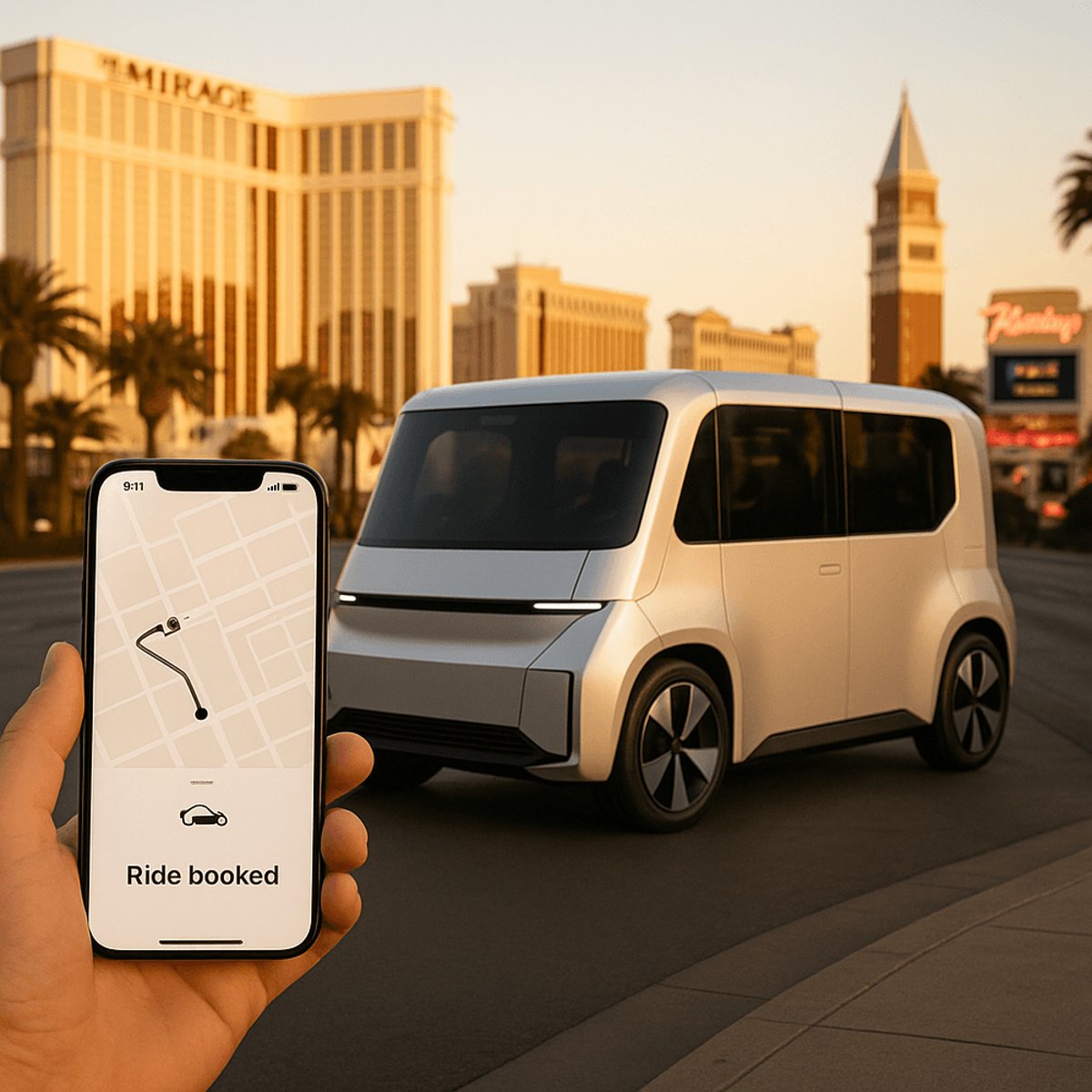
Amazon's Zoox just opened the doors to the autonomous vehicle future, launching its first public robotaxi service in Las Vegas. The cube-shaped, steering wheel-free vehicles are now available to anyone with a smartphone - but there's a catch. The rides are completely free while Zoox waits for regulatory approval to start charging passengers.
Zoox just made autonomous vehicle history. The Amazon-owned company opened its robotaxi service to the public in Las Vegas Wednesday, marking the first time anyone can summon a fully autonomous, custom-built vehicle without a steering wheel or pedals using just their smartphone.
But don't expect to pay for the privilege - yet. These rides come free while Zoox navigates the final regulatory hurdles to launch commercial operations. The company needs approval from federal regulators before it can start charging fares, a process that could take months.
The launch represents a massive milestone for the autonomous vehicle industry. Unlike Waymo or Cruise, which retrofit traditional vehicles, Zoox built its robotaxis from scratch. The cube-like vehicles seat four passengers facing each other, with no traditional front or back - they can drive in either direction.
"This is what we've been working toward for six years," a Zoox spokesperson told TechCrunch. The Foster City, California company began testing on Las Vegas streets in 2023, gradually expanding from a one-mile loop around its facilities to covering the entire Strip.
The service operates within strict boundaries. Passengers can only request rides between five designated locations: Resorts World Las Vegas, AREA15, Topgolf, New York New York, and Luxor. Zoox plans to add more destinations in coming months as it builds confidence in the system's reliability.
Amazon acquired Zoox for over $1 billion in 2020, betting big on autonomous delivery and passenger services. The investment is finally paying dividends as Zoox becomes the first company to offer purpose-built robotaxis to the general public.
The regulatory landscape remains complex. Last month, the National Highway Traffic Safety Administration granted Zoox an exemption to demonstrate its vehicles on public roads. The decision resolved years of debate about whether vehicles without steering wheels could meet federal safety standards.
However, the exemption only covers demonstrations, not commercial operations. Zoox must secure additional approvals before charging passengers, though the company hasn't specified which regulations it still needs to satisfy.
The timing puts Zoox ahead of traditional automakers scrambling to deploy autonomous fleets. General Motors recently paused Cruise operations following safety incidents, while Ford shut down its autonomous vehicle division entirely.
Zoox is already eyeing expansion. The company opened a San Francisco waitlist Wednesday, signaling its next target market. San Francisco presents bigger challenges than Vegas - denser traffic, more pedestrians, and famously steep hills that have challenged autonomous vehicles for years.
Early riders report smooth experiences in the climate-controlled vehicles, which reach speeds up to 75 mph. The absence of a steering wheel creates an almost surreal passenger experience - you're truly along for the ride with no human backup.
The free service period gives Zoox valuable real-world data while building public trust. Every ride generates terabytes of sensor data that helps refine the AI systems powering these vehicles. It's a smart strategy that lets Zoox perfect operations before revenue pressures kick in.
Zoox's public launch marks a pivotal moment for autonomous vehicles - the technology is finally mature enough for everyday consumers to experience. While free rides won't last forever, this phase lets the company build the operational expertise and public confidence needed for a successful commercial launch. As other AV companies struggle with safety issues and regulatory challenges, Zoox's methodical approach could define how the industry moves from prototype to profit.