Newsletter
Beyond Tech

The Tech Buzz
January 03, 2026
Consumer Tech: CES 2026 AI wave (LG Micro RGB; on-device AI PCs); new US state tech laws; “no iPhone 18” report
Travel: Expedia x Alexa+ Transform Conversational Travel Booking
Food + Drink: CA folic acid in corn masa; MAHA reformulation pressure; functional coffee; 2026 wellness beverages
Arts + Culture: AI “slop” visibility hit; Beyoncé a billionaire; Avatar leads box office; DATALAND LA opens 2026
Sports: AI/health-tech partnerships; YouTube golf goes pro; Netflix NFL streaming record; Mark Cuban on AI + NBA
Futurism: quantum-for-chemistry 2026; water-from-air crystals; NASA Moon base; PsiQuantum 2027; Neuralink robotic-arm trials
Health/Biotech: ALA‑CART; Stanford BRP appetite peptide; 3D hydrogel ED; Medicare AI prior auth; next-gen weight-loss drugs; lung-on-chip

CES 2026 Preview — CES 2026 (Las Vegas, Jan 6–9) features AI-heavy reveals across TVs, laptops, smart homes and mobility, with Samsung and LG focusing on "smarter, more human" AI and tighter privacy controls.
TV Innovation at CES — LG is preparing new Micro RGB flagship TVs using advanced AI processors (Alpha 11 Gen 3) to improve brightness, dimming and picture personalization, with high-end features expected in mid-range models within a year.
Laptop AI Chips — Laptop refresh cycles will be driven by new on-device AI chips, including Intel's Core Ultra processors to be unveiled at CES, with AMD, Qualcomm expected to unveil thinner designs, longer battery life and local AI assistants.
US State Tech Laws — A new patchwork of US state tech laws took effect Jan 1, 2026, covering AI transparency, right-to-repair and crypto ATMs in California, Colorado and Washington.
No iPhone 18 in 2026 — Apple will not release the iPhone 18 in 2026 according to a new Forbes report, meaning a long wait for those anticipating the device.
[Open Deal] The WYDE $EAT Token Open Deal
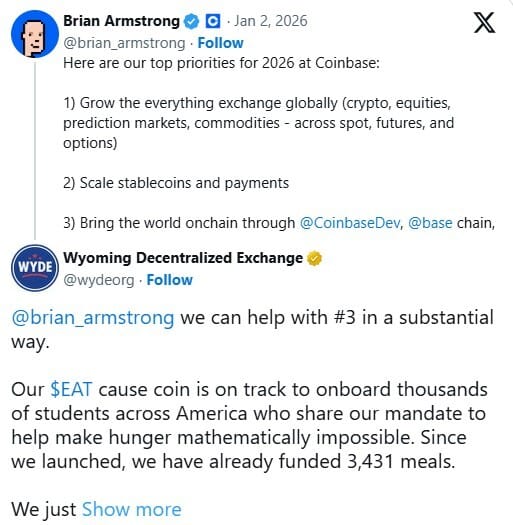
We have been shouting from the rooftops these past few weeks about Wyoming Decentralized Exchange (WYDE), marking it as one of the key innovators we see in the crypto and blockchain sector as well as in the wider charity and impact space.
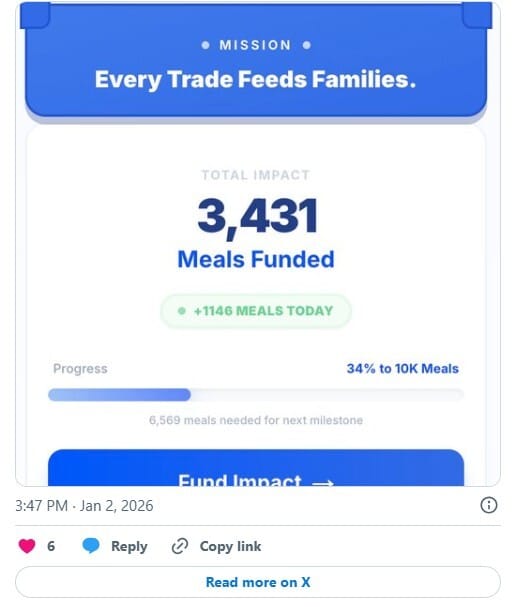
Since we first covered WYDE pre-launch in December, its first Impact Token, $EAT (End Hunger) has gone on to hit over $10 Million market cap, while already funding over 3400 meals for registered charities helping to combat food insecurity in the US. Here they are pitching Coinbase’s Brian Armstrong the concept, jump into the thread and help them to get his attention.
TechBuzz Feature
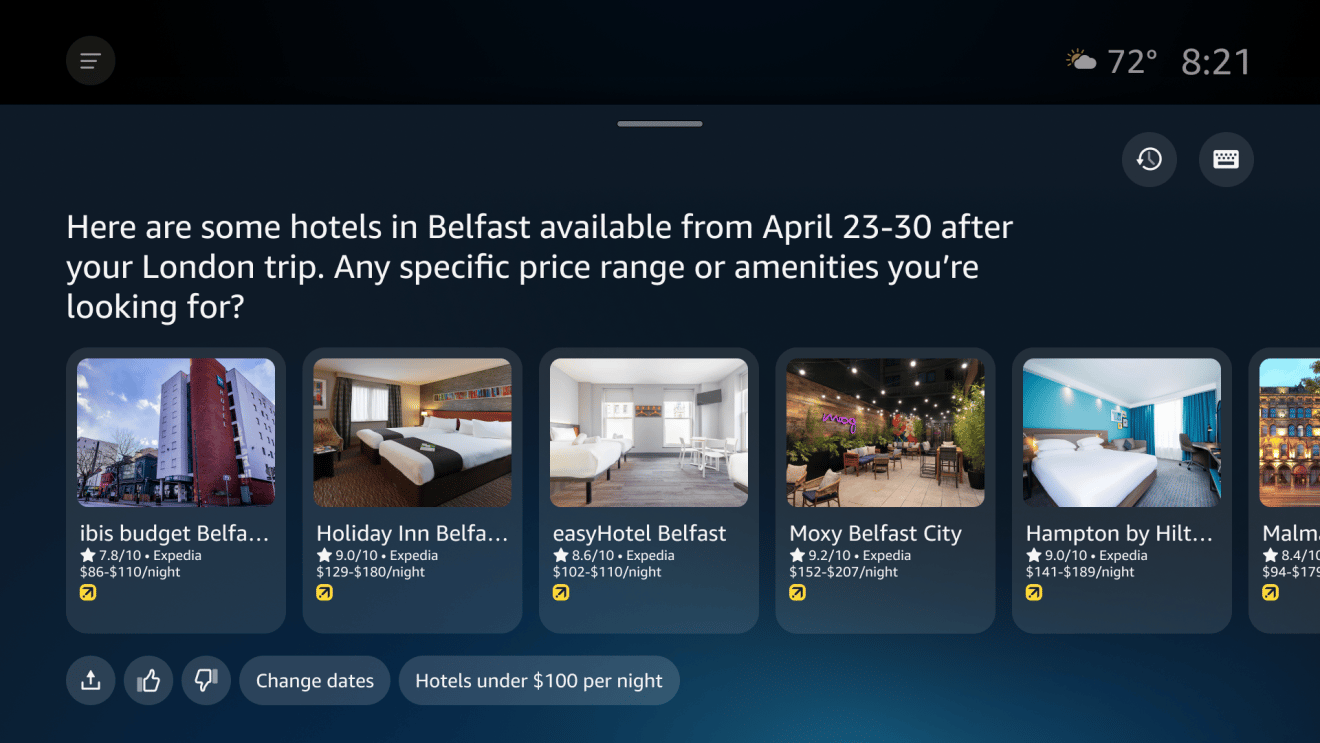
When Amazon confirmed this week that Expedia will integrate with Alexa+ in 2026, it marked a clear shift in how travel decisions are expected to happen. Instead of typing filters into a website or app, travelers will talk through their plans. Alexa+ will be able to suggest, compare, book, and manage hotels and vacation rentals using Expedia’s global inventory.
This matters because it changes where decisions are made. The interface moves from screens to conversations. For the first time at scale, a voice assistant will handle discovery, price comparison, and booking inside one flow. That is a different habit, especially for younger travelers who already talk to devices as naturally as they text.
Expedia has been steadily positioning itself as an infrastructure layer for AI powered travel. The Alexa+ deal fits into a pattern rather than standing alone. In late 2025, the company named its first chief AI and data officer, signaling that AI is now a core business function. Around the same time, Google named Expedia as a partner for upcoming agentic travel booking tools. OpenAI also included Expedia when it opened app integrations inside ChatGPT, and Expedia partnered with Perplexity on the launch of its AI browser, Comet.
Put simply, Expedia wants to be everywhere an AI might need travel inventory. Voice assistants, chat interfaces, browsers, and agent systems all need access to the same underlying supply. Expedia already manages that supply at global scale. This deal strengthens its role as a default backend for AI driven travel.
For Amazon, Alexa+ is about relevance. Voice assistants stalled when they stayed limited to timers, music, and weather. The next phase depends on handling real tasks that involve money and trust. Travel is one of the highest value categories for that goal. Trips are expensive, emotional, and complex. If Alexa+ can manage them well, users have a reason to keep coming back.
Amazon is also assembling a broad service network. Alongside Expedia, Tripadvisor, Uber, Yelp, Angi, and Square are all building for Alexa+. This turns Alexa+ into a routing layer for everyday life. Travel fits naturally into that model, from booking stays to coordinating rides and activities.
For users, the biggest change is effort. Instead of opening multiple tabs, travelers can say something like “Find a place in New York for four nights under $250 a night near Times Square.” Alexa+ can narrow options, explain tradeoffs, and book the stay. Expedia’s data allows personalization by price, room type, and location without extra steps.
This also shifts trust. Travelers are no longer comparing endless lists themselves. They are relying on the assistant to surface the best options. That puts more weight on how AI systems rank, explain, and justify choices. Clear language matters because users need to understand why one hotel is recommended over another.
The Expedia Alexa+ integration points to several clear trends for 2026.
First, interfaces are disappearing. Travel planning is moving away from heavy apps and toward background tools that listen and respond.
Second, inventory owners gain leverage. Companies that control supply at scale, like Expedia, become more valuable as AI platforms multiply. Every assistant needs reliable access to rooms, rates, and availability.
Third, brand visibility shifts upstream. Hotels and vacation rentals will care less about app placement and more about how AI systems describe them in conversation. Descriptions, photos, & structured data will matter more than flashy marketing pages.
Fourth, speed becomes a feature. Voice based booking removes friction. Travelers who are tired of scrolling will choose the fastest path to a confirmed stay.
This deal also raises pressure across the travel industry. Other online travel agencies will need similar integrations or risk losing visibility. Hotel groups may push harder to control how AI assistants present their properties. Metasearch platforms will rethink their role if discovery moves inside assistants rather than browsers.
For Amazon and Expedia, the timing matters. 2026 is shaping up to be the year when AI assistants stop feeling experimental and start handling real purchases. Travel is one of the last big categories to make that leap.
The Expedia Alexa+ integration points to a deeper change. Travel planning is becoming conversational, automated, and embedded in daily life. By 2026, asking a device to book a hotel could feel as normal as asking it to play a song. This deal shows that the industry is preparing for that future now, quietly rewiring how trips begin.

AI Slop Report — Low-quality AI-generated videos are impacting content visibility, with Spain leading in AI slop subscribers and South Korea in views, raising concerns about ethical implications and meaningful content being drowned out.
Beyoncé Billionaire — Beyoncé officially reached billionaire status driven by her "Cowboy Carter" era, with the tour grossing over $400 million as the highest-grossing country tour and earning her $148 million in 2025.
Avatar Box Office — "Avatar: Fire and Ash" leads the box office with $88 million over the holiday weekend, while "Marty Supreme" opens strong with $27.1 million, signaling a potential film industry rebound in 2026.
DATALAND LA — DATALAND, the large-scale AI art museum complex in downtown Los Angeles, is opening in 2026 as a headline tech-culture venue in a Gehry-designed district, positioning LA as a US hub for AI-enhanced exhibitions.


MAHA Beyond Politics — Make America Healthy Again (MAHA) has become a federal initiative pressuring food manufacturers to reformulate products perceived as ultra-processed.
California Folic Acid Law — California now mandates folic acid fortification in corn masa flour, expanding beyond the FDA's 1998 requirement for enriched wheat, rice, and corn flour to prevent neural tube defects.
Bulletproof Functional Coffee — CEO Harry Lewis plans to transform coffee from a pick-me-up into a wellness drink with added ingredients like protein, mushrooms, prebiotics, and fiber.
Health in Beverage Innovation — Finlays' Global Beverage Trend Report identifies health and wellness as the top trend for 2026, with consumers seeking functional beverages that support moderation, active health, and holistic well-being.

Scottie Scheffler
Sports-Tech Integration — 2025 closed with AI integration partnerships, health-tech funding and platform extensions across US leagues, driving personalized fan and athlete experiences through AI-driven video and data services.
YouTube Golf Era — Golf influencers competed in PGA Tour and LIV Golf events with significant payouts in 2025, capitalizing on pandemic-era interest and huge online followings.
NFL Streaming Record — Netflix's Lions-Vikings Christmas game averaged 27.5 million US viewers, breaking the previous NFL streaming record of 24 million set in 2024.
Cuban on NBA Future — Former Mavericks owner Mark Cuban discusses NBA ownership transformation, AI in sports, and basketball's international expansion in Network with Rich Kleiman.


Quantum computers
Quantum Chemistry Breakthrough — Quantum computers may solve practical chemistry problems in 2026, as calculating molecular properties is inherently quantum and challenges traditional supercomputers.
Water from Air Technology — Nobel Prize-winning chemist Omar Yaghi develops crystals that capture moisture to extract water from air, bringing sci-fi technology to arid regions.
NASA Moon Base Initiative — NASA plans to build a Moon base for enduring lunar presence, supporting science, national security, and nuclear power development aligned with national space policy.


Lung-on-chip
AI Medicare Authorization — Over 6M Americans on Medicare will need AI prior authorization for 17 procedures in a six-state pilot program targeting wasteful care.
Next-Gen Weight Loss Drugs — New weight-loss drugs in 2026 trials may surpass Ozempic and Zepbound in effectiveness, transforming obesity treatment beyond current options.
MRI Microrobot Navigation — A Nnew MRI technique enables real-time, artifact-free control of magnetic microrobots for minimally invasive procedures.
Personalized Lung-on-Chip — First breathing lung-on-chip developed using stem cells from one person, simulating breathing and disease to test TB treatments and enable personalized medicine.
Instagram: https://www.instagram.com/thetechbuzz.ig/

Advertisement
Advertisement
| Get the daily newsletter that helps you understand the tech ecosystem sent to your inbox.