
Newsletter
The New Financial System Emerges

The Tech Buzz
March 20, 2026
IN PARTNERSHIP WITH

Top Tech News: Oil spikes to $108 on Iran strikes as central banks flag more hikes; FBI restarts location-data buys; Nvidia wins China clearance for H200
Company Watch: Nvidia $1T backlog; AWS $100B AI-led manufacturing push; OpenAI buys Astral to deepen Codex; Uber + Rivian set a $1.25B robotaxi path
Buzzy Tools: OpenAI desktop “super app”; AWS + Visa push agentic payments; NanoClaw + Docker harden sandboxes; Mistral Forge private enterprise model
Buzzy Tech: Smaller, cheaper GPT mini/nano models proliferate; BlueField-4 targets agentic storage; Intune hack trigger CISA alarm; bot traffic overtake humans by 2027.
Crypto: SEC signals crypto assets aren’t securities; Hyperliquid licensed S&P 500 perps; Tempo mainnet agent micropayments; Coinbase courts Cloudflare rails.
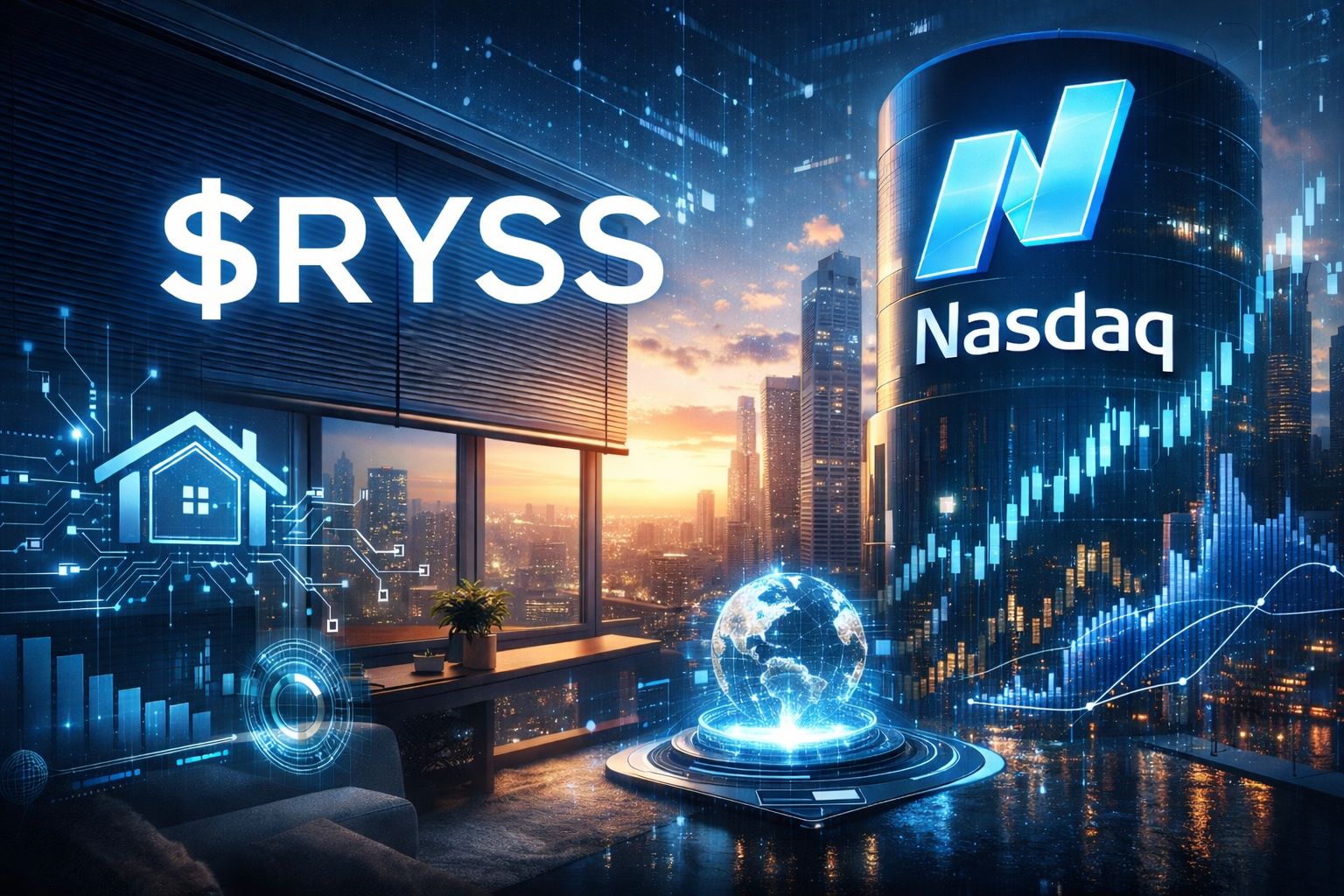
RYSE is building the A.I. layer for the smart home, starting at one of the most important control points: window coverings. Blinds and shades shape how natural light, heat, and comfort move through an entire space — yet over 90% remain manually controlled across homes, offices, and hotels.
The first wave of smart home leaders showed what’s possible. Google acquired Nest for $3.2 Billion. Amazon bought Ring for over $1 Billion. Each began with a single overlooked category. RYSE is following that path with window covering automation.
RYSE has earned over $15 million in revenue, holds 10 patents, and is expanding through major retail and B2B channels, including sales in 100+ Best Buy stores and deployments with Fairmont Hotel.
The company has reserved the Nasdaq ticker $RYSS. This may be their final public round before they shift towards institutional capital ahead of any potential exit or liquidity.

Brent Hits $108 on Strikes — Brent crude rose to $108.65 after Iranian retaliation on regional energy targets. U.S. may “unsanction” Iranian oil to control prices.
Banks Signal Rate Hikes — Major central banks including Federal Reserve and BoE signal potential rate hikes to combat war. Australia already raised.
Qatar Loses 17% LNG offline— The war has put 17% of Qatar's LNG capacity, causing $20B annual losses. QatarEnergy declares force majeure, impacting EU and Asian supplies for up to 20 years.
Trump Seeks $200B — Debate heats up over proposed $200B funding for Iran war. Democrats vow to block amid rising oil prices.
FBI Buys Location Data — FBI resumes buying Americans' location data, raising 4th Amendment concerns. Senator Wyden bill requires court authorization.
Nvidia Gets China H200 Approval — Nvidia received Chinese approval to sell H200 AI chips, new Groq LPU chip for China slated for May release.
Fed Cuts Bank Capital Rules — Federal Reserve proposes reducing capital requirements to enhance lending. Large and small banks see cuts while maintaining reserves.
Tech Buzz Editorial Feature
The same week $5.7T got locked behind private credit redemption gates, Mastercard integrated 85 crypto companies into payment rails spanning 200+ countries. 34 million Americans discovered they couldn't access retirement funds while the SEC and CFTC declared Bitcoin, Ethereum, Solana, and XRP commodities under clear regulatory jurisdiction. Morgan Stanley capped withdrawals at 5% even though 11% of investors want out. The Senate voted 89-10 to ban government digital currency but explicitly exempted private stablecoins.
The timing raises questions about whether we're watching market dysfunction or market transition as planned. Two distinct financial infrastructures are developing at markedly different speeds. One system struggles with liquidity and gates exits. The other builds payment rails and opens regulatory pathways. Understanding both systems matters for anyone making decisions about capital allocation in 2026.
Cliffwater gated a $33B consumer loan fund in early March. BlackRock, Blue Owl, and Deutsche Bank followed with withdrawal restrictions. The pattern spread across private credit markets holding $5.7T in total assets. Paul Atkins, current SEC chairman, sat on Cliffwater's board until April 2025. The same person overseeing markets during the 2008 buildup returned for this cycle.
UBS forecasts 15% defaults in private credit markets, triple the 6.5% peak from 2008. Current defaults already hit 9.2%. JPMorgan stopped lending to software companies entirely and marked down existing portfolios. Wells Fargo dropped 20% year to date, following a trajectory that analysts compare to Lehman Brothers in 2008. Chris Whalen from Whalen Global Advisors describes this as "inning four or five" of a nine-inning game.
Banks hold $257B in disclosed exposure to private credit. Most analysts believe the real number runs significantly higher. When companies in private credit portfolios default, the funds holding that debt can't honor redemption requests. When redemptions get blocked, millions of people discover their retirement accounts don't function as expected. The Dodd-Frank Act from 2010 includes provisions for "bail-ins" where deposits automatically convert to bank equity during crises without requiring Congressional approval.
March 11: The SEC and CFTC signed a memorandum ending jurisdictional disputes over digital assets. The agreement classified major cryptocurrencies as commodities under CFTC oversight. SEC Chairman Paul Atkins called it the end of the "era of turf wars." CFTC Chairman described it as a step toward a "Golden Age of American finance."
March 12: The Senate voted 89-10 to ban the Federal Reserve from issuing central bank digital currency until 2030. The legislation explicitly exempted private stablecoins from the ban. The message: the government won't build centralized digital infrastructure, but the private sector can, and will.
March 11 (same day as SEC-CFTC agreement): Mastercard announced integration of 85+ crypto companies including Binance, Ripple, PayPal, Circle, Gemini, and Kraken. The integration connects blockchain-based payments to existing card networks across 200+ countries.
March 17: Joint SEC-CFTC guidance established a "digital tools" classification for governance tokens, access tokens, and membership badges. The guidance clarified these assets aren't securities unless sold as investment contracts. This created regulatory certainty that didn't exist before.
Also March 17: The FDIC proposed excluding stablecoin holders from deposit insurance while stating that GENIUS-compliant stablecoins could boost USD bank deposits. The proposal creates a framework where stablecoins backed by Treasury securities operate outside traditional deposit insurance systems.
BlackRock provides an instructive case study. The same week it imposed private credit redemption restrictions, it launched ETHB, a staked Ethereum trust. The firm restricts exits from one asset class while opening entry points to another. Mastercard acquired stablecoin startup BVNK for up to $1.8B during this period. Coinbase, Kraken, Circle, and eight other companies filed for or received OCC national bank charters in an 83-day span. The Bank Policy Institute, backed by JPMorgan and Goldman Sachs, is considering legal action to block the charter approvals.
Visa and Stripe-owned Bridge announced plans to expand stablecoin card issuance to over 100 countries. Rain raised $250M at nearly a $2B valuation to build stablecoin-linked Visa cards. The cards connect to stablecoin balances in wallets like MetaMask and Phantom and function at 175 million merchant locations globally. This represents functional payment infrastructure, not pilot programs.
Meanwhile, the CLARITY Act advances through Congress with stablecoin yield provisions 99% resolved according to Senator Cynthia Lummis. Remaining obstacles involve political packaging around community bank deregulation and housing policy rather than technical crypto issues. Senator Bernie Moreno warned that if the bill doesn't advance by May, digital asset legislation may not receive serious consideration for years as midterm election dynamics dominate the calendar.
TThese financial developments occur against significant geopolitical pressure. The Pentagon requested $200B for Iran war operations. Oil hit $120, dropped to $87, and climbed back while Iran keeps the Strait of Hormuz effectively disrupted and 20% of global oil faces transportation challenges. With 5000 U.S. troops headed to the region and a possible ground invasion planned by around 25 March, it is likely the straits will remain blocked for the foreseeable future. Fertilizer prices have spiked 77% due to supply chain disruptions. Former Trump economic adviser Gary Cohn stated this week that elevated gas prices alone constitute "recession-worthy" conditions.
400M barrels from strategic petroleum reserves can supply global markets for approximately four months. Refinery reconstruction takes years. The energy situation creates inflationary pressure at the same time financial system fragility reaches concerning levels. Whether these factors are coincidental or connected remains an open question.
Traditional finance closes access points through redemption gates and increased capital requirements. Crypto infrastructure opens access points through regulatory clarity and payment network integration. Both developments accelerated during the same narrow window in March 2026.
The pattern suggests either remarkable coincidence or deliberate coordination. Market observers disagree on which explanation fits better. Some argue that crypto infrastructure development simply reached maturity at the same time private credit markets reached capacity limits. Others suggest regulatory clarity emerged specifically because traditional finance showed signs of stress and policymakers needed alternative infrastructure ready.
The $5.7T locked in private credit represents capital that needs somewhere to flow if and when access restrictions lift. Stablecoin infrastructure backed by Treasury securities and integrated with Mastercard and Visa networks represents a newly available destination for that capital. Whether this represents organic market evolution or engineered transition depends partly on perspective and partly on information not yet public.
The relevant question for us to consider now may be, which system provides better liquidity, transparency, and resilience over the next 12 to 24 months. The infrastructure being built today determines where capital can flow tomorrow, and which companies will benefit from the flows.
Latest deals and trending companies
NVIDIA $1T Order Backlog — Achieved record $1T order backlog through 2027 from hyperscalers & for AI infrastructure. + Pivots to o-s AI tools + launches Space Computing plan via orbital data centers.
Bezos' $100B Bet — AWS’ Project Prometheus seeks $100B to acquire and transform manufacturing via automation. AWS projects $600B annual sales by 2036.
OpenAI Acquires Astral — Integrates open-source Python tools into Codex ecosystem. Aims to transition Codex from code generation to full dev lifecycle.
Rivian-Uber Robotaxi Deal — Rivian teams with Uber on R2 SUV robotaxis with $300M initial investment. Deal potentially $1.25B, targets San Fran and Miami 2028, 25 cities by 2031.
Samsung-AMD Memory Partnership — Samsung and AMD signed MoU for next-gen high-bandwidth memory for AI accelerators.
Meta's $27B Nebius Deal — Signed $27B deal with Nebius for AI infrastructure, part of $135B AI spending this year. Positions Meta to compete with OpenAI, Google.
Cloaked Raises $375M — Privacy company raised $375M Series B led by General Catalyst and Liberty City Ventures. With 350,000+ paying customers.
Frore Hits $1.64B Valuation — Liquid cooling leader hit $1.64B valuation after raising $143M. Transitioning from solid-state to address data center overheating.
Fervo Energy Loan Victory — Houston-based enhanced geothermal firm secured a major loan, signaling lender confidence. Promises scalable solutions for tech giants.
SyberJet's $1B Autonomous Push — Pardoned Nikola founder Trevor Milton seeks $1B for AI-powered autonomous planes.
The Latest Trending Tools & Cutting Edge Technology Developments
Buzzy Tools To Watch and Try Today
OpenAI Desktop Super App — Merges ChatGPT, browser, Codex into desktop app
AWS Visa Payments — Tools for agentic commerce & scalable payment solutions
NanoClaw Sandboxes — Enhanced AI security with Docker Sandboxes for safety
Mave Brain Headset — $495 tDCS headset enhances attention, mood, productivity
Robinhood Family Hub — Family wealth with custodial accounts, investments
Mistral Forge Platform — Custom AI model platform for enterprises with training
World AgentKit — Verifies human identity behind AI shopping agents,
Xiaomi Hunter Alpha — AI model with 1T parameters for advanced agents
Vera CPU Efficiency — 2x efficiency for agentic AI, 50% faster than legacy CPUs
Buzzy Tech Discoveries and Breakthroughs Trending Today
GPT Mini & Nano — Efficient, affordable AI models for task delegation, coding
Human-Made — Trusted AI impact certification on human-made products
BlueField-4 Storage — Modular DPU architecture optimizes AI storage, cuts costs
GenCAD Photo-to-CAD — MIT's AI converts photos to editable CAD, was $150/hr
Microsoft Intune Breach — CISA warns after hackers wipe Stryker devices
Bots Overtake Humans by 2027 — AI bots to outnumber humans by 2027
The Latest News in Crypto & Blockchain
SEC Crypto Clarity — SEC clarified most crypto assets including staking, airdrops, and Bitcoin mining aren't federal securities. Chair Paul Atkins introduced framework classifying digital commodities as non-securities.
Coinbase-Cloudflare Stablecoin — Coinbase vying to partner with Cloudflare on stablecoin for AI transactions, aiming to set payment standard across Cloudflare's network. Could boost Coinbase revenue but AI agent economy demand unclear.
S&P 500 Perpetuals Launch — Hyperliquid introduces first licensed S&P 500 perpetual contract for 24/7 trading with no expiry. Partnership with S&P DJI and Trade[XYZ].
Tempo Mainnet Live — Launched with Machine Payments Protocol enabling autonomous payments between AI agents. Co-authored with Stripe.
Instagram: https://www.instagram.com/thetechbuzz.ig/

| Get the daily newsletter that helps you understand the tech ecosystem sent to your inbox.


