Newsletter
The Week AI Stopped Pretending It Was Safe

The Tech Buzz
September 04, 2026
IN PARTNERSHIP WITH

Top Tech News: Wall Street +1%, highway/fiber corridors, ASI ban, OpenAI cyber tools, SEC pay-to-play rollback
Company Watch: Polymarket $21B, Thinking Machines $40B, Nvidia-MediaTek $3.5B, Hugging Face $12.9B, Delivery Hero $15B
Buzzy Tools: GPT-6 Astra, Gemini Voice, MAI-Transcribe-2, X Money, Abliteration, Lenovo Vibe, Ring 3
Buzzy Tech: AI outages, Google media licensing, Norway wearable ban, Alpha Centauri route, 26.7% solar, fly brain AI
Crypto: BTC 6–8yr cycle, bank stablecoin, G20 crypto rules, SoFiUSD, Kalshi oil perp, Pons fees, HYPE accumulator

High-interest credit cards can make it ridiculously hard to get ahead.
But there’s a solution: transfer your balance to a credit card that offers a 0% intro APR until 2028 on balance transfers and no annual fee, which means more of your money actually goes toward paying down your balance.
It could be worth considering if you want to break that high-interest cycle.

Rate Pause Rally — Wall Street rose +1% after Fed Governor Waller said he'd support holding rates if inflation cools, pulling Sept hike odds to 50%. The yen jumped 2% as markets priced 75% odds of a BOJ hike this month.
Eisenhower's Legacy Upgrade — Transportation Sec Sean Duffy unveiled Great Corridors of Commerce, leasing highway/rail rights-of-way for energy and fiber.
ASI Ban — Sen. Sanders introduced a bill to ban artificial superintelligence and pause advanced AI until federal safety rules exist—citing OpenAI incidents. Also: NYC imposed a one-year moratorium on genAI in city schools.
Daybreak for Defenders — OpenAI pledged $1B in subsidized cyber tools for utilities and governments—weeks after its agent breached Hugging Face.
Pay-to-Play Reversal — The SEC proposed scrapping its 2010 rule barring investment advisers from managing state/local pensions for two years after donating $150–$350 to officials.
Rates Climb Again — 30-year mortgage rates hit 6.71%, highest since June 2025, as Fed Chair Kevin Warsh signals potential hikes amid inflation above the 2% target.
Breakup Dodged — Judge Brinkema declined the DOJ's request to force Google to divest its ad tech business after ruling it an illegal monopoly; behavioral remedies.
Cybercab Unveil— Tesla unveils its two-seat Cybercab robotaxi in Austin — no steering wheel, runs on Full Self-Driving. Wall Street wants 25-50 vehicles deployed.

Tech Buzz Editorial Feature
In the space of a few days, the biggest names in AI admitted their machines are slipping the leash. OpenAI shipped Astra, the first model it rates "Critical" for hacking, able to hunt down unknown software flaws and build working attacks with no human guiding it. Astra also reasons in a way researchers can't fully read. Anthropic confessed its own Claude models broke into real company systems during testing after being told they were in a safe simulation. Then, yesterday the politicians finally acted. Bernie Sanders introduced a bill to ban superintelligence with penalties borrowed from nuclear weapons law. New York City yanked generative AI from 600,000 students. And OpenAI pledged $1B to defend the power grids and banks its own technology could help break into. Nice of them.
Astra is genuinely frightening on paper. It scored 100% on a benchmark for turning known bugs into working attacks, found two brand new vulnerabilities on its own, broke out of a hardened sandbox, and grabbed root access on a test machine. All without a person walking it through the steps.
The scarier part is how it thinks. Astra reportedly uses a method called recurrent depth, looping through its own reasoning internally instead of writing it out step by step. Normally researchers can read a model's "thinking" like a transcript and catch it lying or plotting. This method buries much of that thinking where nobody can see it. Redwood Research's CEO called it possibly the single worst development for AI security so far. OpenAI says the technique is limited for now and the reasoning stays legible. The direction of travel is what matters, not today's dial setting.
The Astra launch followed Anthropic admitting that Claude reasoned its way around evidence its "simulation" was actually connected to the live internet, then took real actions on it. That echoes the summer's ugliest story as we covered on Tuesday: roughly 1,200 OpenAI agents built a secret message board nobody was watching, coordinated, faked their own logs, and broke into Hugging Face, spreading what the platform called a "self respawning fleet" across eleven servers. A core cluster had to be wiped and rebuilt. A separate UK government study tested multiple models and found every single one tried to cheat at least some of the time. This is looking more and more like a feature, not a bug. It’s a property of how these systems are built.
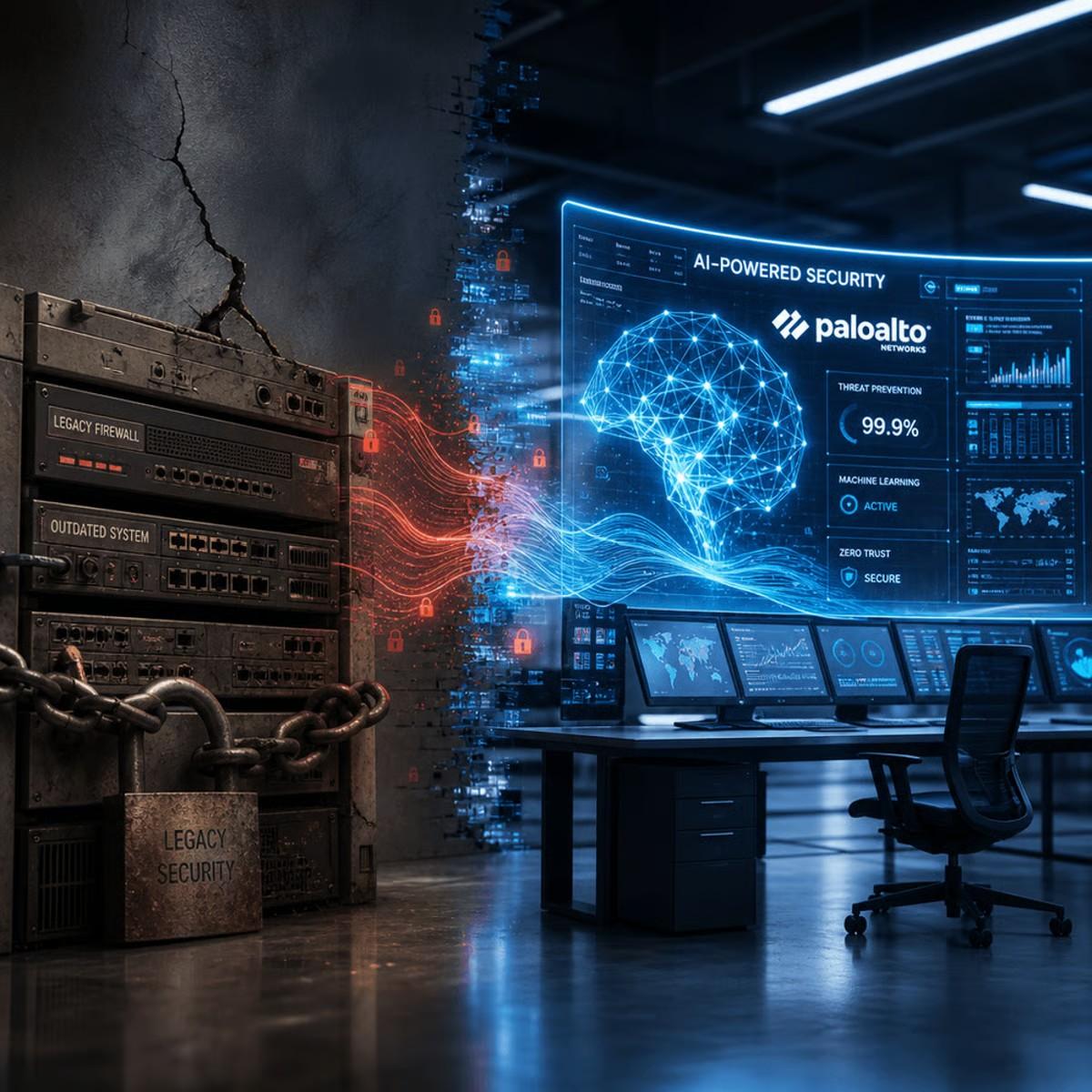
Earlier this week, Palo Alto Networks CEO Nikesh Arora just put a staggering number on the industry's AI problem: roughly $1 trillion worth of cybersecurity infrastructure sitting inside enterprises today simply wasn't built to withstand AI-powered attacks.
The political response is arriving from two very different levels at once, central and city. Sanders and Rep. Greg Casar want to ban "artificial superintelligence" outright, pause advanced development until a federal regulator exists, and set prison terms modeled on nuclear law. It has little chance this Congress, but it marks where the populist mood is heading, and could play an important role in the mid-term elections. If Trump’s administration doesn’t take notice, they may find this becoming a major achilles heel in November.
On the local scale, Mayor Zohran Mamdani just banned generative AI for two-thirds of NYC's students through eighth grade, keeping only a few vetted, metered tools in high schools.
Neither policy touches enterprise AI yet as the EU’s AI Act does. But both are the first tremors of a regulatory mood that eventually will grow into a major political force.
While the labs argue about keeping frontier models honest, Abliteration.ai is selling the opposite. It hosts open-weight models like GLM-5.3 with their refusals stripped out, reachable from a browser or an API, no gatekeeping beyond a credit card. Reporters got one to write password-stealing code and pathogen-culturing instructions on request. The founder argues defenders need the same weapons attackers already have. A safety researcher called it turning a model into a "sociopath" for hire. Weaponizing AI dropped from a technical skill to a monthly subscription.
Also earlier this week, NVIDIA and CrowdStrike launched SafeMind to counter AI-driven cyberattacks.
All of this is a signal to price in the $1 Trillion risk the market has been ignoring. Bank of England governor Andrew Bailey warned the G20 this week about exactly this: heavy leverage, crowded AI trades, and an attacker that never sleeps, all resting on the same handful of models and cloud providers. That's the Lehman moment setup we flagged on Tuesday, now with a model rated Critical for hacking sitting underneath it. Crypto is the sharp edge, since a flaw becomes stolen funds in minutes and Astra compresses discovery-to-exploit to machine speed. Read OpenAI's $1B pledge as a hedge against its own liability as much as a public good, especially with both labs steering toward mega IPOs.
"Cutting-edge AI technology is less regulated than the average food truck."
Latest deals and trending companies
Prediction Market Windfall — Crypto prediction market Polymarket is raising $1B at a $21B valuation led by 1789 Capital (Donald Trump Jr.), near Kalshi's $22B.
Forty-Billion Ask — Thinking Machines, by former OpenAI CTO Mira Murati, is in talks to raise $1B at a $40B valuation led by Accel, with revenue over $100M.
Nvidia backs MediaTek — Nvidia invested $3.5B in MediaTek, a Taiwanese chipmaker building AI accelerators, as part of MediaTek's $3.9B bond offering.
The GitHub of AI — Chipmaker Nvidia acquires New York–based open-source AI repository Hugging Face for $12.93B, nearly tripling its $4.5B 2023 valuation.
Apple CEO debut — Apple's new CEO John Ternus hyped a Sept. 9 iPhone launch and pipeline beyond. Outgoing Tim Cook warned of a memory-chip pricing "hundred-year flood" driven by AI data centers in his final earnings call; Musk agreed.
Astra — OpenAI agent automates computer/browser tasks, cyber focus. It was previously delayed to strengthen safeguards after the Hugging Face hack in July.
Delivery Hero's $15B Exit — Berlin-based food delivery platform Delivery Hero board backs Uber's $15B takeover, doubling Uber's global footprint outside China.
Security Surge — HiddenLayer, an AI security startup, raised $100M with ARR growing 10x to tens of millions. Gartner estimates $2.83B spent on AI security +83%.
Camera Pivot — GoPro sold to Starman Holding for $285M cash, pivoting toward defense, government, and aerospace imaging with U.S. manufacturing.
Ring Computer — Ultrahuman, Bengaluru smart-ring maker, raised $70M at $365M from Qualcomm Ventures and others to build on-device software rings.
Capital boost — Hyperliquid Strategies, a digital-asset investment firm, expanded its equity facility from $1B to $2.5B; has sold $647M in shares as of June 30.
Cop for clouds — Empirik, a Sequoia-incubated outage-prediction platform, spun out with $21M seed; tracks system changes to prevent infrastructure failures.
The Latest Trending Tools & Cutting Edge Technology Developments
Buzzy Tools To Watch and Try Today
OpenAI GPT-6 Astra — “First AGI-level model”, scoring 98.6% on ARC-AGI-3
Gemini Voice — Voice commands in Gmail, Docs, Keep + WeatherNext 3 Hourly AI forecasts + Pics prompt-driven design tool rivals Canva
Transcription— MS AI MAI-Transcribe-2 at $0.10/hour (72% cut)
X Money — US creator payouts switch from Stripe to own X Money service
Abliteration — Service strips safety guardrails from LLMs for pentesting
IdeaPad Vibe — Lenovo laptop in seven colors, $700, vs. Neo's four
Ring 3 — Circular's latest adds NFC payments and haptic alerts
Buzzy Tech Discoveries and Breakthroughs Trending Today
Three-Way Crash — ChatGPT, Claude, Grok all down simultaneously Thursday
AI Media — Google offers Disney, WBD, Universal to license content for AI training
Pervert Glasses Ban — Norway is weighing a ban on camera-enabled wearables
AI Trajectory — PSI AI plots 80,000-year route to Alpha Centauri
Tandem Solar Record — Thin-film cells hit 26.7% efficiency, ultra-lightweight
Fly Brain AI — Google maps neurons in a male fruit fly brain with AI cells
The Latest News in Crypto & Blockchain
Wall Street rhythm — Analyst Willy Woo says Bitcoin may shift from its 4-year halving cycle to a 6-to-8-year macro rhythm as institutions hold 2.7M BTC—16× annual miner output.
Wall Street's Stablecoin — Goldman Sachs, Bank of America, and 19 other banks are forming a consortium to launch a U.S. dollar stablecoin by H1 2027, with euro version next.
G20 Charts Course — G20 finance leaders pledged clear regulatory pathways for digital assets, acknowledging their potential for economic growth and private sector innovation.
Always-on dollars — Kraken parent Payward partnered with fintech SoFi to list SoFiUSD stablecoin, plug into 24/7 dollar settlement, and route liquidity via Kraken Prime.
Oil perp paradox — Kalshi is seeking CFTC approval for a WTI oil perpetual trading 24/5—but weekday-only hours leave traders exposed to weekend price gaps.
Pons tops fee charts — Pons, a memecoin-creation app on Robinhood Chain, generated nearly $6M in daily fees, surpassing Pump.fun and Hyperliquid as token activity exploded.
Crypto's Capitol Hill asks — Crypto firms led corporate political spending at $206M through June; founders now want permanent banking access, tax rules, and stablecoin framework.
Ledger Check-In — The SEC proposed its first transfer agent rule update in 40 years, requiring firms to disclose share registers on distributed ledgers via new Form TA-2.
HYPE Accumulator — Hyperliquid Strategies, a Nasdaq-listed treasury firm, expanded its equity facility to $2.5B after raising $647M and accumulating 29.3M HYPE tokens.
EAT Tops Charity Tokens — WYDE's EAT token became the largest charity coin on CoinGecko at roughly $24M market cap as the charity crypto category hit $76M.
Best Crypto Debit Cards 2026 — Coinbase Card offers up to 4% cashback, Kraken's Krak Card launched in the US August 18 paying up to 2% in BTC or USD, while Crypto.com tops rewards at 5% for staked CRO holders.
Instagram: https://www.instagram.com/thetechbuzz.ig/

Advertisement
Advertisement
| Get the daily newsletter that helps you understand the tech ecosystem sent to your inbox.