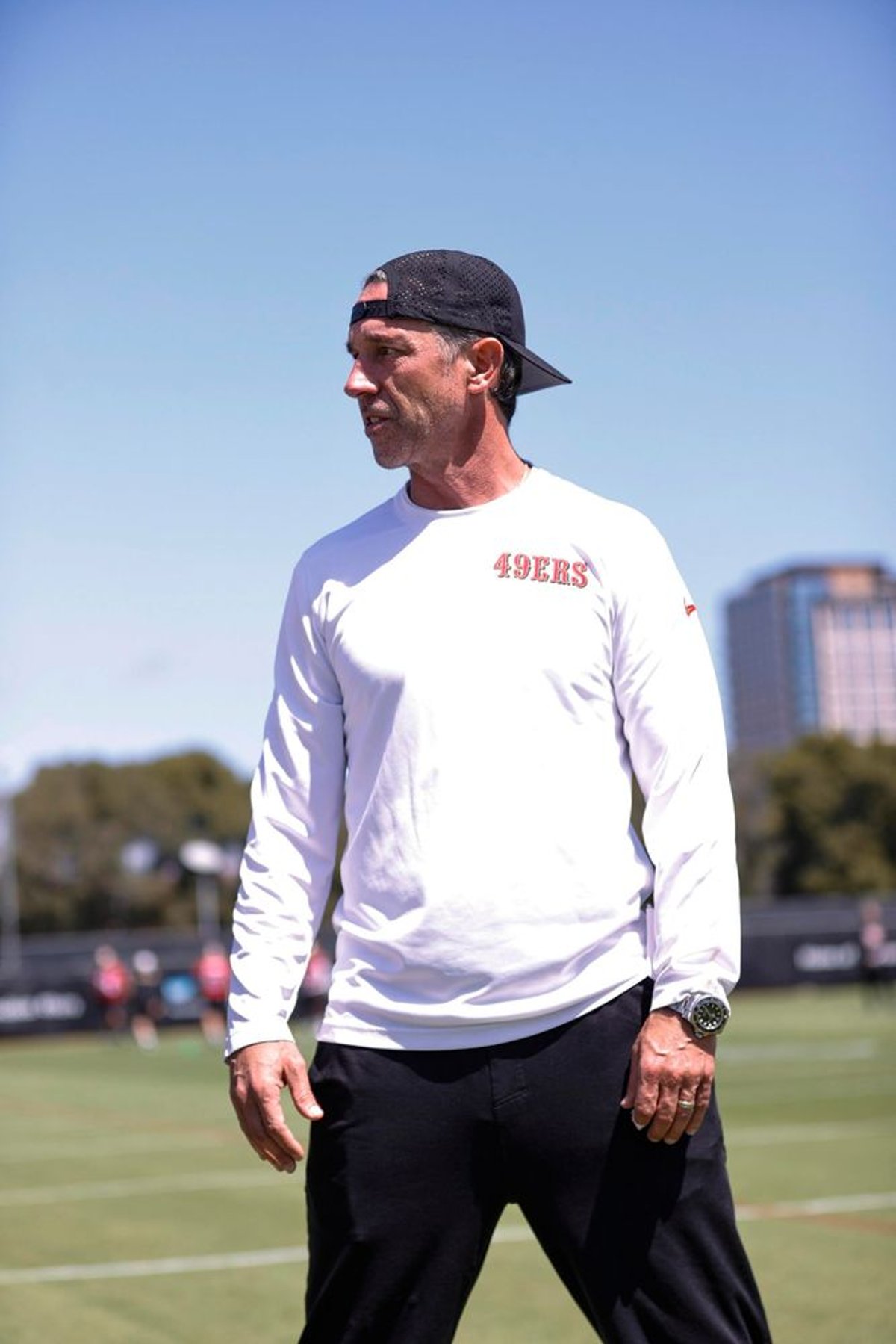
San Francisco 49ers head coach Kyle Shanahan just added fuel to the ongoing debate about Tesla's Autopilot safety. During a press conference this week, Shanahan revealed that his Tesla was operating on Autopilot when he crashed near downtown Palo Alto four weeks ago. While the coach took full responsibility for the incident, his admission that he's unsure whether the system malfunctioned or he accidentally disengaged it highlights a critical gap in how drivers interact with semi-autonomous systems.
Tesla is back in the spotlight, and not for reasons Elon Musk would want. Kyle Shanahan, the high-profile head coach of the San Francisco 49ers, just went public with details about a crash that happened in Palo Alto last month - and his Tesla's Autopilot was engaged at the time.
During a recent press conference, Shanahan didn't dodge responsibility. He made it clear the accident was his fault, Autopilot or not. But what's striking is his candid uncertainty about what actually happened. "I've had Autopilot for nine years, so I'm pretty comfortable with it and, you know, who knows what happened when I turned around? Whether it malfunctioned or whether I knocked it off?" Shanahan told reporters, according to the San Francisco Chronicle.
That ambiguity is exactly what safety advocates have been warning about for years. When a driver with nine years of experience using Autopilot can't tell whether the system was functioning properly or whether he accidentally disengaged it, there's a fundamental problem with how these semi-autonomous systems communicate their status to users.
Tesla has long positioned Autopilot as a driver-assistance feature that requires active supervision, not a fully autonomous system. The company's website explicitly states that drivers must keep their hands on the wheel and remain attentive. But the gap between how the technology is marketed and how users perceive it continues to generate controversy.
Shanahan's case is particularly interesting because he represents the ideal Autopilot user on paper - someone with nearly a decade of experience with the system. If a veteran user can lose track of the system's operational state during a critical moment, what does that say about less experienced drivers?
The timing couldn't be more sensitive for Tesla. The National Highway Traffic Safety Administration has been investigating the company's driver-assistance systems for years, examining their role in numerous crashes. Some of those investigations have resulted in recalls affecting millions of vehicles.
What Shanahan's admission really highlights is the persistent challenge of the "handoff problem" in semi-autonomous driving. Unlike fully autonomous systems that take complete control or manual driving where the human is fully engaged, systems like Autopilot exist in a dangerous middle ground. Drivers must remain alert enough to take over instantly, but the system handles enough of the driving to encourage complacency.
The incident near downtown Palo Alto - just miles from Tesla's engineering headquarters - serves as an uncomfortable reminder that even in the technology's backyard, with experienced users behind the wheel, things can go wrong. Shanahan's inability to determine whether the system malfunctioned speaks to a larger issue: the lack of clear, immediate feedback about system status during critical moments.
For Tesla, each high-profile Autopilot incident chips away at public confidence in autonomous driving technology. The company has consistently argued that its data shows Autopilot makes driving safer overall, but individual incidents - especially those involving uncertainty about system performance - shape public perception more powerfully than statistics.
Shanahan's openness about the crash and his uncertainty might actually help the broader conversation about autonomous vehicle safety. By admitting he doesn't know exactly what happened, he's acknowledging a truth that many drivers experience but few discuss publicly: these systems aren't always intuitive, and their behavior isn't always predictable to the humans supposed to be supervising them.
Shanahan's crash won't change Tesla's trajectory, but it adds another data point to the growing body of evidence that semi-autonomous driving systems create unique cognitive challenges for drivers. As these technologies become more widespread, the industry needs to solve the communication problem - helping drivers understand exactly what their vehicle is doing at any given moment. Until then, we'll keep seeing incidents where even experienced users can't explain what went wrong, and that's a problem that transcends any single crash or any single coach's mistake.