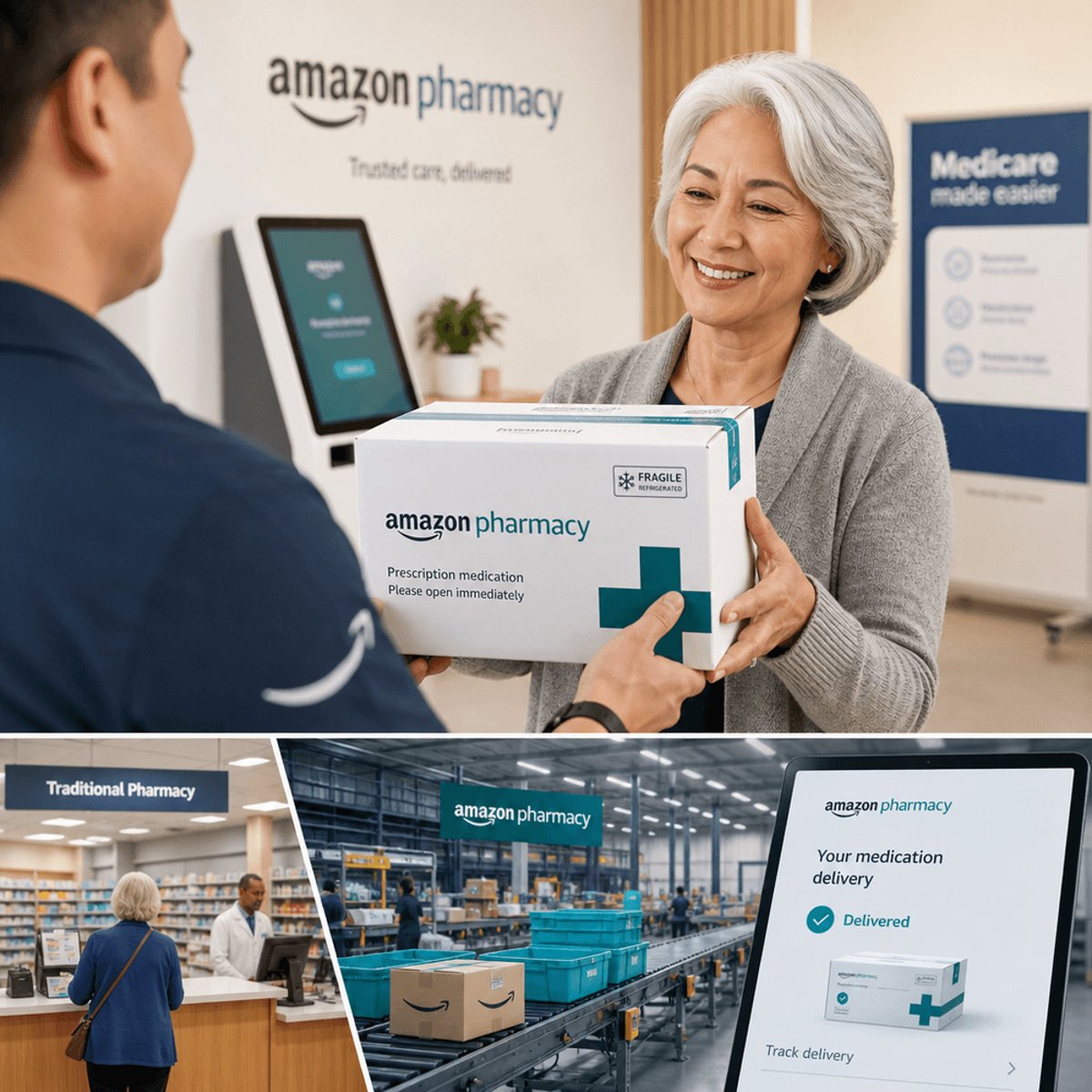
Amazon just cracked open the Medicare prescription market in a big way. The company's pharmacy division now delivers GLP-1 weight-loss medications including Wegovy, Zepbound, and Foundayo directly to eligible Medicare patients for $50 per month, handling the paperwork nightmare that's kept many seniors from accessing these drugs. With same-day delivery and kiosk pickup options already live, Amazon's leveraging its logistics empire to solve what's been a massive access problem in the booming weight-loss drug market.
Amazon isn't waiting around for healthcare to fix itself. The retail giant's pharmacy arm just launched a flat-rate GLP-1 delivery program that brings blockbuster weight-loss drugs straight to Medicare patients' doorsteps for $50 a month, cutting through the bureaucratic mess that's made these medications notoriously hard to access.
The program covers three major GLP-1 medications - Wegovy from Novo Nordisk, Zepbound from Eli Lilly, and Foundayo - with Amazon Pharmacy promising to handle "the majority of the paperwork" that typically bogs down prescriptions for weeks. That means prior authorizations, insurance verification, and the endless phone tag between doctors' offices and pharmacy benefit managers.
It's a calculated strike at traditional pharmacy chains. CVS and Walgreens have been drowning in GLP-1 demand since these drugs exploded in popularity, with both chains reporting supply constraints and frustrated customers throughout 2025 and into 2026. Amazon's offering something they can't match: same-day delivery in select markets and 24/7 kiosk pickup options that tap into the company's existing logistics network.
The $50 monthly price point is particularly aggressive. While it applies to eligible Medicare patients with coverage, it represents a significant simplification of the typically opaque pricing structure around these medications. GLP-1 drugs can run thousands of dollars per month without insurance, and even with coverage, patients often face confusing co-pay structures and coverage denials that leave them paying out of pocket.
Amazon's timing isn't coincidental. The GLP-1 market has ballooned into a $30 billion-plus category, with analysts projecting it could hit $100 billion by 2030 as medications originally developed for diabetes became the most talked-about weight-loss treatment in decades. Medicare's decision to expand coverage for these drugs earlier this year opened the floodgates to millions of new potential patients.
But there's a bigger play here than just prescription fulfillment. Amazon Pharmacy launched in 2020 after the company acquired PillPack, and it's been steadily building out capabilities that traditional pharmacies can't easily replicate. The same infrastructure that delivers packages to your door in hours now handles temperature-controlled medications, and the company's been quietly adding pharmacy services to its Prime membership benefits.
The paperwork handling is where Amazon might have the real edge. Anyone who's tried to get a GLP-1 prescription filled knows the drill: insurance denials, appeals, prior authorization forms that require detailed medical histories, and weeks of waiting. Amazon's betting that its tech stack can automate much of this process, pulling patient data, submitting forms electronically, and tracking approvals in real-time.
Traditional pharmacy chains are already feeling the pressure. CVS has been investing heavily in its own digital health offerings, including telehealth services and app-based prescription management, while Walgreens has partnered with various tech companies to modernize its operations. But neither has Amazon's delivery infrastructure or its willingness to burn cash to gain market share.
The Medicare angle is particularly strategic. Seniors represent one of the fastest-growing segments of Amazon's customer base, and prescription medications are a sticky, recurring revenue stream. If Amazon can become the default pharmacy for Medicare patients, it's not just about GLP-1s - it's about capturing ongoing prescription business across all medication categories.
There are questions Amazon hasn't answered yet. The company didn't disclose how many markets currently qualify for same-day delivery, what the kiosk network looks like, or how it's handling the cold-chain logistics that GLP-1 injections require. These medications need to be refrigerated, which adds complexity to the delivery process that doesn't exist with traditional pills.
The pharmaceutical industry is watching closely. Drug manufacturers have been grappling with distribution challenges as demand for GLP-1s has outstripped supply, and Amazon's entry could reshape how these medications reach patients. If Amazon can prove its model works, expect other tech companies to follow.
Amazon's GLP-1 delivery program is less about disrupting healthcare and more about applying its core competency - moving stuff efficiently - to a market desperate for better logistics. Traditional pharmacies built their businesses around physical locations and in-person pickup, but that model is creaking under the weight of modern demand and insurance complexity. If Amazon can truly streamline the paperwork nightmare while delivering medications faster and cheaper, this won't be the last category of prescriptions it targets. The question isn't whether Amazon will grab market share - it's how quickly traditional pharmacies can adapt before their prescription counters start looking as outdated as bookstores did in 2010.