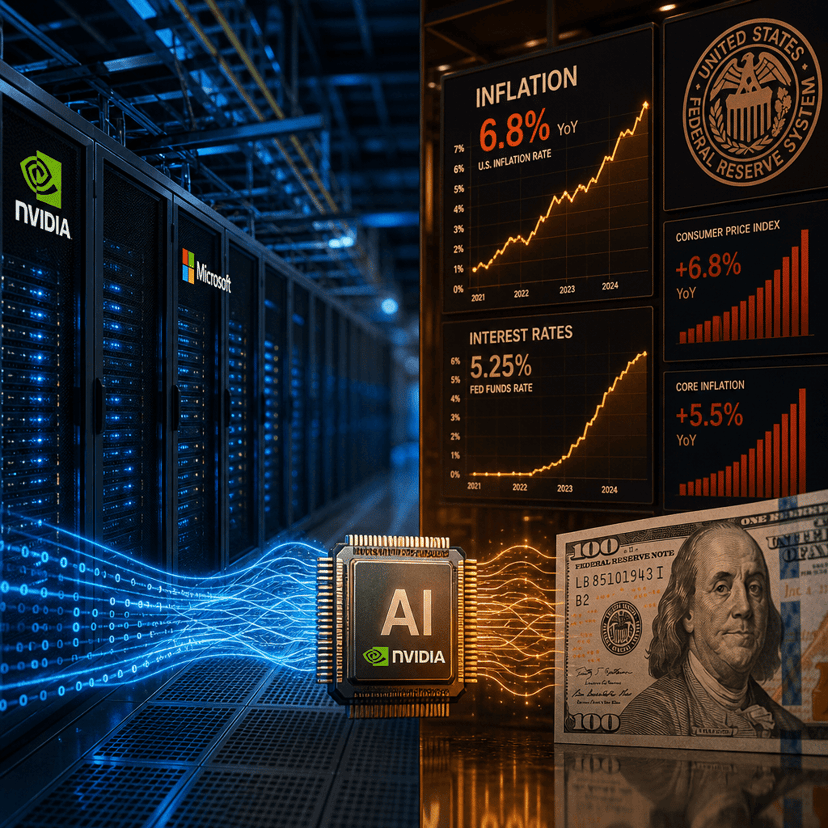
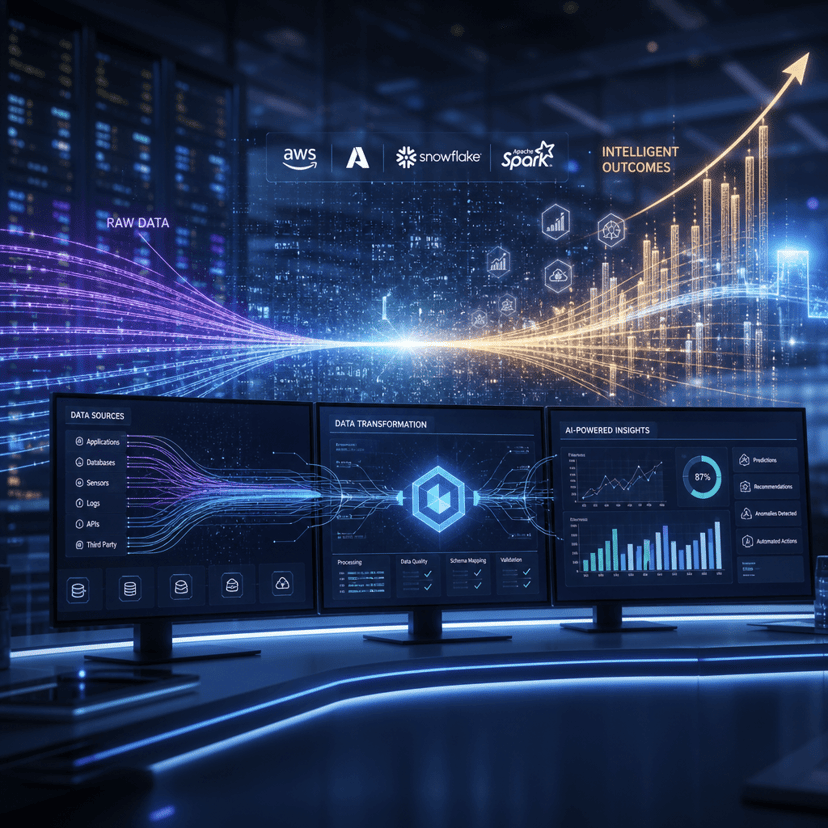
The artificial intelligence revolution is creating an unexpected economic headache for the Federal Reserve. While tech giants promised AI would slash costs and boost productivity, the reality looks different - a massive data center build-out is fueling inflation pressures just as corporate adoption crawls forward at a fraction of the pace needed to deliver those efficiency gains. This disconnect between infrastructure spending and real-world returns is forcing policymakers to rethink how AI factors into their inflation fight.
The promise seemed simple enough. Microsoft, Google, Amazon, and Meta all told investors the same story - artificial intelligence would drive down costs, supercharge productivity, and usher in a new era of efficiency. But there's a problem with that narrative, and it's showing up in the Federal Reserve's inflation data.
The AI infrastructure boom is here, and it's expensive. Really expensive. Tech giants are pouring hundreds of billions into data centers, high-end chips, and power infrastructure. Nvidia can barely keep up with demand for its H100 and upcoming Blackwell chips, with some data center operators paying premiums of 20-30% above list price just to secure allocation. Construction costs for AI-optimized facilities are running 40% higher than traditional data centers, according to industry estimates. And the power requirements - some of these facilities need as much electricity as a small city.
This wouldn't be a problem if companies were actually using AI at the pace needed to generate those promised cost savings. But they're not. Corporate adoption is moving slower than anyone expected. While OpenAI and other AI developers are signing enterprise deals, actual deployment and integration is taking longer than the infrastructure build-out. IT departments are cautious, worried about accuracy, security, and the learning curve required to retrain workers.
The gap between spending and returns is starting to show up in economic data. Energy prices in regions with heavy data center concentration are ticking up. Construction material costs are rising as cement, steel, and specialized cooling equipment get diverted to AI projects. Semiconductor prices remain elevated despite increased production capacity. These aren't massive spikes, but they're persistent - exactly the kind of steady pressure that makes the Fed's job harder.
Federal Reserve officials are trying to figure out what this means for monetary policy. Is AI spending a temporary supply shock that will fade once the initial build-out completes? Or is it the beginning of a longer investment cycle that will keep inflation elevated? The answer matters because it determines whether the Fed should look through these price increases or respond with tighter policy.
Some economists argue the Fed should be patient. Once AI tools actually get deployed at scale, productivity gains should materialize and put downward pressure on costs. Companies will need fewer customer service reps, accountants will work faster, software will write itself. The infrastructure spending is front-loaded, but the benefits compound over time. By this logic, raising rates now would be a mistake - it would slow the very investment needed to deliver future deflation.
But others see a different risk. What if corporate adoption never reaches the scale needed to justify current infrastructure spending? What if AI turns out to be useful but not transformative for most businesses? Then you've got a massive capital misallocation that's driven up costs without delivering offsetting productivity gains. That's inflationary, full stop.
The data center build-out isn't slowing down. Microsoft recently announced plans for dozens of new AI-focused facilities over the next two years. Amazon Web Services is expanding capacity across multiple regions. Google Cloud is racing to keep up. These aren't speculative bets - they're commitments backed by multi-year contracts with hyperscalers who need the capacity yesterday.
Meanwhile, the actual enterprise AI market is growing, just not fast enough. Companies are running pilots, testing tools, figuring out workflows. But the gap between experimentation and full-scale deployment is measured in years, not quarters. IT leaders are cautious about rushing into AI adoption after watching how many digital transformation projects failed to deliver promised ROI over the past decade.
This creates an awkward in-between state for the economy. You've got all the inflation from building AI infrastructure, but you don't yet have the deflation from AI actually making things cheaper. It's like paying for a new factory before you've figured out what to manufacture. The costs are real and immediate. The benefits are theoretical and delayed.
The Fed is watching this closely. Inflation has been stubborn, and officials need to understand what's driving it. If AI infrastructure is a meaningful contributor, that changes how they think about the neutral rate and how long to keep policy restrictive. Some regional Fed presidents are already asking questions about data center energy demand in their districts and what it means for local price pressures.
Tech leaders remain confident the math will work out. They point to early wins - customer service chatbots handling more queries, coding assistants speeding up software development, AI tools helping with everything from drug discovery to fraud detection. These aren't trivial applications. But they're also not yet delivering economy-wide productivity gains at the scale needed to offset the infrastructure spending boom.
The AI boom is creating a unique challenge for economic policymakers - an infrastructure arms race that's driving costs up now while the benefits remain mostly theoretical. The Fed can't ignore the inflation pressures from data center construction, semiconductor demand, and energy consumption, but raising rates too aggressively could choke off the very investment needed to deliver AI's promised productivity gains. This tension will only intensify as tech giants double down on infrastructure while corporate adoption continues its cautious, methodical pace. The question isn't whether AI will eventually reshape the economy - it's whether the timeline between spending and returns creates enough friction to derail the Fed's inflation fight in the meantime.