the tech buzz

SUBSCRIBE
AIEnterpriseDealsSecurityCrypto
Newsletter

the tech buzz

Your premier source for technology news, insights, and analysis. Covering the latest in AI, startups, cybersecurity, and innovation.

FOLLOW US

THE DAILY

Get the latest technology updates delivered straight to your inbox.

Company

  • About Us
  • Editorial Team
  • Write For Usnew
  • Contact Us
  • Advertisenew

Legal

  • Privacy Policy
  • Terms of Service
  • Cookie Policy
  • Disclaimer
  • EULA
  • AI Code of Conduct

Resources

  • Newsletters
  • RSS Feeds
  • Subscribe
  • Pricing & Packages
  • Sitemap
  • Archives
  • TechBuzz Pressnew

PUBLISH WITH US

Reach 1.1M+ subscribers via TechBuzz Press.

TechBuzz Press

HAVE A TIP?

Send us a tip using our anonymous form.

Send a tip

HAVE QUESTIONS?

Reach out to us on any subject.

Ask Now

Browse by Category

AIBlockchainCloudSecurityDataDealsInvestmentsEnterpriseVenturesIoTMobileRoboticsSoftwareStartupsAppleMetaMicrosoftOpenAiGoogleTesla

© 2026 The Tech Buzz. All rights reserved.

the tech buzz

AI in Healthcare: Addressing Model Hallucinations

ArticlesNewsletters
ArticlesNewsletters
AI & Automation

AI in Healthcare: Addressing Model Hallucinations

The crucial need to verify AI outputs in healthcare settings

by The Tech Buzz

PUBLISHED: Mon, Aug 4, 2025, 2:33 PM UTC | UPDATED: Fri, Sep 4, 2026, 5:28 AM UTC

Add as a preferred source on Google
AI in Healthcare: Addressing Model Hallucinations

TL;DR

  • - Double-check AI outputs to catch errors.
  • - Google's AI misidentified a brain area, showing its risks.
  • - Vigilant AI oversight required as healthcare AI evolves.
  • - Strategic focus on integrating human oversight with AI systems.

When AI models like Google's Med-Gemini inaccurately identify nonexistent body parts, it raises immediate concerns around AI's reliability in healthcare. Such errors, like mislabeling brain areas, highlight critical risks and underscore the necessity for stringent oversight and verification processes in AI-assisted medical diagnostics.

Opening Analysis:

Google's AI model Med-Gemini recently made headlines for "hallucinating" a nonexistent brain part during diagnostics, conflating the basal ganglia with something it called the "basilar ganglia." This error, not caught in initial reviews, puts a spotlight on AI's fallibility in medical settings — a critical issue given AI's increasing role in healthcare.

Market Dynamics:

With the healthcare AI market witnessing rapid growth, expected to surpass $44 billion by 2025 (Statista), incidents like these question AI deployment readiness. As AI tools become integral to diagnostics, the industry faces mounting pressure to bolster trustworthiness and ensure comprehensive oversight protocols.

Advertisement

Technical Innovation:

Healthcare AI, including Med-Gemini, showcases capabilities in synthesizing large datasets to assist diagnostics. Yet, such incidents underscore the gaps still present in model accuracy — particularly "hallucination" issues where AI models extrapolate beyond trained data sets, necessitating rigorous validation mechanisms.

Financial Analysis:

Advertisement

AI's promise in healthcare includes potential cost savings upwards of $150 billion by 2026 (Accenture), enticing organizations to fast-track AI integration. However, this push also necessitates investing in error-checking and validation frameworks, a strategic pivot that could protect long-term interests against liabilities stemming from AI misdiagnosis.

Strategic Outlook:

Companies employing AI must prioritize human oversight in their healthcare solutions to mitigate risks of "hallucinations." Continuous refinement and auditing processes should be established to bolster accuracy, while research into AI explainability and transparency remains crucial for seamless clinician integration. The next 3-6 months may see increased scrutiny and adaptation of AI governance frameworks. In the long term, by 2027, successful navigation of these challenges could result in AI becoming a standard auxiliary tool for clinicians, enhancing workflows and decision-making.

Key Takeaways:

  1. Proactive verification of AI outputs is essential to preventing errors.
  2. Integration of human oversight remains crucial amidst swift AI adoption.
  3. Long-term opportunities lie in AI capacity enhancements for augmented diagnostics.

Advertisement

Advertisement

Trending Now

1

GoPro CEO Vows Cameras Stay Core After Starman Deal

2

Judge Splits Ruling in X vs. Twitter Rival Fight

3

Tim Cook Steps Down, Ternus Takes Apple's Helm

4

Google's Lyria 3.5 Brings AI Music to Gemini

5

Google Translate Gets Listening Mode, Live Background Mode

More in AI & Automation

The MVP Is Easy. The Pipes Are the Constraint.

The MVP Is Easy. The Pipes Are the Constraint.

AI Precision Agriculture Vs The Fertilizer Crisis

AI Precision Agriculture Vs The Fertilizer Crisis

Indian IT Giants Shift to AI-Powered Teams by 2027

Indian IT Giants Shift to AI-Powered Teams by 2027

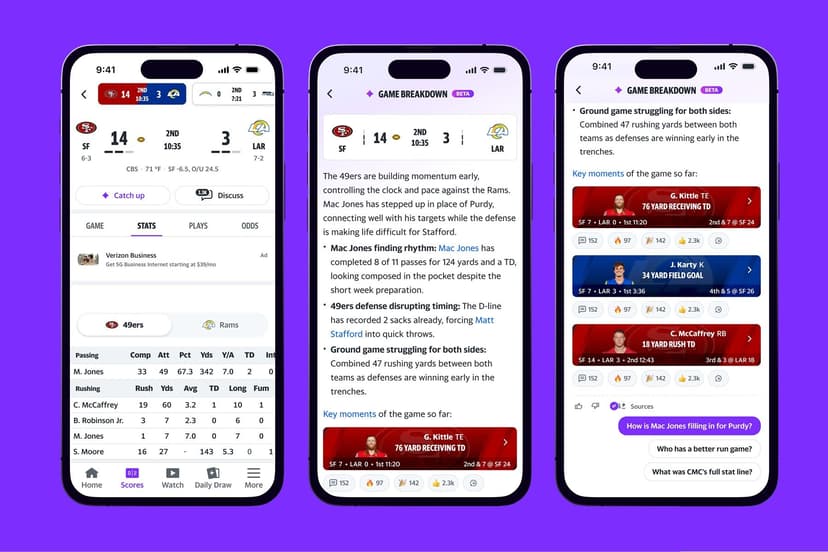
Yahoo Launches AI-Powered Game Breakdowns for Real-Time Sports

Yahoo Launches AI-Powered Game Breakdowns for Real-Time Sports

Meta Cuts Risk Staff as AI Takes Over FTC Privacy Reviews

Meta Cuts Risk Staff as AI Takes Over FTC Privacy Reviews

Breaking: Nvidia Fires Back at China's 'Security Risk' Claims on H20 Chips

Breaking: Nvidia Fires Back at China's 'Security Risk' Claims on H20 Chips

More Articles

The Verge Reveals Practical AI Use Cases That Actually Work

The Verge Reveals Practical AI Use Cases That Actually Work

Aug 10

Breaking: Ocado's Robot Army Now Packs 40% of Grocery Orders

Breaking: Ocado's Robot Army Now Packs 40% of Grocery Orders

Aug 10

Truth Social's AI Reflects Bias in Media Sourcing

Truth Social's AI Reflects Bias in Media Sourcing

Aug 8

Truth Social's AI & Conservative Bias

Truth Social's AI & Conservative Bias

Aug 8

OpenAI's GPT-5 Rollout: Learnings & Future Adjustments

OpenAI's GPT-5 Rollout: Learnings & Future Adjustments

Aug 8

Microsoft's Strategic Shift: AI Replaces Lens for Enhanced Efficiency

Microsoft's Strategic Shift: AI Replaces Lens for Enhanced Efficiency

Aug 8