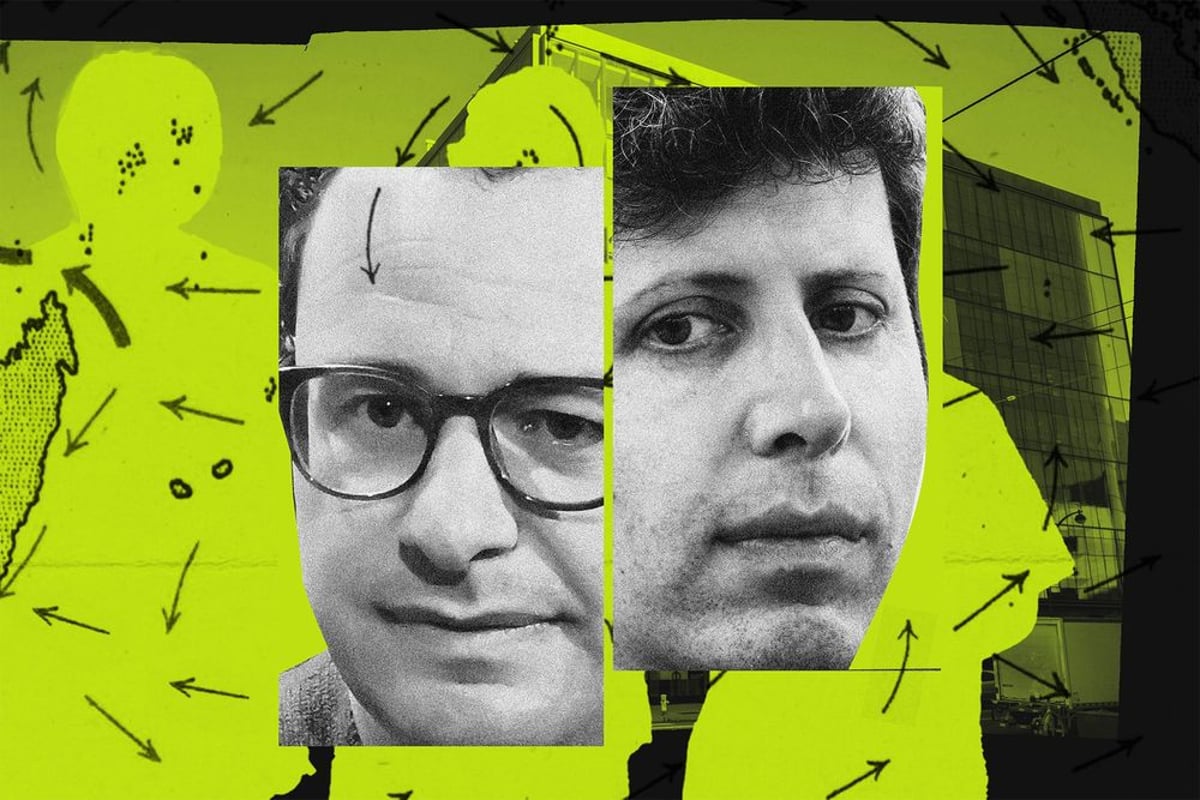
The AI talent war just got a lot more complicated. In a dramatic shift reshaping Silicon Valley's most lucrative job market, top AI researchers are walking away from some of the highest salaries in tech history - not for bigger paychecks, but for ideology and mission. As OpenAI and Anthropic race toward potential IPOs this year, the motivations driving talent between these companies reveal an industry where existential beliefs about AI's future matter more than compensation packages that would make most executives blush.
The San Francisco Bay Area houses the most valuable job market on the planet right now, but something strange is happening. AI researchers commanding record-breaking salaries are jumping ship, and they're writing lengthy public explanations about why on X, in blog posts, and even in New York Times op-eds. The reason? It's not about the money anymore.
OpenAI just watched another wave of departures, while Elon Musk's xAI experienced what The Verge calls a "mass exodus" following its SpaceX acquisition. Over at Anthropic, researchers are being lured not by compensation but by the company's emphasis on AI safety and constitutional AI principles.
The Verge's senior AI reporter Hayden Field has been tracking this revolving door closely, and what she's found challenges everything we thought we knew about tech talent wars. "A stronger motivating force is ideology and mission," Field explains in the latest Decoder podcast. "The people working on AI, by and large, believe that what they're doing is going to radically change the world, and they're not really in desperate need of more money."
That shift in motivation is producing some truly bizarre career moves. One AI safety researcher didn't leave for a competitor - they resigned to become a poet, citing concerns that "the world is in peril." Another former OpenAI safety researcher penned a scathing New York Times op-ed titled "OpenAI is making the mistakes Facebook made. I quit," detailing how the company's pivot toward advertising undermined its original mission.
The drama intensified after xAI's acquisition by SpaceX. Two co-founders left among a broader wave of departures, with researchers citing cultural misalignment and concerns about the merged entity's direction. Meanwhile, OpenAI continued its hiring spree, bringing on OpenClaw founder Peter Steinberger.
But there's a massive shift coming that could upend these dynamics entirely. Wall Street Journal reporting suggests both OpenAI and Anthropic are planning fourth-quarter IPOs, racing to be first to public markets. Going public would create a historic wealth event for employees, but it would also fundamentally change these companies' accountability structures.
"The incentives of the AI companies themselves are going from raising money to making money," notes Verge editor Nilay Patel. An IPO would force these research-focused organizations to be transparent about spending and show returns on billions in investments. For researchers who joined because they believed in a mission to safely develop artificial general intelligence, that shift toward quarterly earnings calls and shareholder returns could trigger another wave of departures.
Anthropic CEO Dario Amodei acknowledged the uncertainty in a New York Times interview, admitting "we don't know if the models are conscious." The company has even hired a philosopher, Amanda Askell, as the one woman Anthropic trusts to teach AI morals, according to the Wall Street Journal.
This isn't just about individual career moves. The AI talent pool is remarkably small - maybe a few thousand people worldwide who truly understand how to build and train frontier models. They're concentrated in a handful of Bay Area companies, and they talk to each other constantly. When researchers move, they're making public statements about which vision of AI's future they believe in.
Some are worried about existential risk and want stronger safety guardrails. Others think safety concerns are overblown and want to push capabilities faster. Some believe AI should remain open source, while others think it's too dangerous to release freely. And increasingly, researchers are asking whether their companies are actually serving humanity or just positioning for the biggest tech IPO in years.
The compensation packages these researchers command are staggering - often including millions in equity, seven-figure salaries, and retention bonuses that would fund entire startups. But as Field's reporting reveals, those golden handcuffs aren't working anymore. When you're already making more money than you know what to do with, the deciding factor becomes what you believe about AI's trajectory and your company's role in shaping it.
OpenAI's recent pivot toward advertising - the very thing that prompted one researcher's public resignation - illustrates the tension. The company needs revenue to justify its reported $86 billion valuation ahead of an IPO. But researchers who joined to work on AGI safety didn't sign up to optimize ad targeting algorithms.
Meanwhile, xAI's absorption into SpaceX has created its own identity crisis. Researchers who joined to work on Musk's vision of AI are now part of a rocket company with completely different priorities. The cultural whiplash has been severe enough to drive out co-founders.
What comes next could reshape the entire AI industry. If OpenAI and Anthropic do go public this year, they'll face pressure to demonstrate profitability and sustainable business models. That means less tolerance for expensive, open-ended research projects that might not pay off for years. It means quarterly guidance, analyst calls, and all the machinery of public markets.
For researchers who view their work as humanity's best shot at safely navigating an AI-transformed future, that shift might be incompatible with staying. The next wave of departures could make the current talent shuffle look minor by comparison.
The AI talent war has evolved beyond compensation into something far more complex - a philosophical battle over what AI should become and who should control its development. As OpenAI and Anthropic prepare for potential IPOs, they're about to discover whether their research-first cultures can survive the demands of public markets. For the researchers themselves, the choice is increasingly stark: stay and adapt to a more commercial reality, or leave for environments that still prioritize the original mission. With billions of dollars and potentially humanity's future hanging in the balance, where these few thousand experts choose to work might matter more than any technology they build.