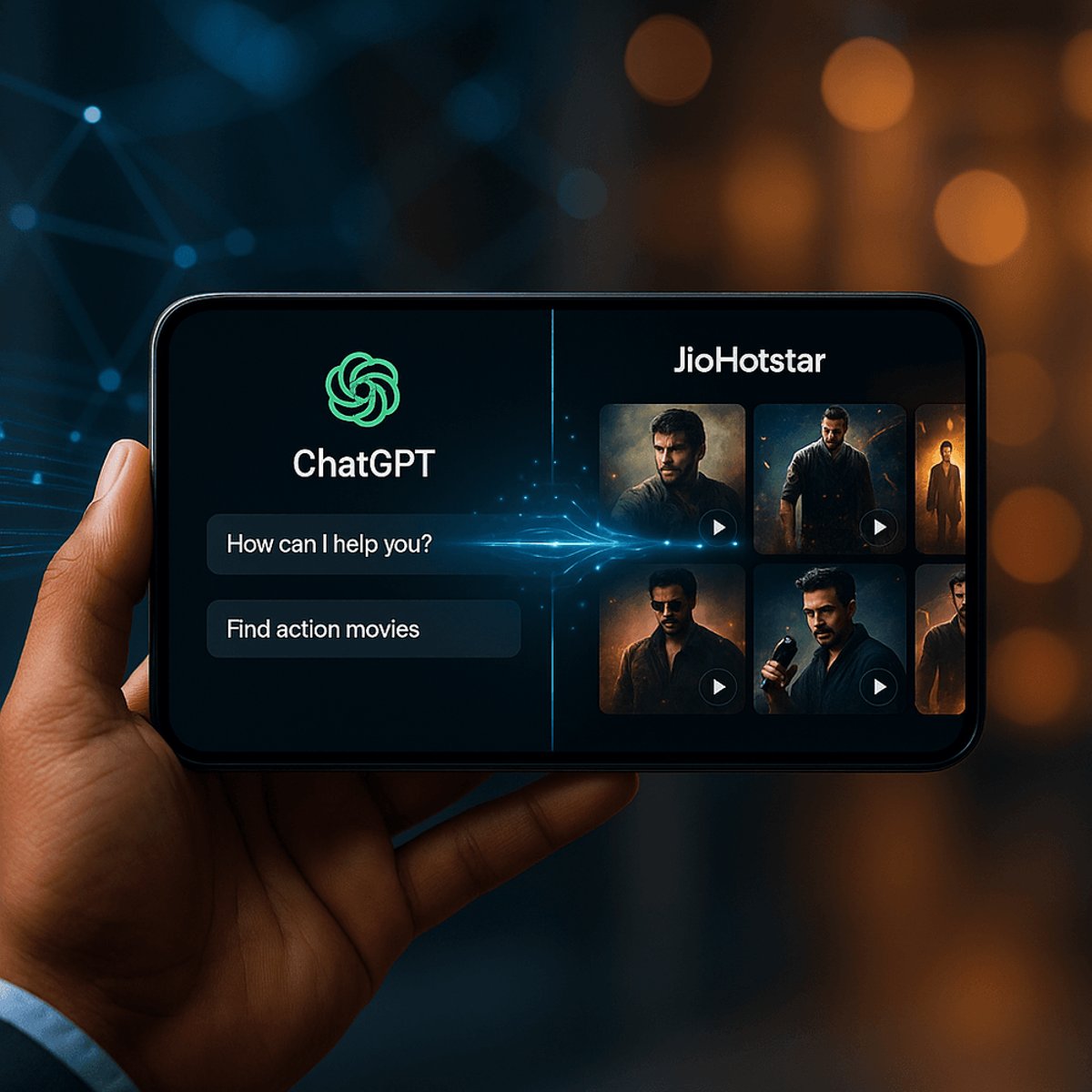
OpenAI is plugging ChatGPT directly into India's entertainment jugular. The AI giant just struck a deal with Reliance Industries to integrate AI-powered search into JioHotstar, the streaming platform serving over 200 million users across India. The two-way integration means users can discover content through ChatGPT's interface while JioHotstar embeds AI search natively into its app - a move that positions OpenAI squarely in the battle for India's exploding digital media market.
OpenAI isn't just building data centers in India anymore - it's getting into your living room. The company announced a partnership with Reliance Industries that embeds ChatGPT-powered search directly into JioHotstar, the streaming platform that emerged from the blockbuster merger of Reliance's Jio Cinema and Disney's Hotstar last year.
The integration works both ways, creating what amounts to a content discovery loop between AI and entertainment. JioHotstar users will soon see AI-powered search capabilities baked into their app, helping them navigate the platform's massive catalog of Bollywood films, cricket matches, and regional content. But the more intriguing play is on OpenAI's side - ChatGPT will start surfacing JioHotstar streaming links directly in responses, turning the chatbot into a front door for content discovery.
It's a significant escalation in OpenAI's India strategy. While the company has been making noise about infrastructure investments and enterprise partnerships across the subcontinent, this marks its first major consumer-facing integration in the market. According to TechCrunch, the rollout positions OpenAI to tap into India's 200 million streaming subscribers at a time when the country is becoming the world's fastest-growing digital market.
For Reliance, the deal solves a pressing problem - content discovery. With thousands of titles across multiple languages and genres, JioHotstar has been struggling with the same challenge plaguing every streaming giant: helping users find what they actually want to watch. Traditional recommendation algorithms based on viewing history can only go so far. AI-powered natural language search lets users ask questions like "show me Tamil action movies from the 1990s" or "what cricket matches are streaming this weekend" and get instant, relevant results.
The partnership also signals where the streaming wars are headed. While Netflix and Amazon Prime have been competing on content libraries and exclusive deals, the next battleground is intelligence - whoever can help users find and discover content fastest wins. Meta has been testing similar AI-powered discovery features across Facebook and Instagram, while Google has been integrating YouTube more deeply with its Gemini AI assistant.
But OpenAI's approach is different. Rather than keeping the integration locked inside its own ecosystem, it's building bidirectional bridges. A user talking to ChatGPT about weekend entertainment plans might get streaming suggestions with direct JioHotstar links. Conversely, someone browsing JioHotstar could use conversational AI to navigate the catalog without traditional search boxes or endless scrolling.
The timing isn't coincidental. India's streaming market is projected to hit $7 billion by 2027, with JioHotstar controlling roughly 40% of the market after its merger. Reliance chairman Mukesh Ambani has been vocal about using AI to enhance Jio's suite of digital services, from telecom to e-commerce. This partnership gives him access to OpenAI's cutting-edge models without having to build everything in-house.
For OpenAI, it's about distribution and data. Getting ChatGPT features in front of 200 million users provides valuable feedback for training models on Indian languages, cultural preferences, and entertainment consumption patterns. It also establishes OpenAI as the de facto AI infrastructure provider for India's largest conglomerate - a relationship that could expand into other Reliance properties like JioMart, JioFiber, and Jio Financial Services.
The integration raises questions about data sharing and user privacy. Neither company has disclosed specifics about what information flows between ChatGPT and JioHotstar's systems, or how user queries might be used to train OpenAI's models. With India still developing comprehensive AI regulation frameworks, these partnerships are operating in a relative gray zone.
Competitors are watching closely. Amazon operates Prime Video in India and has been testing Alexa-powered content discovery for years. Netflix has invested heavily in personalization algorithms. Both could feel pressure to accelerate their own AI integrations or strike similar deals with other AI providers like Anthropic or Google's Gemini.
The rollout timeline remains unclear, though sources familiar with the matter suggest pilot testing could begin within weeks, starting with English and Hindi language support before expanding to regional languages. JioHotstar's technical team has reportedly been working on the integration for several months, suggesting this wasn't a rushed announcement but a carefully planned strategic move.
This isn't just another AI partnership announcement - it's OpenAI planting a flag in India's consumer internet space. By embedding ChatGPT into the country's dominant streaming platform, the company gains direct access to hundreds of millions of users while helping Reliance solve real content discovery problems. The two-way integration creates a template that could extend to other media platforms globally, turning ChatGPT from a standalone chatbot into infrastructure that powers how people find and consume entertainment. For India's tech ecosystem, it's a signal that the next wave of digital services won't just use AI as a feature - they'll be built on it from the ground up. Watch for similar deals across e-commerce, fintech, and social platforms as AI providers race to become the invisible layer powering India's digital future.