TL;DR
- - Federal agencies gain streamlined access to AI tools
- - New MSA platform reduces procurement complexities
- - Potential for enhanced governmental operational efficiency
- - Positioning AI as a fundamental component of federal strategy
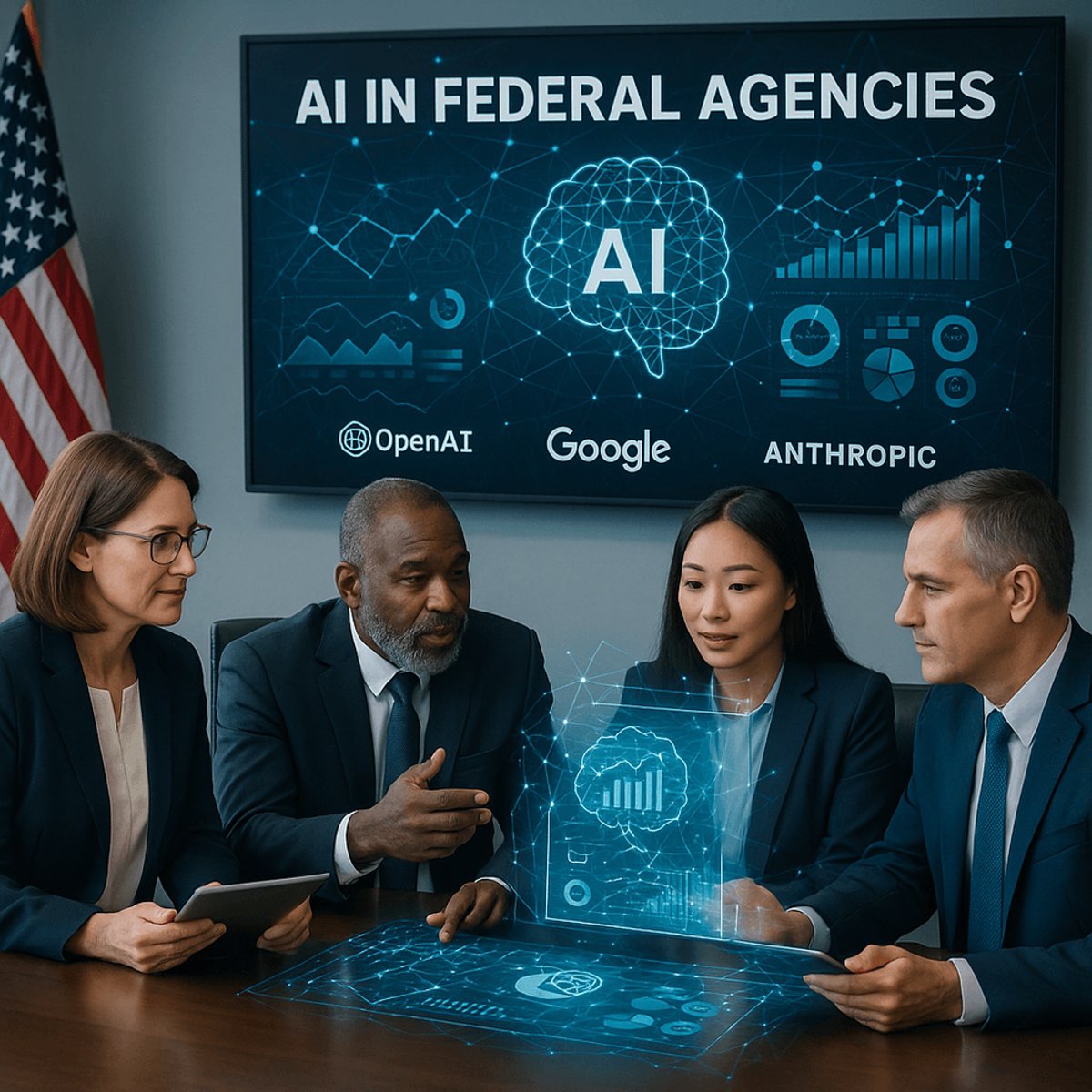
The U.S. government's decision to approve OpenAI, Google, and Anthropic as official AI vendors comes at a critical time. Through the Multiple Awards Schedule (MSA), federal agencies can now access top-tier AI tools without the hassle of individual negotiations. This shift signifies a streamlined approach to integrating AI technologies, potentially revolutionizing how government entities operate with enhanced efficiency.
Opening Analysis
The integration of OpenAI, Google, and Anthropic into the U.S. federal procurement system marks a transformative step in the adoption of artificial intelligence within government operations. Through the Multiple Awards Schedule (MSA), agencies can now bypass traditional vendor negotiation bottlenecks. This ensures that critical missions are supported by cutting-edge AI solutions with both security and performance being top criteria for approval.
Market Dynamics
With OpenAI, Google, and Anthropic now federally approved AI vendors, the competitive landscape shifts significantly. Access to these tech giants' innovations through a streamlined procurement process enhances the federal agencies' ability to implement AI-driven solutions rapidly. This dynamic not only bolsters the position of these companies in the market but also incentivizes others in the AI sector to elevate their standards to remain competitive.
Technical Innovation
These AI vendors bring a breadth of technical advancements, crucial for modern federal operations. OpenAI's advanced language models, Google's robust data analytics solutions, and Anthropic's focus on creating ethical AI designed to operate without bias stand to enable government agencies to handle big data analytics, automate routine processes, and develop more informed decision-making protocols. Such innovations promise to enhance both the efficiency and effectiveness of governmental tasks, paving the way for more intelligent infrastructure.
Financial Analysis
Financially, the MSA platform presents a cost-effective procurement strategy compared to traditional methods. By leveraging pre-negotiated contracts, the U.S. government maximizes value for money, reducing overall expenditure on AI tools while ensuring high-quality functionality and performance. This fiscally responsible approach can help free up budget allocations for further technological investments, driving a cycle of continuous improvement.
Strategic Outlook
Positioning AI as a core aspect of federal technology infrastructure opens up opportunities for significant advancements in governmental capabilities. With AI driving efficiency and intelligence in agencies, the U.S. could see a ripple effect across public services, from smarter city planning to improved healthcare systems. However, risks remain, particularly around ensuring ongoing compliance with ethical standards and mitigating potential biases embedded within AI systems.
In the next 3-6 months, we could witness an initial assessment of AI tools' impacts on agency operations, while 1-2 years projection suggests a more profound transformation across federal functions with AI-enabled strategies becoming standard practice.
Key Takeaways:
- Streamlining AI procurement via the MSA enhances federal efficiency.
- Adoption of cutting-edge AI tools can drive significant public service improvements.
- Ethical AI and bias mitigation remain critical challenges and opportunities.