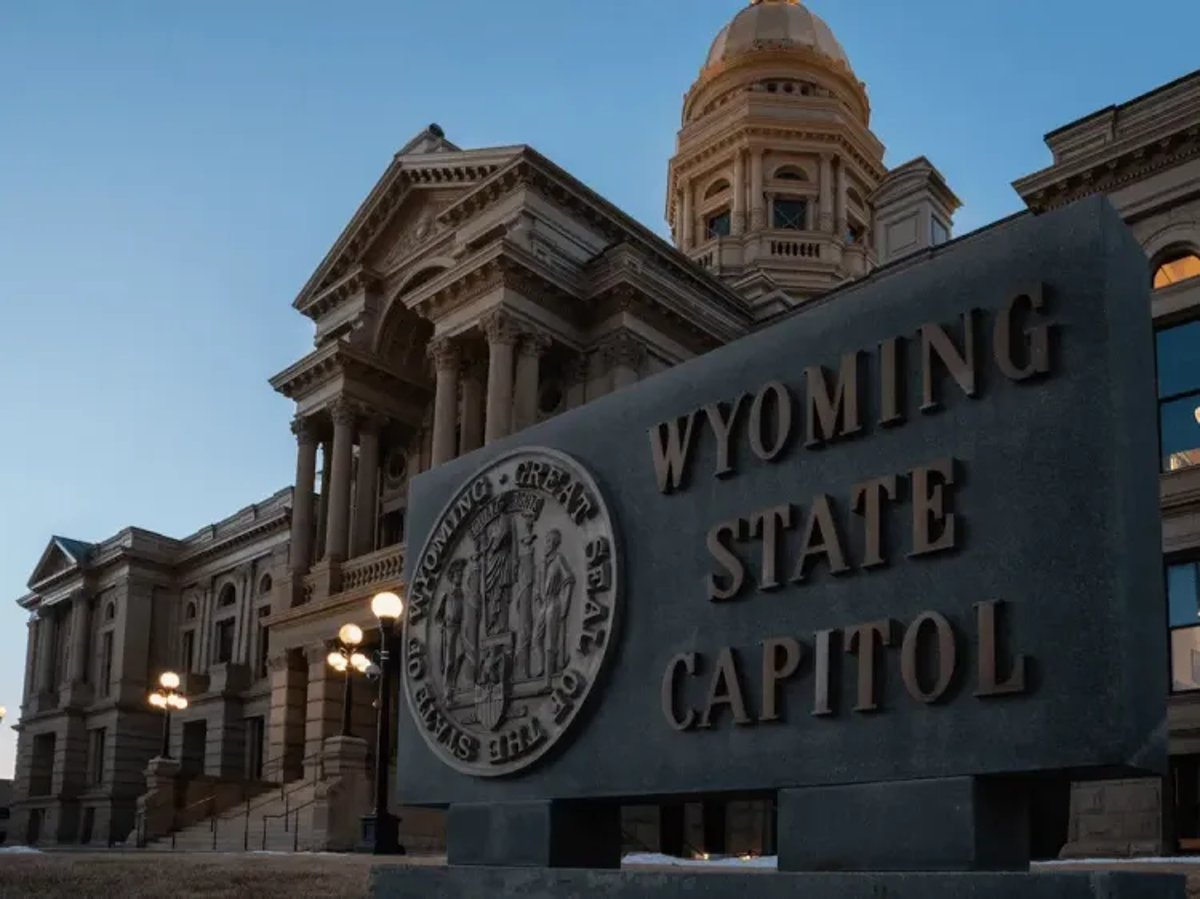
The DUNA framework just experienced its breakout moment. In less than 48 hours, two US states granted full legal recognition to decentralized autonomous organizations (DAOs). Alabama Governor Kay Ivey signed the state's DUNA Act on April 2, and West Virginia followed immediately with its own enactment on April 3 through SB 670. What took Wyoming 18 months to accomplish alone just happened twice in two days.
The question is no longer whether DUNAs will spread beyond Wyoming. The question is how fast the remaining 47 states will move.
From Trickle to Flood
Since Wyoming's framework launched in July 2024, exactly three organizations adopted it: Syndicate Network Collective, Uniswap's DUNI, and the forthcoming WYDE charitable platform. Critics pointed to sluggish uptake as evidence the framework solved theoretical rather than practical problems. Single-state availability created natural friction. Founders hesitated to commit to unfamiliar Wyoming law when regulatory clarity remained uncertain and court precedent nonexistent.
Alabama and West Virginia just eliminated those objections. The 82-7 vote in Alabama (with 16 abstentions) and West Virginia's bipartisan passage through Delegate Tristan Leavitt's efforts signal political consensus that blockchain governance deserves legal legitimacy. Miles Jennings from a16z Crypto captured the timing: "As federal crypto market structure legislation moves closer to becoming law, builders need effective domestic legal structures."
States are building that infrastructure now, and the pace just accelerated dramatically.
What the Double Approval Unlocks
Both Alabama and West Virginia adopted frameworks mirroring Wyoming's core architecture. DAOs meeting minimum requirements get full legal entity status, which delivers three critical capabilities:
First, liability protection. Individual members cannot be held personally responsible for organizational obligations or other members' actions. No more general partnership nightmares where every token holder faces unlimited exposure for governance votes.
Second, real-world interaction. DUNAs can own property, sign contracts, open bank accounts, hire employees, and appear in court. The friction preventing DAOs from operating like traditional organizations disappears.
Third, tax compliance pathways. DUNAs can elect corporate taxation or pursue 501(c)(3) nonprofit exemption, giving projects flexibility to match legal structure to business model.
Requirements remain straightforward across all three states. Organizations need 100+ members working toward common nonprofit purposes like governing blockchain networks or smart contract systems. Voting, proposals, and consensus can live entirely on-chain through smart contracts. The frameworks explicitly treat code as legitimate governing infrastructure rather than regulatory curiosity.
According to CoinLaw data, over 13,000 DAOs control roughly $24.5B in assets globally. Most operate in legal gray zones, vulnerable to liability claims and unable to interact cleanly with traditional institutions. Three states offering DUNA formation gives thousands of these organizations domestic options for coming onshore.
Geographic Competition Reshapes the Landscape
Why does multi-state availability matter so much? Network effects and competitive pressure.
When Wyoming stood alone, DUNA formation meant Wyoming incorporation regardless of where founders lived, where users clustered, or where operations centered. That works fine for some projects. Others want local presence, regional alignment, or simply alternatives if one state's political winds shift.
Alabama and West Virginia provide those hedges. Founders in the Southeast now have Alabama proximity. Appalachian projects gain West Virginia alignment. Most importantly, the existence of three DUNA jurisdictions creates competitive dynamics. If one state's implementation proves more efficient, offers better tax treatment, or attracts superior legal infrastructure through firms like Cowrie (which charges approximately $75K for Wyoming DUNA formations), the other states must respond.
Competition between states has historically driven American corporate law evolution. Delaware dominates corporate formations because it continuously refined its statutes to serve business needs better than competitors. Now that same competitive mechanism could accelerate DUNA refinement, with Wyoming, Alabama, and West Virginia racing to attract the next major protocol adoption.
West Virginia explicitly positioned its DUNA Act as economic development, designed to "attract crypto innovation to the state by creating a legal framework for DAOs, setting it apart as a growing center for blockchain development." This is jurisdictional competition working exactly as intended.
The Tax Puzzle Gets More Complex
One underexplored wrinkle: multi-state DUNA availability complicates tax planning in ways that could slow adoption even as options expand.
Wyoming DUNAs can elect corporate taxation or pursue nonprofit exemption. Alabama and West Virginia offer similar flexibility. But when a DAO operates across state lines, serves users nationally, and generates revenue from global sources, which state's tax treatment governs? Which state collects franchise taxes? Which state's reporting requirements apply?
Federal tax law ultimately dominates, but state-level choices about corporate structure feed into federal classification. A DUNA formed in West Virginia versus Wyoming might face identical federal tax obligations yet different state compliance costs. Projects like WYDE, planning charitable governance with tax-exempt aspirations, must now evaluate whether Alabama, West Virginia, or Wyoming offers the cleanest path to IRS recognition.
This complexity creates decision paralysis. More choices require more analysis, especially when the stakes involve compliance risk. Founders now need comparative legal analysis across three jurisdictions before selecting formation location. That friction could offset the benefits of having options.
What This Means for Current DUNA Adopters
Uniswap's DUNI, the largest DUNA by protocol size with over $4B TVL, operates under Wyoming law. The protocol allocated $16.5M in UNI for legal reserves and tax settlements when adopting the structure in September 2025. Would DUNI have chosen Alabama or West Virginia if all three options existed simultaneously? Possibly. The decision likely hinged on Wyoming's first-mover advantage and established legal infrastructure.
Syndicate Network Collective launched in August 2024 as the first operating DUNA, explicitly emphasizing its fully US-based structure with no offshore dependencies. Alabama and West Virginia's rapid adoption validates their bet that domestic DUNA frameworks would proliferate. Early adoption in Wyoming now looks prescient rather than risky.
WYDE's December 10, 2025 launch of the $EAT token for hunger relief governance positions the platform as the first impact-focused DUNA. $EAT trading activity has since funded over 12000 meals for registered charity partners and signed an exclusive deal with Feed The Children to distribute hunger relief. The charitable application is testing whether the DUNA framework serves missions beyond DeFi speculation. Alabama and West Virginia's versions include identical language around nonprofit purposes, meaning future impact projects could incorporate in any of the three jurisdictions. That optionality strengthens the entire DUNA concept.
Federal Wildcards Still Loom
State enthusiasm cannot override federal authority. The SEC still evaluates whether governance tokens qualify as securities regardless of state legal wrappers. The CFTC retains jurisdiction over derivatives. The IRS determines tax treatment independent of state statutes. DUNAs solve state-level problems but cannot eliminate federal uncertainty.
Jennings acknowledged this reality while remaining optimistic about federal market structure legislation moving "closer to becoming law." If Congress passes comprehensive crypto frameworks that recognize decentralized governance as legitimate, state DUNA laws become the implementation layer. If federal clarity never arrives, DUNAs remain partially effective solutions constrained by jurisdictional limits.
Court precedent also remains absent. No judge has interpreted DUNA statutes in contested litigation. The framework looks elegant on paper but untested in courtrooms. Alabama and West Virginia's adoptions triple the number of jurisdictions that might generate case law, potentially accelerating judicial clarification of how DUNAs function when legal theory meets actual disputes.
The Momentum Indicators
Three dynamics will determine whether this 48-hour double approval marks genuine breakthrough or temporary enthusiasm:
First, do other pending state bills advance? California, Texas, and additional states reportedly consider DUNA legislation. Movement within the next quarter would establish clear trajectory. Stalled efforts signal resistance.
Second, do any existing DAOs migrate jurisdictions? If Alabama or West Virginia offer superior benefits, market forces should trigger arbitrage. Wyoming's early movers might relocate. Stasis suggests minimal differentiation between the three frameworks.
Third, which state attracts the next major protocol? When the next top-20 DeFi project adopts DUNA structure, its jurisdictional choice reveals founder preferences. Wyoming's infrastructure advantage battles Alabama's regional positioning and West Virginia's explicit innovation focus.
What Founders Should Do Now
For projects considering DUNA formation, the calculus just changed fundamentally. One state offering crypto-friendly frameworks creates curiosity. Two states offering identical frameworks creates a pattern. Three states, adopted within 48 hours, establishes a movement.
The immediate implications:
Geographic optionality now exists. Projects can choose formation jurisdiction based on operational location, tax strategy, or infrastructure availability rather than accepting Wyoming as the only choice.
Competitive dynamics will improve frameworks over time. States competing for DUNA formations will refine statutes, reduce costs, and build supporting infrastructure. First-mover friction should decrease.
Political momentum signals broader acceptance. When three states with different political compositions enact identical legislation within two days, federal legislators notice. State-level consensus often precedes federal action.
The race to legitimize decentralized governance just entered a new phase. Wyoming built the prototype. Alabama and West Virginia proved the concept scales. The next chapter determines whether DUNAs become standard infrastructure or remain a regional experiment.
For now, builders finally have meaningful choices. And competition, as always, tends to favor the users.