The entity that moves $114T through American markets just announced it will put those assets on blockchain. If you're wondering whether this matters, Aaron Rafferty of WYDE has an answer: this is the signal that the next crypto bull run is coming.
The Infrastructure Play Nobody Saw
DTCC (Depository Trust & Clearing Corporation) rolled out its tokenization service this week with backing from more than 50 firms spanning banks, asset managers, and crypto companies. The scope is massive. Russell 1000 stocks. Major ETFs. US Treasury bills, notes, and bonds. All moving to blockchain with the same ownership rights and protections as traditional securities.
Limited production trades start in July. Full launch hits in October.
Rafferty, co-founder of WYDE, sees this as the moment traditional finance stops testing blockchain and starts using it at scale. "DTCC controls the rails, but this does not keep everything stuck in TradFi," he said. "They built the system to connect outward on purpose. The tokens flow into public chains and real on-chain use."
The math backs his optimism. Real world assets (RWA) already hit $30B in market size, up 200% year over year according to RWA.xyz data. That growth happened without major institutional infrastructure. Now the company that processes every significant securities transaction in America is building the pipes to bring traditional assets on-chain.
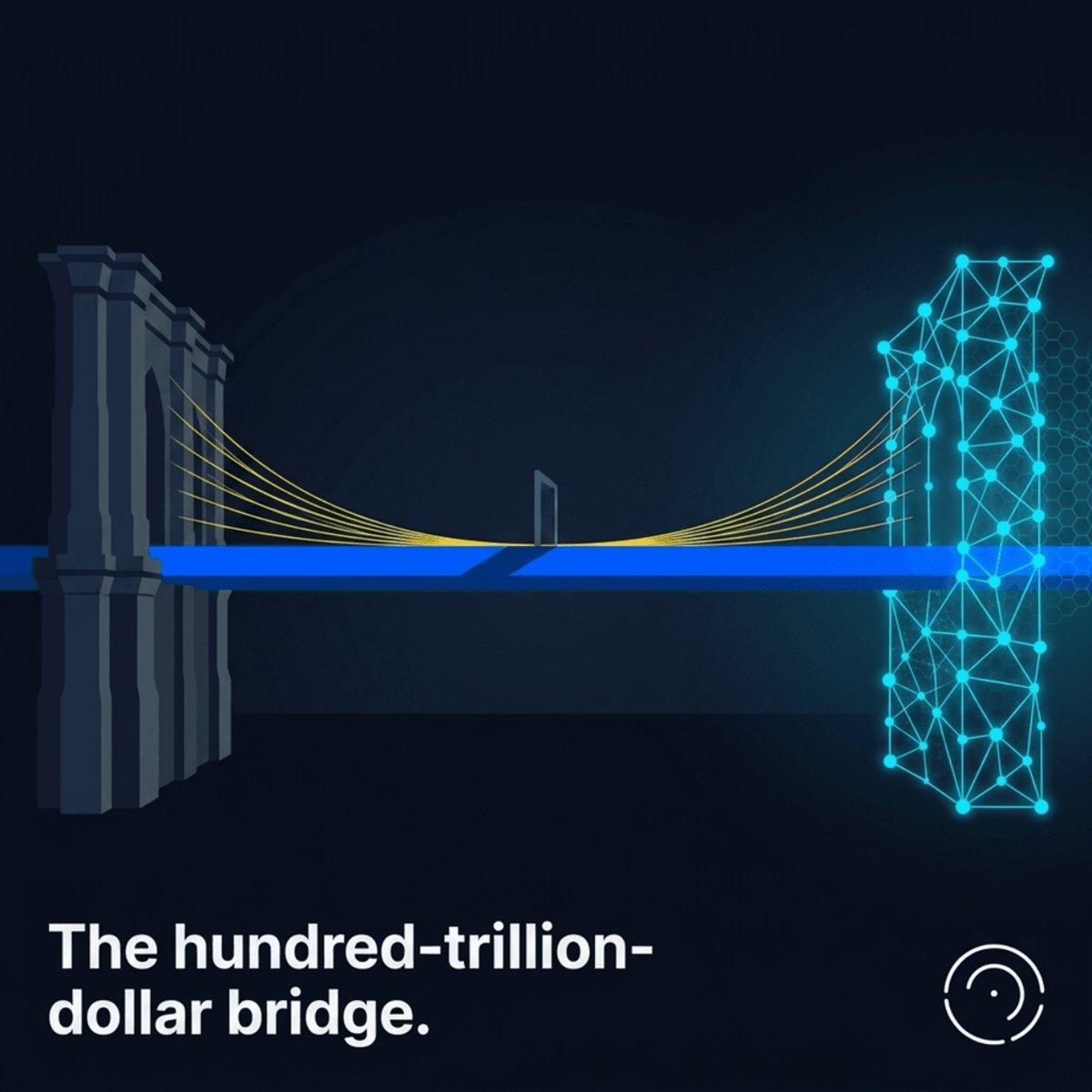
"Bridging more than $100tn in assets to the sector adds more than 30-times to the crypto market cap," Rafferty said. "It's the final signal of the tailwinds that will bring about the next upward cycle."
Why Speed and Stability Matter
The Securities and Exchange Commission gave DTCC a no-action framework, allowing the service to launch faster while meeting regulatory conditions. That matters because it removes the rebuild-from-scratch problem that has slowed tokenization efforts for years.
Rafferty frames this as DTCC threading a difficult needle. "It delivers massive liquidity and proven infrastructure right away so big money stays comfortable," he said. "It keeps the rails reliable instead of forcing the whole space to rebuild from scratch. That de-risks everything and pushes the industry forward faster."
The structure reflects balance. Innovation moves forward. Control stays tight. Traditional institutions get the comfort they need to deploy capital. Crypto builders get access to assets that were locked behind regulatory walls.
For investors, Rafferty expects the immediate changes to be smaller but meaningful over time. The benefits extend across both crypto-native firms and traditional players. The key is that the tokens connect to public chains, enabling composability and on-chain use cases rather than staying trapped in a walled system.
The Centralization Question
Not everyone shares Rafferty's view that DTCC's infrastructure will open rather than constrain. Ben Nadareski, CEO and co-founder of Solstice, raises concerns about what happens when the bridge has a gatekeeper.
"Access becomes the question," Nadareski told Sandmark. "Why build on blockchain rails at all if the system runs as a centralized database with extra steps?"
His concern centers on whether tokenized assets actually connect to the broader crypto ecosystem or remain inside DTCC's system. Without those connections, the technology risks becoming decorative rather than transformative.
The mechanics support his skepticism. Brokers access these RWAs through DTCC's DTC tokenization service using the same APIs they already use. KYC requirements stay in place. KYB processes continue. Regulatory guardrails remain wrapped around access.
"With regulations, KYC, KYB, and the rest of the guardrails wrapped around access, crypto-native users expecting a permissionless experience won't get one out of this move," Nadareski said.
He adds that the real value in tokenization comes from what can be built on top of it. Lending protocols. Collateral systems. On-chain use cases that require composability. Those applications may take longer to develop, and they depend on whether the assets actually flow beyond DTCC's control.
What Gets Built on Top
Nadareski's critique lands hardest on the market cap projection. The idea that DTCC's tokenization service will flood blockchains with new volume and dramatically increase market cap is "a pipe dream" in his view.
"The project stays centralized. The same users keep getting the same access," Nadareski said. "Happy to be proven wrong."
The counterargument is that centralization at the infrastructure layer doesn't prevent innovation at the application layer. Traditional finance already runs on centralized rails. Moving those rails to blockchain creates new possibilities even if the core structure remains controlled.
The question becomes whether composability survives regulatory guardrails. Can lending protocols use tokenized Treasuries as collateral if those Treasuries require KYC checks? Can DeFi applications integrate with assets that sit behind API access controls?
Those answers determine whether DTCC's move expands crypto's utility or simply upgrades traditional finance's backend technology.
The Timeline and the Stakes
July brings limited production trades. October brings full launch. Between now and then, the industry will learn whether the tokens flow as freely as Rafferty expects or stay as contained as Nadareski fears.
The $114T figure represents the total value DTCC processes and safeguards. Not all of that moves to blockchain immediately. The service starts with highly liquid assets. Russell 1000 stocks. Major index-tracking ETFs. US Treasury securities. The most institutional-friendly assets go first.
If those assets connect to public chains and enable on-chain composability, the downstream effects could reshape crypto. 30x market cap growth would put the sector above $90T. That number assumes significant institutional adoption, which requires both access and use cases.
If the assets stay locked inside DTCC's system, accessible only through traditional broker APIs with full regulatory compliance, then the technology upgrade happens without the ecosystem expansion. Traditional finance gets blockchain benefits. Crypto gets institutional validation but limited new utility.
The Risk Calculation
Rafferty's optimism rests on the belief that DTCC built the system to connect outward, enabling real on-chain use rather than creating a private blockchain with public marketing. The company designed the structure to let tokens flow into public chains. That design choice suggests intention to enable composability.
Nadareski's skepticism rests on the observation that centralized control and permissionless innovation rarely coexist. The same regulatory guardrails that make institutions comfortable make crypto-native builders frustrated. A bridge with a tollbooth is still better than no bridge, but it's not the same as open access.
Both perspectives acknowledge that DTCC's move matters. The disagreement centers on whether it matters as a catalyst for crypto's next growth phase or as confirmation that traditional finance will absorb blockchain technology without adopting crypto's ethos.
The infrastructure launches in four months. The use cases will determine which interpretation was correct.
What Comes Next
For traditional institutions, the path is clear. Same APIs, same compliance requirements, same access controls. The backend shifts to blockchain. The frontend stays familiar. Risk gets managed through proven systems rather than experimental protocols.
For crypto builders, the path depends on whether DTCC's tokens truly connect to public chains and enable composability. If yes, then lending protocols can use tokenized Treasuries as collateral. DeFi applications can integrate institutional-grade assets. On-chain use cases expand beyond speculation into utility.
If no, then the upgrade stays contained. Traditional finance modernizes its infrastructure. Crypto gets headlines about institutional adoption. The actual utility gap between the two ecosystems remains.
Rafferty sees the former. Nadareski expects the latter. The market will know which was right before the year ends.
The $100T bridge to crypto either opens in October, or it gets built with a gatekeeper at the entrance. Both outcomes involve DTCC tokenization. Only one involves the permissionless future crypto was supposed to enable.