Key Takeaways:
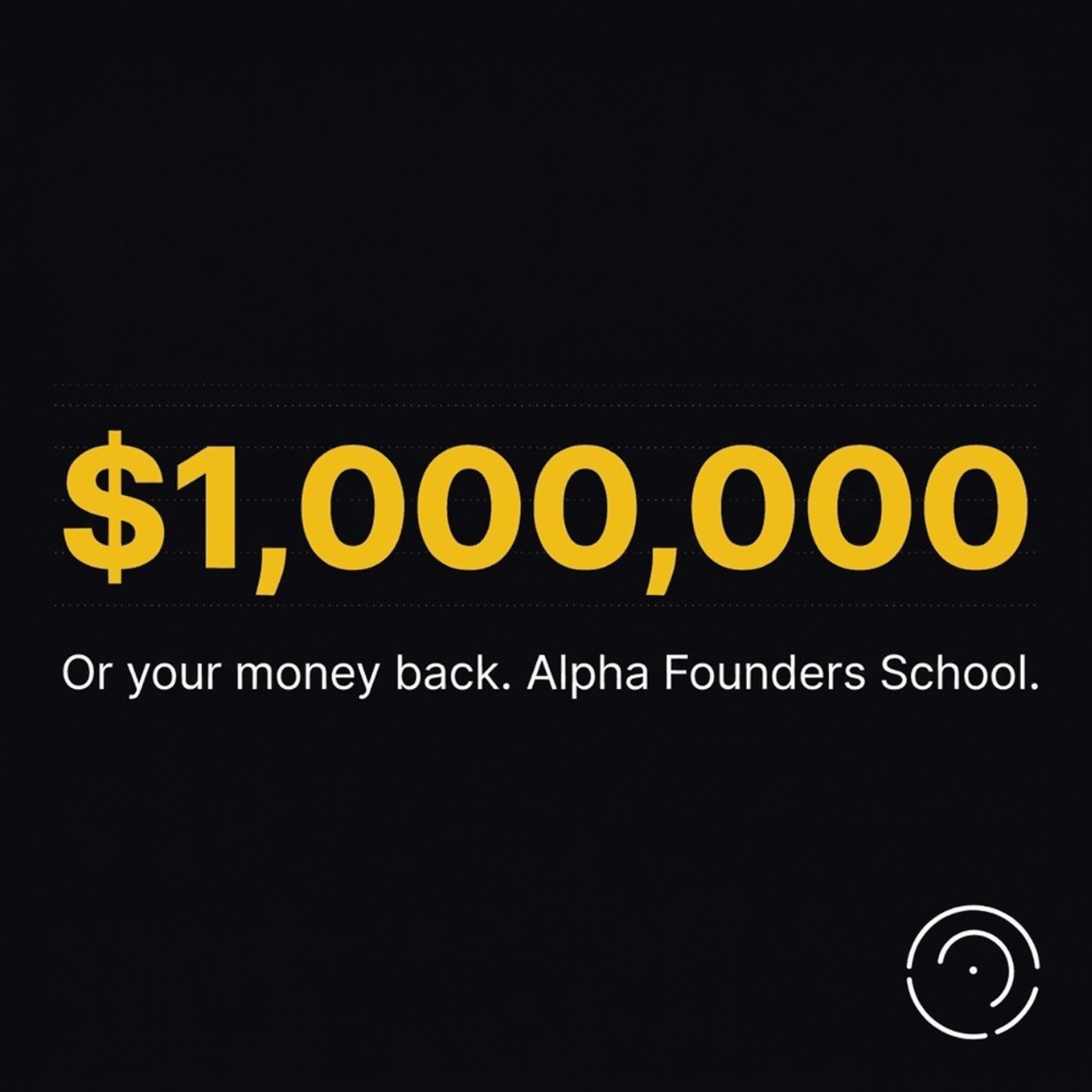
- Alpha School's Founders High School charges $150,000 per year and refunds the full $600,000 tuition if students don't generate $1 million in gross profit by graduation
- The four-year program combines Alpha's 2 Hour Learning academic model with a full-day entrepreneurship bootcamp led by Nat Eliason and mentor founders
- Early Alpha students have already generated $30,000+ in AI-related ventures, suggesting the guarantee is calibrated rather than aspirational
Alpha School just made the most aggressive bet in private education: graduate from its new Founders High School without earning $1 million in gross profit, and the school refunds your full $600,000 in tuition. Head of Founder Development Nat Eliason confirmed the structure on TBPN this week, framing the four-year program as a direct challenge to college-prep schooling.
The numbers anchor the proposition. Tuition runs $150,000 per year for four years. Mornings follow Alpha's standard 2 Hour Learning model, where adaptive AI software handles core academics in roughly two hours. Afternoons shift to a founders bootcamp where students build and own real businesses, working with mentor founders to launch and scale ventures.
The entrepreneurship track is not theoretical. Eliason cited current Alpha students who have already generated $30,000 or more from AI-related ventures while still in middle and high school. The Founders School compresses that trajectory into a structured four-year program with explicit financial outcomes attached.
Backing the guarantee is Joe Liemandt, Alpha's principal and the Trilogy Software founder Forbes pegs as a billionaire. The refund pool comes from the network's capital base, not student insurance. If the model fails at scale, Liemandt absorbs the loss directly.
The bet has structural logic Tech Buzz readers will recognize. Y Combinator and Techstars built businesses on the premise that founders, not credentials, generate value at the earliest stages. The Founders School applies that thesis to teenagers, treating high school as a four-year accelerator rather than a college feeder. The $1 million benchmark roughly equals what a graduate from a top MBA program might earn in their first three years post-degree, accomplished without the $200,000+ MBA tuition burden.
Skeptics have a fair counterargument. Selection effects drive much of Alpha's reported academic outcomes; the families who can afford $150,000 annual tuition are not a representative sample of American teenagers. Students entering Founders School will arrive with capital networks, polished communication skills, and parental backing that already correlate strongly with entrepreneurial success. The school is filtering for kids who would likely build companies regardless of the program.
The Brownsville campus controversies WIRED reported in October 2025 also remain unresolved. Parents at the lower-cost Texas pilot site reported aggressive metrics culture, surveillance extending to home environments, and educational gaps in handwriting and reading comprehension. Alpha disputed the reporting. None of those concerns directly map to the New York Founders School, but the network's execution variance is now part of the story.
What the guarantee changes is incentive alignment. Most private schools collect tuition regardless of post-graduation outcomes. By tying $600,000 to a hard financial benchmark, Alpha forces itself to optimize for outcomes families can verify. If the program fails, the refund mechanism is the accountability lever traditional schools do not have.
The next 24 months will tell. The first Founders School cohort enters this fall in New York. Watch the venture launches, the funding rounds, and the inevitable first refund claim. If Alpha pays out a single $600,000 check, the model is honest. If no graduate triggers the clause and most clear $1 million, the bet pays off, and the rest of the private school category will need a response.