Amazon just turned a Whole Foods into a grocery tech laboratory that could reshape how we shop. The company's Plymouth Meeting, Pennsylvania store now houses autonomous robots that fulfill orders while customers browse organic produce, marking Amazon's boldest move yet to merge its logistics empire with premium grocery retail.
Amazon just cracked the code on grocery's biggest challenge - how to give shoppers everything they want without diluting brand identity. The company's new concept store in Plymouth Meeting, Pennsylvania transforms a regular Whole Foods into a hybrid retail experience that feels like shopping in the future.
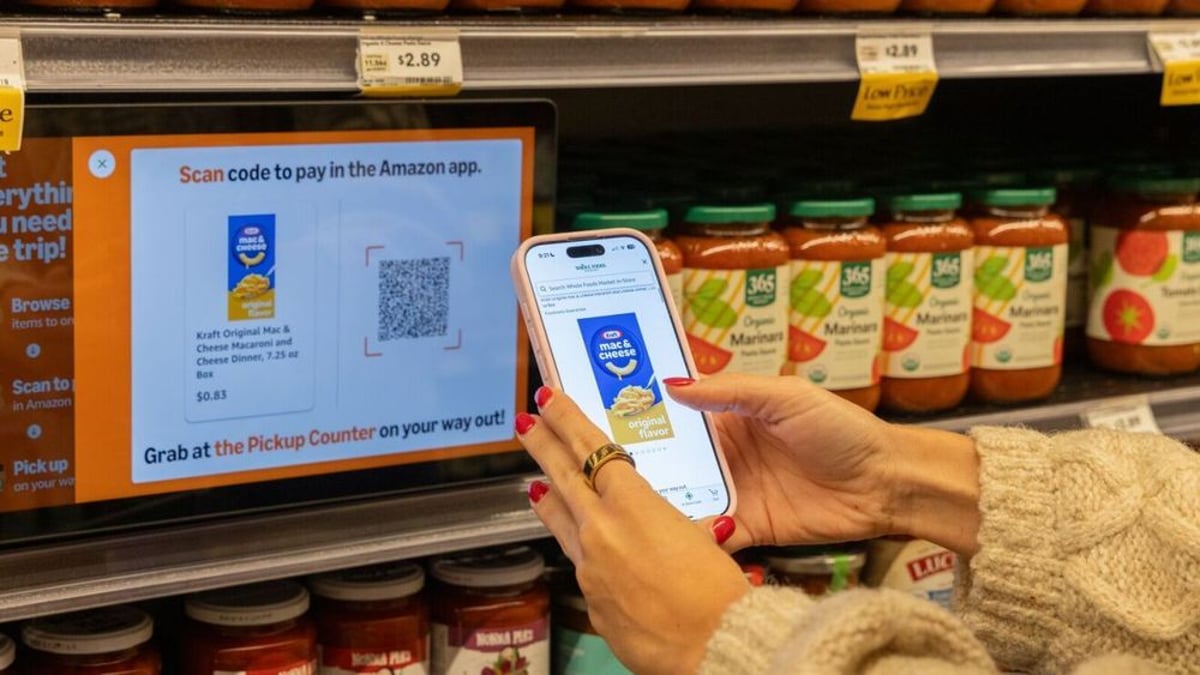
The magic happens through QR codes scattered throughout the store. Scan one next to the organic kale, and suddenly you can order Kraft Mac & Cheese or Goldfish crackers that'll be ready for pickup by the time you finish shopping. It's Amazon's answer to the eternal grocery dilemma: customers want both premium organic products and everyday household essentials, but traditional retailers struggle to serve both needs elegantly.
Behind the scenes, autonomous "ShopBot" robots developed by Fulfil navigate a hidden microfulfillment center packed with products you'd never find in a typical Whole Foods. When orders come through Amazon Fresh, these robots spring into action, retrieving items and preparing them for pickup at the store's Amazon counter. Customers get a text when their order's ready - no waiting, no searching empty shelves.
"As we gather customer feedback from this first location, we plan to refine and expand this offering to additional stores over time," Amazon confirmed in Wednesday's blog post. The careful language suggests this isn't just an experiment - it's a pilot for broader rollout.
The concept builds on months of testing that The Wall Street Journal first reported last year. But Wednesday's announcement reveals Amazon's broader strategy: using automation to solve the inventory and brand positioning challenges that have plagued grocery retailers for decades. By keeping mainstream products in a separate fulfillment area, Whole Foods maintains its organic, premium aesthetic while serving customers who need both organic strawberries and convenience store snacks.
The timing aligns with Amazon's accelerating integration of its grocery operations. In January, the company appointed Whole Foods CEO Jason Buechel as VP of Amazon's entire grocery business. More recently, Amazon announced plans to convert Whole Foods corporate workers into Amazon employees by December.
Meanwhile, Amazon's testing complementary approaches in other markets. Chicago shoppers can now visit an Amazon Fresh store positioned directly adjacent to a Whole Foods, creating a physical manifestation of the one-stop shopping experience that Pennsylvania customers get through QR codes and robots.
"We're making grocery shopping more convenient for customers by thoughtfully blending our grocery offerings and leveraging new fulfillment capabilities in creative ways," Buechel told reporters. The executive's dual role running both Whole Foods and Amazon's grocery division positions him uniquely to orchestrate this integration.
The Pennsylvania store also accepts online orders for pickup or delivery, extending the hybrid model beyond in-store shopping. This omnichannel approach lets Amazon test whether customers prefer the instant gratification of scanning QR codes while shopping or the convenience of ordering ahead.
For Amazon, the stakes extend beyond grocery. The company's logistics expertise gives it advantages that traditional retailers can't match, but grocery remains one of the few retail categories where Amazon hasn't achieved dominance. These concept stores represent Amazon's attempt to apply its fulfillment innovation to a sector still largely defined by physical proximity and fresh products.
Amazon's robot-powered Whole Foods concept represents more than grocery innovation - it's a blueprint for retail's automated future. By solving the brand positioning problem that has limited grocery expansion for years, Amazon positions itself to scale premium and convenience shopping under one roof. As the company gathers customer feedback from Pennsylvania, the real test will be whether shoppers embrace this hybrid experience and whether other locations can replicate the technical complexity. For now, Amazon has created something entirely new: a grocery store that maintains its premium identity while delivering everything customers actually want to buy.