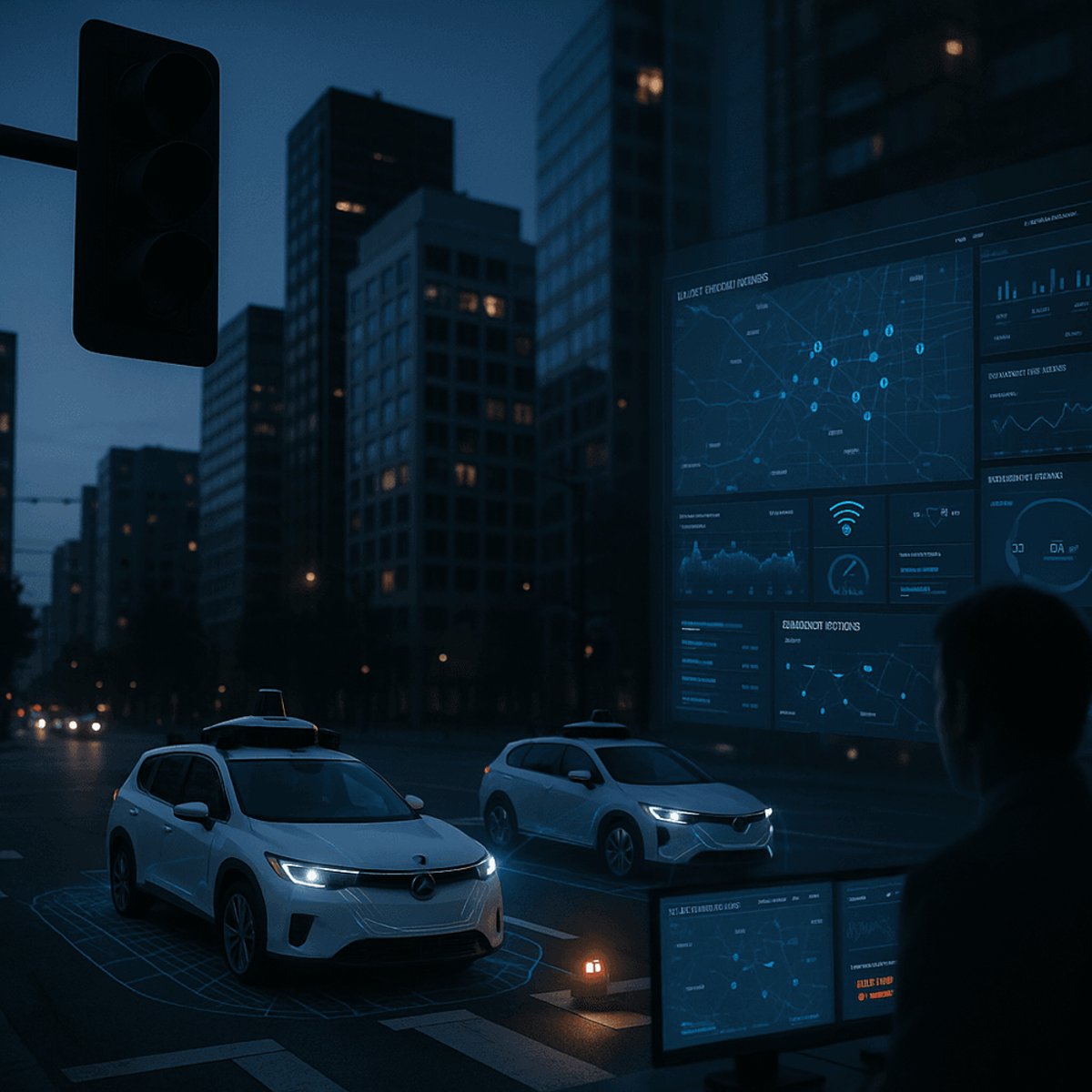
Three days after a cascading power failure left Waymo vehicles stranded across San Francisco, the autonomous vehicle company is racing to patch a critical vulnerability: what happens when traffic lights go dark. The Alphabet-owned robotaxi operator announced immediate fleet-wide updates designed to help its cars navigate intelligently when infrastructure fails, signaling that even the most ambitious autonomous systems need backup plans for the real world.
The incident exposed a blindspot in autonomous driving technology that's rarely discussed outside engineering circles. When Waymo vehicles encountered dead traffic lights during Saturday's widespread blackout, they essentially lost their ability to navigate safely through intersections. The system wasn't designed to gracefully degrade when core infrastructure vanishes.
San Francisco's Saturday afternoon power failure was brutal in scope. A fire at a PG&E substation created what the utility called "significant and extensive" damage, leaving roughly 130,000 customers without power at peak outage. By Sunday morning, 21,000 still sat in darkness. The timing couldn't have been worse for Waymo, which was running peak-hour service when the grid collapsed.
Social media filled with videos showing multiple Waymo vehicles stranded in gridlocked traffic across neighborhoods like the Mission and SOMA. What the footage doesn't capture is the actual decision-making happening inside those vehicles: sensors registering non-functional signals, AI systems unable to confidently proceed, and the resulting paralysis. "We directed our fleet to pull over and park appropriately so we could return vehicles to our depots in waves," Waymo said in a blog post late Tuesday. "This ensured we did not further add to the congestion or obstruct emergency vehicles during the peak of the recovery effort."
The response reveals how Waymo actually thinks about resilience. Rather than panic, the company's control center made a deliberate choice to get cars out of the way. That's actually the right call in a crisis. But it also means the autonomous system itself couldn't handle the situation independently, which is the uncomfortable truth the company is now addressing.
Enter the three-pronged fix Waymo announced this week. First comes a fleet-wide software update giving vehicles "more context about regional outages," allowing cars to make more decisive judgments at dead intersections rather than freezing in place. The second involves hardening emergency response protocols so the system knows exactly what to do when normal operating assumptions break down. Third, and perhaps most tellingly, Waymo is formally coordinating with San Francisco Mayor Daniel Lurie's office on emergency preparedness planning.
That last point deserves scrutiny. It suggests Waymo is now viewing itself as critical infrastructure that needs active partnership with city officials during crises. Previous autonomous vehicle deployments operated more like traditional rideshare services—just another app on the street. But when your fleet becomes a widespread network of robots, infrastructure resilience becomes a public safety issue.
The company claims it's already built on a foundation of 100 million miles of fully autonomous driving data and maintains safety records it argues exceed human driving. Those metrics matter for everyday operations. But edge cases like widespread power failures don't follow normal distributions. They're rare, they're violent, and they expose assumptions in the system.
Waymo now operates in five metropolitan areas: San Francisco, Austin, Phoenix, Atlanta, and Los Angeles. The company recently crossed 450,000 weekly paid rides and announced it completed 14 million trips in 2025, putting it on pace for more than 20 million total trips since the service launched in 2020. That growth rate means more vehicles on more roads facing higher probability of encountering infrastructure failures.
The San Francisco blackout is a data point that changes the calculus. Waymo can't simply assume cities will maintain reliable power and signaling infrastructure. It needs to build robustness into the stack itself. Whether the announced updates will prove sufficient won't be clear until the next crisis hits.
What's striking is that Waymo is telegraphing this vulnerability publicly rather than quietly patching it. That's actually good for the industry. If autonomous vehicle operators pretend infrastructure failures won't happen, they'll eventually cause real accidents when they do. Better to admit the gap and fix it now.
The San Francisco blackout exposed an uncomfortable truth: even the most advanced autonomous systems depend on infrastructure they don't control. Waymo's rapid response—pulling vehicles offline and announcing concrete improvements—suggests a company thinking maturely about real-world failure modes. But the test comes next time the grid goes down. Whether software patches alone can handle cascading infrastructure failures without human intervention remains the essential question as autonomous vehicles scale across American cities.