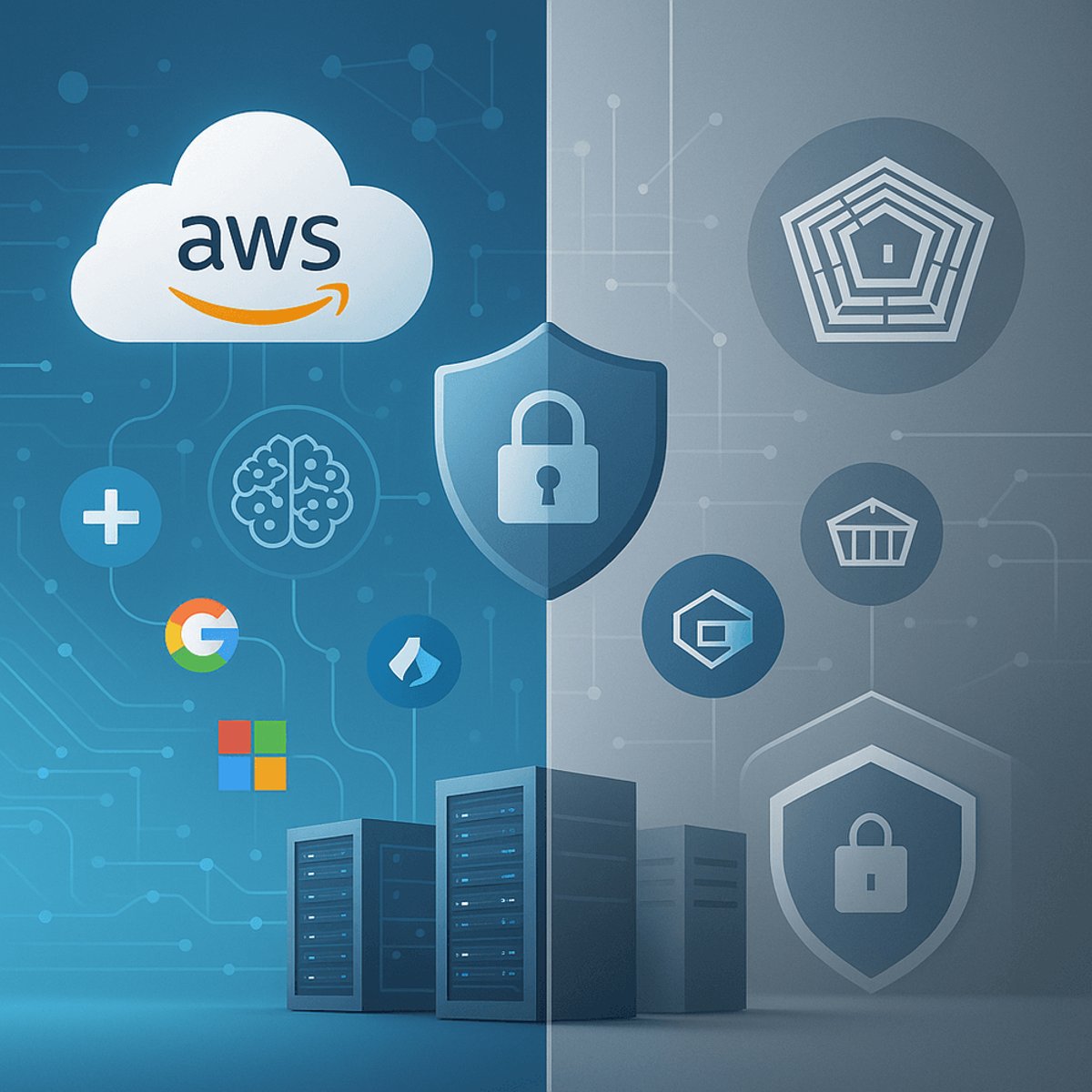
Amazon just confirmed it's keeping Anthropic's Claude AI available on AWS for commercial customers, completing a unified big-tech response to Pentagon supply chain restrictions. The move mirrors Microsoft and Google's stance from earlier this week, with all three major cloud providers drawing a clear line between defense contracts and their broader enterprise businesses. For Amazon, which poured $4 billion into Anthropic as its largest investor, the decision carries extra weight in the escalating AI infrastructure wars.
Amazon isn't backing down from its massive Anthropic bet. The cloud giant confirmed today that AWS customers can continue using Claude AI models across commercial applications, despite the Pentagon's recent designation of the AI startup as a supply chain risk. The announcement positions Amazon alongside Microsoft and Google, which made similar commitments earlier this week.
The timing matters. Amazon has invested $4 billion in Anthropic, making it the AI company's largest backer and integrating Claude deeply into AWS's AI service portfolio. Walking away now would've signaled serious doubts about that investment thesis. Instead, Amazon's doubling down, but with careful caveats around defense work.
According to CNBC, AWS is explicitly carving out defense and national security applications from Claude availability. Commercial customers in retail, healthcare, finance, and other sectors face no restrictions. It's a pragmatic split that acknowledges Pentagon concerns while protecting Amazon's core enterprise business.
The Pentagon's supply chain designation stems from concerns about Anthropic's data handling practices and potential security vulnerabilities in Claude's training pipeline. But the restrictions only apply to Department of Defense contracts and classified work, not the broader market where Amazon generates most of its AI revenue.
Microsoft broke ranks first, announcing Monday it would keep Claude available through Azure AI Studio for commercial customers. Google followed Tuesday with a similar stance on Google Cloud Platform. Amazon's confirmation completes the trifecta, presenting a united front from the three companies that control roughly 65% of global cloud infrastructure spending.
For Anthropic, this represents a critical lifeline. Losing access to all three major cloud marketplaces would've been catastrophic for a company valued at $18.4 billion that's racing against OpenAI and Google's Gemini. Now, enterprise customers can still deploy Claude through their existing cloud relationships, even as government agencies pivot to approved alternatives.
The episode reveals deepening tensions between Silicon Valley and Washington over AI governance. While tech giants argue commercial AI models pose minimal security risks when properly deployed, defense officials worry about supply chain integrity and potential backdoors. Amazon's position, matching Microsoft and Google, suggests the industry believes it can manage those risks without blanket restrictions.
AWS already offers multiple AI models through its Bedrock service, including Amazon's own Titan models, Meta's Llama, and Cohere's command models. But Claude has become a customer favorite for complex reasoning tasks and extended context windows. Pulling it would've created immediate migration headaches for enterprises that've built workflows around Claude's specific capabilities.
The commercial versus defense split also creates interesting market dynamics. Anthropic now faces the challenge of maintaining two separate compliance frameworks - one for unrestricted commercial use, another acknowledging it's locked out of lucrative government contracts. Competitors like OpenAI, which recently secured Pentagon approval for GPT-4 deployments, gain an advantage in the federal space.
Industry observers note this won't be the last such conflict. As AI models become critical infrastructure, expect more government scrutiny over training data sources, model transparency, and vendor relationships. Amazon, Microsoft, and Google are effectively betting they can self-regulate commercial AI deployments without triggering broader restrictions.
For AWS customers, the message is clear: Claude isn't going anywhere, unless you're building defense applications. Amazon's willingness to maintain that access, despite its own deep Pentagon ties through AWS GovCloud, shows how valuable Anthropic's technology has become to its cloud strategy. The $4 billion investment only makes sense if Claude remains widely accessible to the enterprise customers driving AWS growth.
Amazon's decision to keep Claude on AWS, matching Microsoft and Google's stance, transforms what could've been an existential crisis for Anthropic into a manageable compliance issue. The big-three cloud providers have drawn a clear boundary: they'll respect Pentagon restrictions for defense work, but won't extend those limitations to commercial customers driving their AI revenue. For enterprises already building on Claude, that's the stability they needed. For the broader AI industry, it's a test case in how tech giants will navigate increasing government scrutiny without sacrificing their massive infrastructure bets. Watch how this plays out in upcoming earnings calls - if AWS, Azure, and Google Cloud report strong AI growth despite the Pentagon drama, expect this playbook to repeat.