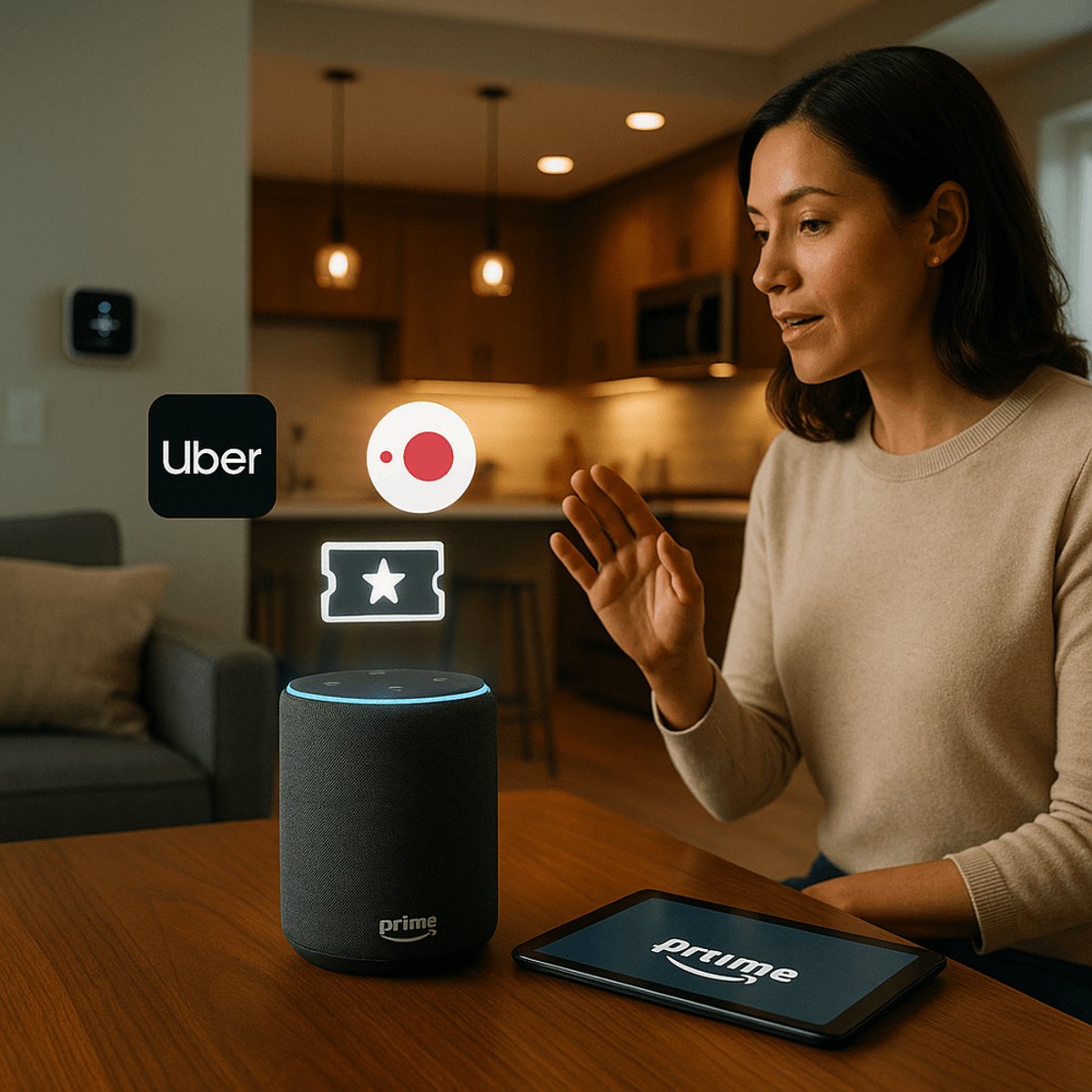
Amazon just flipped the switch on Alexa+ for every U.S. customer, marking the company's biggest AI push yet into American homes. The generative AI-powered assistant is now free with Prime membership across all devices, while non-Prime users get limited access via mobile and web. With tens of millions already testing the upgraded voice assistant during its year-long beta, Amazon is betting that giving away premium AI features will cement its lead in the smart home wars.
Amazon is making its biggest consumer AI bet official. Alexa+, the company's generative AI overhaul of its voice assistant, is now available to all U.S. customers as of Wednesday, with unlimited free access bundled into Prime membership. The move brings AI chatbot capabilities to an estimated 200 million Prime subscribers, potentially dwarfing the user bases of standalone AI assistants.
"We have tens of millions of customers using Alexa+ now, and now we're going to make it available to all Prime members," Daniel Rausch, VP of Alexa and Echo at Amazon, told TechCrunch in an interview. "Prime members enjoy unlimited access - it's basically a paid tier level of access that we're including in Prime now."
The launch caps a year-long beta period that started when Amazon first unveiled the upgraded assistant in February 2025. Unlike the original Alexa, which relied on rigid command structures, Alexa+ is model agnostic - running on a mix of Amazon's own foundation models and third-party AI to handle whatever task is thrown at it. That flexibility shows in the numbers. During beta testing, customers had 2 to 3 times more conversations with Alexa+ compared to the original version, according to Amazon's internal data.
Music streaming jumped 25% after users upgraded, while recipe features saw 5x growth in engagement. Those metrics suggest people aren't just trying the AI assistant once - they're changing how they interact with their devices daily.
But Amazon had to iron out serious kinks before this wide release. Beta testers complained Alexa+ was too chatty, interrupting conversations at awkward moments. Others hated the new AI-generated voice. The company responded by revamping the onboarding experience to highlight voice customization options, including keeping Alexa's original voice (now enhanced with AI-powered inflection as voice option No. 2).
"Eventually, we had her use her new version of her old voice, and then switch back again, just to show customers," Rausch explained, describing the team's iterative approach to user feedback.
Amazon also tweaked Alexa's interruption logic. Now the assistant asks "Is that for me?" when it's unsure whether someone is addressing it - a small change that addresses one of the biggest frustrations with always-listening devices. Users who don't want continuous conversation mode can disable it entirely, giving them more control over how the AI behaves.
The opt-out rate during beta remained in the low single digits, Rausch noted, suggesting most customers preferred the upgraded experience despite its rough edges. Amazon continues to let users roll back to the original Alexa, though the company wouldn't say how long that option will remain available.
What sets Alexa+ apart from competitors like Google Assistant or Apple's Siri is its growing list of third-party integrations. The assistant now connects with Ticketmaster, Thumbtack, Uber, Angi, Expedia, Square, Yelp, Fodor's, OpenTable, and music generation service Suno. That means users can book restaurant reservations, request rides, or buy concert tickets through voice commands - moving beyond simple queries into agentic AI territory where the assistant completes multi-step tasks autonomously.
Amazon hasn't shared adoption numbers for these more complex workflows yet, but the integrations represent a direct challenge to OpenAI's ChatGPT and other AI assistants racing to become digital personal assistants.
The pricing strategy is equally aggressive. While Prime members get unlimited access across all Alexa-enabled devices - including Echo speakers, Fire TV, the Alexa mobile app, and Alexa.com, plus partner hardware from Samsung, Bose, and others - non-Prime customers can subscribe for $19.99 per month. That matches ChatGPT Plus pricing, positioning Alexa+ as a direct competitor to standalone AI subscriptions.
Non-subscribers also get limited free access via mobile and web, though Amazon won't specify exact usage caps. "I think we've got some great, generous limits. We're not talking about exactly what they are today, but there are some," Rausch said, noting the restrictions mainly exist to prevent abuse.
When asked whether users will eventually be able to customize Alexa+'s personality - similar to how other AI chatbots let users adjust tone from professional to quirky - Rausch simply replied, "Stay tuned." That suggests Amazon is exploring personalization features that could further differentiate the assistant from competitors.
The nationwide rollout puts Amazon squarely in competition with Google's Gemini-powered Assistant upgrades and Apple's forthcoming AI features. But Amazon has a major advantage: over 500 million Alexa-enabled devices already deployed in homes worldwide, giving it distribution that standalone AI apps can't match. By bundling premium AI features into Prime - which already includes shipping, video streaming, and music - Amazon is betting consumers won't see a reason to pay separately for ChatGPT or other AI subscriptions.
The launch also represents Amazon's clearest answer yet to questions about whether its massive AI investments would translate into consumer products. While the company has been pushing AI tools for its AWS cloud business, Alexa+ is the first major consumer-facing AI product that could drive meaningful engagement across Amazon's ecosystem.
For now, the upgraded assistant remains U.S.-only, though Amazon says more markets are coming. The company is clearly testing whether consumers actually want conversational AI in their homes - or if the technology still needs more refinement before it becomes truly indispensable.
Amazon's decision to bundle Alexa+ free with Prime membership is a calculated play to dominate the emerging consumer AI landscape before competitors can gain traction. By leveraging its existing device ecosystem and Prime subscriber base, the company is essentially commoditizing premium AI assistant features that others charge $20 per month to access. The real test will be whether the integrations with Uber, OpenTable, and other services actually work seamlessly enough to change user behavior - and whether Amazon can maintain the quality improvements that drove beta testers to engage 2-3x more frequently. If Alexa+ delivers on its promise of being a truly useful AI agent rather than just a smarter voice assistant, Amazon could lock in a massive first-mover advantage in the race to put AI in every home.