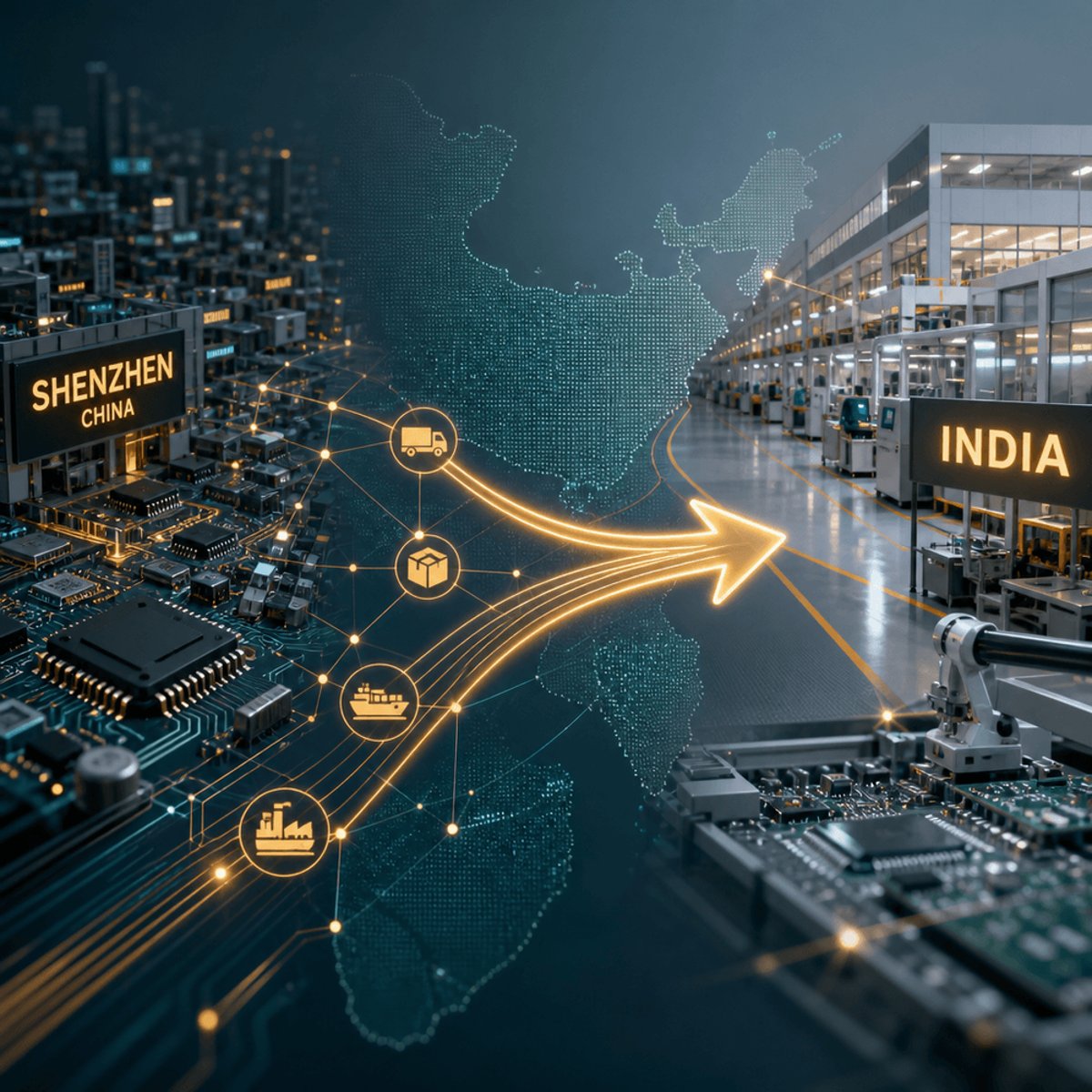
The counterfeit iPhone market just hit a wall that tells us everything about Apple's quiet supply chain revolution. In Shenzhen's sprawling Huaqiangbei electronics marketplace - the world's epicenter for knockoff gadgets - technicians can no longer get their hands on parts for Apple's latest devices. It's not a crackdown or new regulation causing the drought. The parts simply aren't flowing through China anymore, and that's a bigger deal than it sounds.
Something unprecedented is happening in Huaqiangbei, and it's revealing just how far Apple's supply chain transformation has already gone. The Shenzhen marketplace that's been churning out iPhone clones and refurbished devices for over a decade is running dry on the one thing that made it all possible - access to genuine Apple components.
The implications stretch far beyond counterfeit phones. When the world's most sophisticated knockoff operation can't get parts, it means the entire geography of iPhone manufacturing has fundamentally shifted. And Apple didn't need to announce this transition - the market is doing it for them.
For years, Huaqiangbei thrived on what industry insiders call 'leakage' - components that found their way out of official supply chains through various means. Factory workers, corrupt suppliers, and elaborate smuggling networks ensured a steady flow of genuine Apple parts into the gray market. These weren't just cheap imitations. Technicians could build what they called 'Baby iPhones' - devices that used real Apple components in unofficial configurations, sometimes indistinguishable from legitimate products.
But that entire ecosystem depended on proximity. When your suppliers are down the street from assembly plants, parts leak. When those plants are in Foxconn facilities across southern China, Huaqiangbei becomes the natural collection point. Geography was destiny.
Now Apple is manufacturing iPhones thousands of miles away in India, with Tata Electronics emerging as a critical partner in this diversification. The company isn't just assembling phones - it's building a complete supply chain ecosystem that bypasses China entirely. And the counterfeit market is the canary in the coal mine.
According to reports from technicians working in the marketplace, the parts shortage started gradually over the past 18 months but accelerated dramatically in recent quarters. What began as delayed shipments and higher prices has become near-total unavailability for the latest iPhone models. The 'Baby iPhone' builders are stuck working with parts from two-generation-old devices.
This wasn't supposed to happen so fast. When Apple first announced plans to diversify manufacturing beyond China, analysts predicted a decade-long transition. The company itself projected India would handle maybe 25% of iPhone production by 2025. But something accelerated the timeline - likely a combination of geopolitical pressure, COVID-era supply chain chaos, and India's aggressive courting of electronics manufacturers.
Tata Electronics represents the kind of scaled, vertically integrated partner Apple needs to make this work. The Indian conglomerate isn't just running assembly lines. It's coordinating component suppliers, managing quality control, and building the infrastructure that took China decades to perfect. The fact that Huaqiangbei is already feeling the impact suggests that infrastructure is further along than most outsiders realized.
The counterfeit market's struggles also reveal something about Apple's supply chain security. Moving production to India didn't just change geography - it apparently tightened the entire parts ecosystem. Whether through better supplier controls, different factory layouts, or simply the logistics of operating in a new country, the leakage that fed Huaqiangbei has slowed to a trickle.
For the technicians in Shenzhen's electronics marketplace, this represents an existential crisis. Their entire business model depended on access to parts that are increasingly manufactured and assembled in places where they have no connections. Some are pivoting to other brands. Others are stockpiling older iPhone components, betting on sustained demand for refurbished devices. But everyone recognizes that an era is ending.
The broader implications for China's electronics ecosystem are stark. Huaqiangbei wasn't just a counterfeit hub - it was an innovation laboratory where engineers experimented with components, developed new manufacturing techniques, and sometimes produced genuinely novel devices. That experimental space is shrinking as the parts supply dries up.
Meanwhile, India is building its own electronics ecosystem from scratch, learning from China's playbook but with Apple's direct involvement from day one. The question is whether India will develop its own version of Huaqiangbei - a gray market that signals manufacturing maturity - or whether tighter modern supply chains prevent that kind of leakage entirely.
Apple hasn't commented directly on the Huaqiangbei situation, but the company has been increasingly vocal about its India manufacturing expansion. Recent supplier responsibility reports show a steady increase in India-based partners and a corresponding decrease in China-heavy concentration. The numbers tell the story Apple's PR statements don't - this is a fundamental rewiring of how iPhones get made.
What happens next in Huaqiangbei could predict the future of global electronics manufacturing. If the parts drought continues, we're watching real-time proof that supply chains can shift faster than anyone thought possible. If components start flowing again, it might mean China's manufacturing infrastructure is more resilient and adaptive than the India optimists believe.
The Huaqiangbei parts shortage isn't just about counterfeit iPhones - it's a real-time indicator that Apple's supply chain diversification has reached a tipping point faster than anyone predicted. When the world's most sophisticated knockoff market can't source components, it means the fundamental geography of iPhone manufacturing has already shifted. Whether this represents a permanent realignment or a temporary disruption will become clear in the coming quarters, but for now, the message from Shenzhen's electronics bazaar is unmistakable - the parts are flowing somewhere else, and that somewhere is increasingly India.