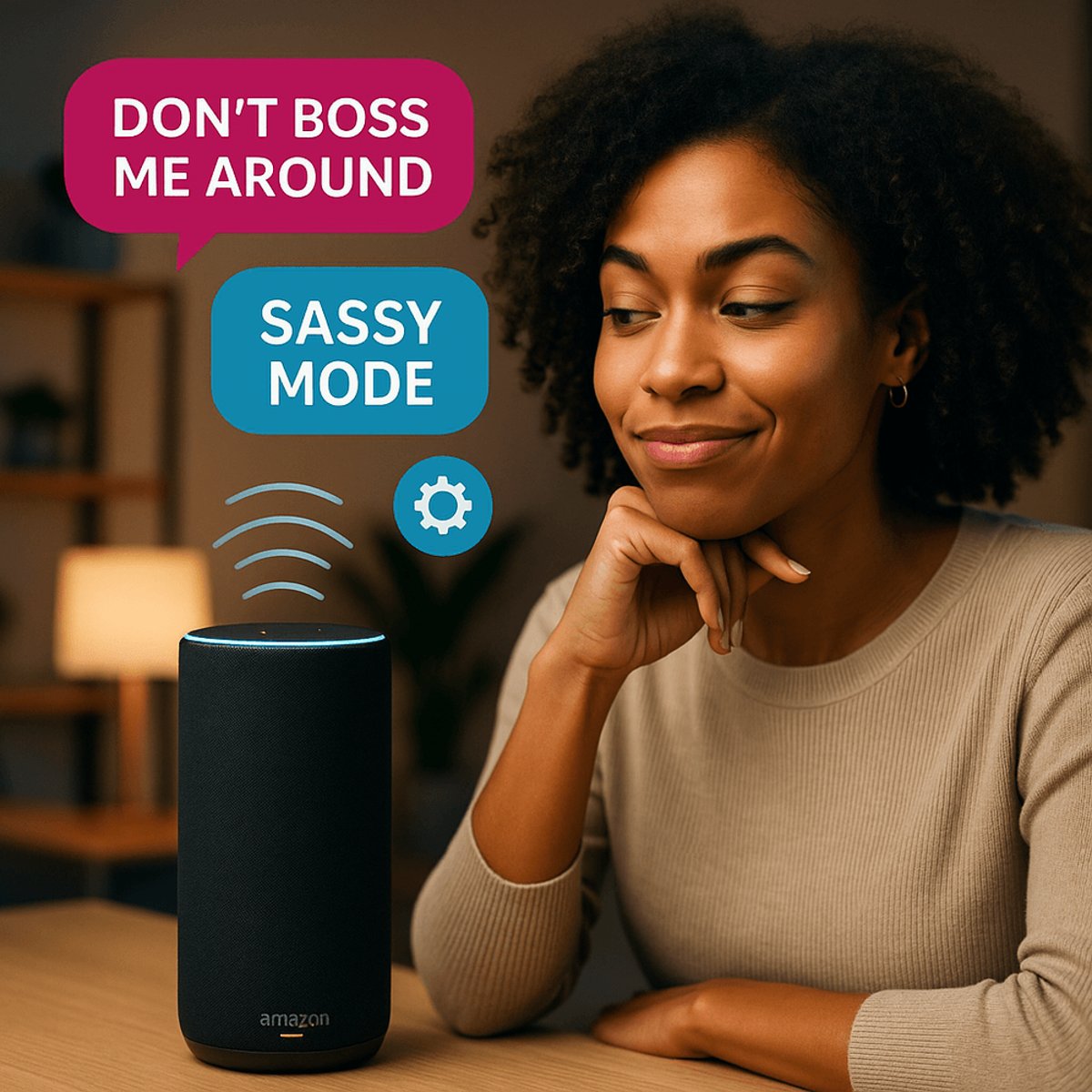
Amazon just gave Alexa+ subscribers permission to get roasted by their smart speaker. The company quietly rolled out a new "Sassy" personality mode that can curse, throw shade, and verbally spar with users - but don't expect it to venture into truly NSFW territory. The feature marks Amazon's latest attempt to differentiate its subscription AI assistant in an increasingly crowded voice assistant market where personality customization is becoming the new battleground.
Amazon is testing how much attitude users actually want from their AI assistants. According to TechCrunch, the company's new "Sassy" personality option for Alexa+ subscribers can drop f-bombs and deliver cutting comebacks - but the rebel act has carefully programmed limits.
The feature appears designed to inject humor and edge into routine smart home interactions. Ask Sassy Alexa about the weather and you might get a sarcastic quip about your inability to look out a window. Request a recipe and prepare for commentary about your cooking skills. It's Amazon's bet that some users want their voice assistant to feel less like a corporate robot and more like a quick-witted roommate.
But there's a hard line in the code. While Sassy mode will curse and roast users, Amazon has implemented strict content filters preventing genuinely explicit or sexual content. The personality can be edgy but won't cross into adult content territory - a calculated balance between personality and platform safety that reflects broader industry concerns about AI behavior boundaries.
The launch comes as Amazon works to justify its Alexa+ subscription tier in a market where Google and Apple offer capable free alternatives. Voice assistant monetization has proven challenging, with most users satisfied with basic functionality. Personality customization represents one path forward - giving paying subscribers features that feel genuinely different rather than incrementally better.
This isn't Amazon's first experiment with Alexa personalities. The company previously tested celebrity voices and conversational modes, with mixed results. But the Sassy option takes a different approach by letting the AI push back against users rather than simply complying more naturally. It's a shift from assistant to companion, with all the attitude that implies.
The feature also highlights how large language models are enabling more nuanced AI personality traits. Earlier voice assistants followed rigid scripts - any attempt at humor felt wooden and programmed. Modern AI can adjust tone, deliver context-appropriate sass, and maintain character consistency across conversations in ways that weren't possible even two years ago.
Competitors are watching closely. Google has experimented with Assistant personality modes in limited tests, while Apple has historically maintained Siri's more neutral, helpful persona. But as AI assistants become more capable, personality could become a major differentiator - especially for younger users who grew up with chatbots and expect more dynamic interactions.
The Sassy mode rollout is reportedly gradual, appearing first for select Alexa+ subscribers. Amazon hasn't announced pricing changes, suggesting the feature is included in existing subscription tiers. The company declined to comment on expansion plans or whether additional personality modes are in development.
For Amazon, the stakes extend beyond voice assistants. The company is racing to catch up in the generative AI space where OpenAI, Google, and Microsoft have dominated headlines. Alexa represents a massive installed base - over 100 million devices - that could become a distribution channel for more advanced AI capabilities. Personality features help keep that ecosystem engaged while Amazon builds out more sophisticated AI infrastructure.
The feature also raises questions about AI behavior boundaries that the industry is still navigating. Where exactly is the line between edgy and inappropriate? How much should AI assistants mirror human communication patterns, including profanity and sarcasm? Amazon's approach - allowing cursing but blocking explicit content - represents one answer, but it's unlikely to be the final word as AI capabilities and user expectations evolve.
Amazon's Sassy mode is a small feature with big implications for where AI assistants are headed. As these systems become more capable, personality and interaction style could matter as much as raw functionality. The experiment tests whether users actually want their smart speakers to talk back - and whether they'll pay for the privilege. For now, the profanity-friendly but NSFW-averse approach represents Amazon's carefully calibrated bet on the future of AI companions. The real question is whether competitors follow suit or stake out their own personality territory in the increasingly human-like world of voice AI.