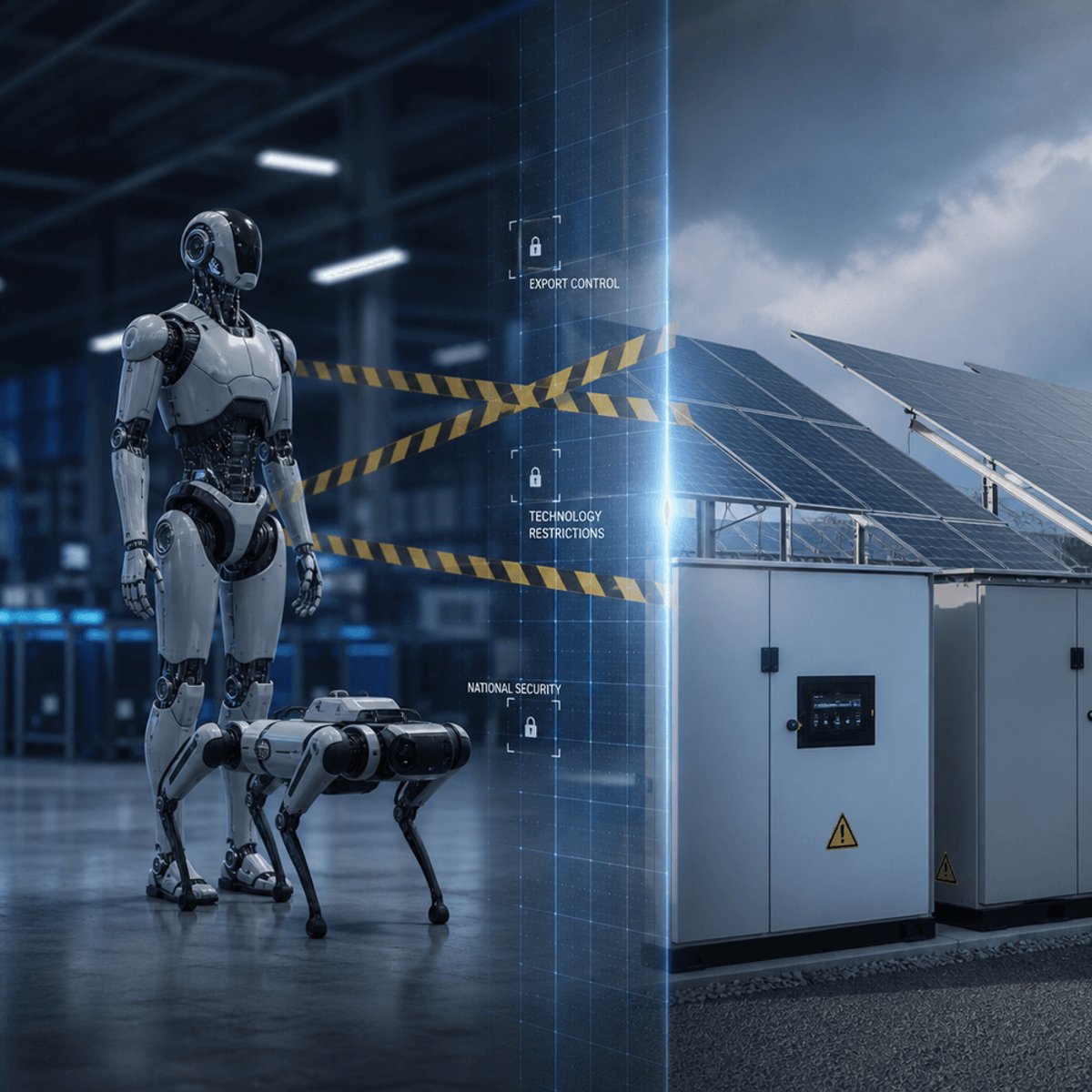
The US government just slammed the door on foreign-made humanoid robots, quadrupedal bots, and solar inverters, marking the most aggressive move yet to cut China out of America's critical infrastructure. The sweeping ban, announced today by the FCC, targets new imports from China, which controls the vast majority of global production for both humanoid robotics and solar power equipment. The decision sends shockwaves through an industry that's been banking on cheap Chinese hardware to fuel the robotics revolution.
The US just drew a hard line in the sand against foreign robotics hardware. The FCC's new ban on humanoid robots, quadrupedal robot dogs, and solar inverters marks a dramatic escalation in Washington's efforts to wall off critical infrastructure from potential foreign interference, particularly from China.
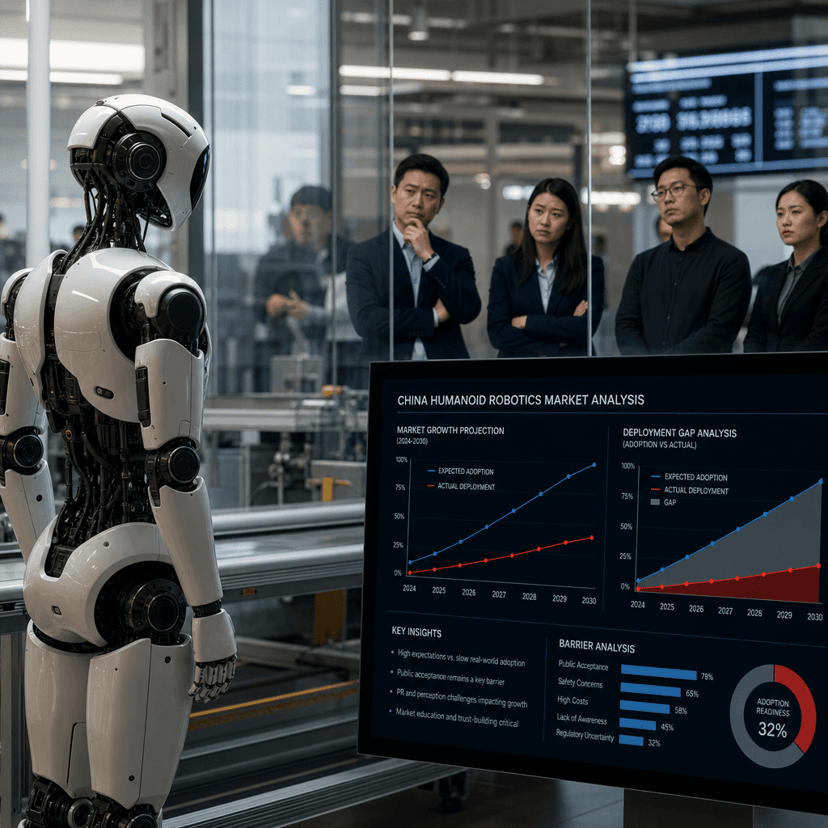
The timing couldn't be more disruptive for the robotics industry. Just as humanoid robots were starting to move from lab demonstrations to real-world deployments in warehouses, factories, and even retail spaces, the government is forcing companies to rethink their entire supply chain strategy. Chinese manufacturers have been leading the charge in affordable humanoid platforms, with production costs that American startups simply can't match.
"This ban fundamentally reshapes the economics of deploying humanoid robots in the United States," explains the reality facing dozens of robotics startups that were counting on Chinese-made hardware to keep their business models viable. The cost differential isn't trivial - Chinese humanoid platforms often run 40-60% cheaper than American or European alternatives, and that price gap becomes existential for companies operating on thin margins.
The inclusion of robot dogs in the ban is particularly notable. These quadrupedal robots have already found legitimate use cases in security, inspection, and search-and-rescue operations. Several US police departments and industrial facilities currently deploy robot dogs for patrol and monitoring duties, though it's unclear how the ban affects existing units versus new purchases.
Solar inverters might seem like an odd addition to a list dominated by walking robots, but they represent an equally serious vulnerability. These devices convert solar panel DC power into grid-compatible AC electricity, and they're networked devices that communicate with utility companies and grid operators. A compromised inverter could theoretically be used to destabilize local power grids or gather intelligence on energy infrastructure.
China's dominance in solar inverter manufacturing is even more pronounced than in robotics. Chinese companies produce roughly 70% of the world's solar inverters, creating a dependency that US policymakers have grown increasingly uncomfortable with as renewable energy becomes a larger portion of the American power grid.
The national security rationale centers on the potential for surveillance, data collection, and remote manipulation. Humanoid robots and robot dogs are essentially mobile sensor platforms bristling with cameras, microphones, and often LIDAR or other advanced sensing equipment. If that data streams back to foreign servers, or if the robots themselves can be remotely controlled or compromised, they become potential intelligence gathering tools operating inside sensitive facilities.
The ban doesn't affect robots already in operation, but it does freeze new imports effective immediately. That leaves American companies scrambling to identify domestic or allied-nation suppliers who can fill the gap. The problem is that US robotics manufacturing is still ramping up, and production capacity can't scale overnight.
Several American robotics companies have been working to build domestic supply chains, but they're still months or years away from matching Chinese production volumes and prices. This ban might accelerate that timeline by creating guaranteed demand for Made-in-America robots, but the transition period will be painful for companies that need robots now, not in 2027.
The solar industry faces similar whiplash. The US has been pushing aggressive renewable energy adoption targets, but those goals assumed access to affordable Chinese hardware. Forcing solar installers to source more expensive domestic inverters could slow deployment rates or push project costs high enough to kill marginal installations.
The Trump Administration has been telegraphing this move for months, with increasing rhetoric about supply chain security and concerns about Chinese technology in critical infrastructure. This ban represents the administration translating that rhetoric into concrete policy, even if it creates short-term economic pain.
Industry reaction has been mixed but largely resigned. Most robotics executives saw this coming and have been quietly diversifying suppliers, but the abruptness of the implementation leaves little time for adjustment. Some companies are lobbying for grandfather clauses or extended transition periods, but early signals suggest the administration wants a clean break.
The geopolitical implications extend beyond robotics and solar. This ban is part of a broader pattern of technology decoupling between the US and China, following similar restrictions on semiconductors, telecommunications equipment, and drone technology. Each new ban tightens the web of restrictions and forces both countries further into separate technology ecosystems.
For China, losing access to the American market for humanoid robots and inverters is a blow to industries where they've built commanding leads through years of investment and subsidies. For the US, the challenge is building domestic alternatives fast enough to avoid creating gaps in critical capabilities.
This ban forces American robotics and renewable energy sectors into an abrupt reckoning with supply chain reality. Companies betting on cheap Chinese hardware to fuel growth now face higher costs and uncertain timelines, while domestic manufacturers scramble to fill the gap. The immediate pain is real, but the long-term bet is that forcing the development of American robotics and solar manufacturing capabilities will pay off in supply chain resilience and technology independence. Whether that transition happens fast enough to avoid throttling innovation in the meantime remains the open question keeping industry executives up at night.