Amazon is pulling the plug on its entire UK Fresh supermarket operation, closing all 19 stores just four years after launching its ambitious cashierless grocery experiment across the pond. The retreat comes as CEO Andy Jassy doubles down on online delivery while admitting the company's physical retail footprint needs serious recalibration.
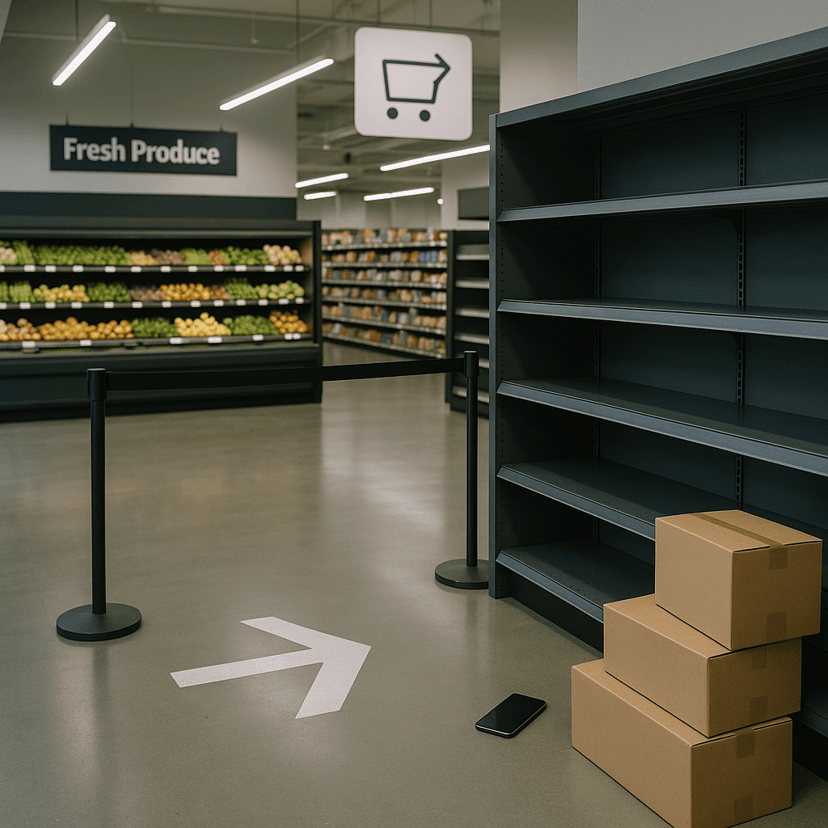
Amazon just dealt a major blow to its brick-and-mortar ambitions. The tech giant announced Tuesday it's closing every single Fresh supermarket in the UK - all 19 locations - marking one of the company's most dramatic retail retreats in recent years.
The decision signals Amazon's broader struggle to crack the grocery code beyond its premium Whole Foods brand. According to the company's official statement, the closures follow "a thorough evaluation of business operations and the very substantial growth opportunities in online delivery."
Five of the shuttered Fresh locations won't stay empty long - they're getting converted into Whole Foods stores, suggesting Amazon still sees value in physical grocery retail, just not at the mass-market price point Fresh was targeting.
The UK experiment launched with considerable fanfare in 2021, when Amazon opened its first Fresh location outside the US in London. The timing seemed perfect - cashierless "Just Walk Out" technology was the industry's hot new thing, and Amazon was positioning Fresh as a more accessible alternative to Whole Foods' upscale positioning.
But the reality proved messier than the press releases suggested. Fresh stores offered cheaper prices and mass-market appeal compared to Whole Foods, which Amazon acquired for $13.7 billion in 2017. However, the UK grocery market proved surprisingly resistant to Amazon's tech-forward approach.
This isn't just a UK story - it's part of Amazon's global grocery recalibration. The company has slowed expansion of Fresh and Go stores across the US, even as it maintains 500 Whole Foods locations and experiments with mini "daily shop" formats in New York City.
CEO Andy Jassy remains publicly optimistic about Amazon's grocery future, telling investors at the company's May shareholder meeting that he's "bullish" on the sector. His confidence stems largely from the success of "everyday essentials" - items like canned goods, paper towels, and snacks that customers increasingly order online rather than picking up in-store.
"Grocery is a significant business for Amazon," Jassy emphasized during the meeting. The numbers seem to back him up - Amazon's online grocery sales have surged, particularly for non-perishable items that ship easily and store well.
The UK closure comes with a silver lining for British customers. Amazon announced it's launching same-day delivery of groceries, including perishable items, starting next year. The move suggests the company learned something valuable from its physical store experiment: British customers want Amazon's convenience and selection, just not necessarily in a physical location.
This pivot reflects broader industry trends. While competitors like Tesco and Sainsbury's doubled down on physical presence during the pandemic, Amazon's betting that the future of grocery lies in ultra-fast delivery rather than reinventing the supermarket experience.
The Fresh closure also highlights the challenges facing Amazon's "Just Walk Out" technology. Despite generating significant buzz, the cashierless shopping experience never gained the traction Amazon hoped for. Industry observers note that while the technology works, it often feels more gimmicky than genuinely useful to everyday shoppers.
Amazon's UK Fresh retreat isn't just about 19 store closures - it's a signal that even tech giants must pick their battles carefully. While the company doubles down on online grocery delivery and maintains its Whole Foods premium positioning, the mass-market physical grocery play clearly didn't deliver the returns Amazon expected. The real test now is whether same-day delivery can capture the UK market that cashierless stores couldn't.