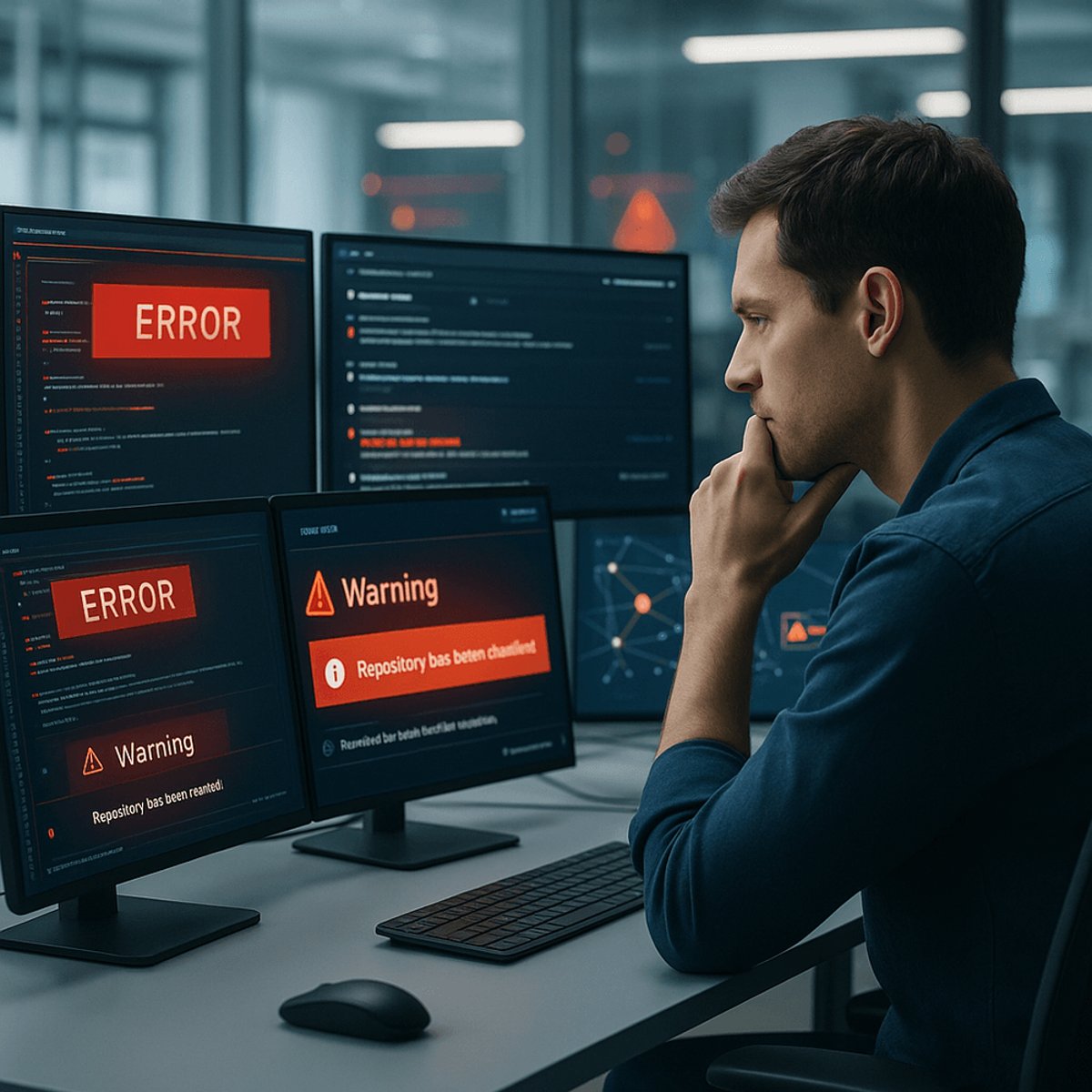
Anthropic just caused chaos across the developer community after a bungled DMCA takedown campaign accidentally nuked thousands of unrelated GitHub repositories. The AI safety company, maker of the Claude assistant, was scrambling to remove leaked source code when its overly aggressive copyright notices took down repos that had nothing to do with the leak. Within hours, developers across the platform found their projects suddenly inaccessible, sparking immediate backlash before Anthropic executives admitted the mistake and started retracting the notices.
The developer community woke up to an unexpected crisis Wednesday when Anthropic unleashed a wave of DMCA copyright takedown notices that swept across GitHub like a digital wildfire. What started as a legitimate effort to contain leaked proprietary code turned into a mass deletion event that caught thousands of innocent developers in its crosshairs.
According to reports flooding social media and developer forums, repositories spanning everything from personal projects to open-source tools suddenly disappeared without warning. The common thread? Anthropic's legal team had flagged them as containing stolen intellectual property, but the vast majority had zero connection to the AI company's codebase.
The leak itself appears to have originated from an internal security breach at Anthropic, though the company hasn't disclosed specifics about how its source code ended up in the wild. What's clear is that once executives discovered the leak, they moved fast - perhaps too fast - to scrub it from the internet's most popular code repository platform.
GitHub, owned by Microsoft, processes DMCA takedown requests through a semi-automated system designed to protect copyright holders while maintaining platform integrity. But when Anthropic submitted what sources describe as an overly broad list of allegedly infringing repositories, GitHub's system apparently lacked sufficient guardrails to catch the errors before executing the removals.
The blowback was immediate and fierce. Developers took to Twitter and Hacker News to share screenshots of takedown notices, many expressing confusion about how their projects could possibly contain Anthropic's proprietary code. Some pointed out they'd never even used Claude or any Anthropic API in their work. Others noted their repositories predated Anthropic's founding in 2021.
Within hours of the mass takedowns going live, Anthropic executives issued a statement acknowledging the mistake. The company characterized the incident as an "accident" stemming from an error in how it identified and reported potentially infringing repositories. They committed to retracting the bulk of the improper notices and working with GitHub to restore affected repositories.
But the damage to Anthropic's reputation in the developer community may already be done. The incident exposes a fundamental tension in how AI companies balance protecting their competitive advantages - often encoded in training methods, model architectures, and proprietary algorithms - against the collaborative, open ethos of software development.
For GitHub, the episode raises uncomfortable questions about its takedown infrastructure. Critics argue the platform should implement more robust verification before automatically removing content based on copyright claims. The company's current system, inherited and refined since Microsoft's 2018 acquisition, prioritizes speed in responding to legal notices - a approach that works for clear-cut infringement but fails spectacularly when claimants cast too wide a net.
The timing couldn't be worse for Anthropic, which has positioned itself as the responsible alternative in the AI arms race. The company, founded by former OpenAI executives, has built its brand around Constitutional AI and safety-focused development. An own-goal that disrupts thousands of developers undermines that carefully cultivated image.
Industry observers note this isn't the first time aggressive intellectual property protection has backfired in the AI sector. As competition intensifies and model capabilities become increasingly valuable, companies face pressure to guard their secrets while operating in an ecosystem built on shared tools and open-source foundations. The collision between these imperatives was bound to produce sparks.
What remains unclear is exactly how Anthropic's source code leaked in the first place, and whether the company has plugged whatever security hole allowed it to escape. The AI industry has seen a string of high-profile leaks and breaches as nation-states, competitors, and hackers target what may be some of the most valuable intellectual property in the world.
As repositories slowly come back online following Anthropic's retractions, developers are left to assess the collateral damage. For some, it's a few hours of downtime and frustration. For others working on time-sensitive projects or coordinating with distributed teams, the disruption could have real costs. And for the broader community, it's a reminder of how dependent modern software development has become on centralized platforms - and how quickly things can go sideways when the system breaks down.
This mess serves as a cautionary tale for the entire AI industry. As companies race to protect increasingly valuable intellectual property, they need systems that can distinguish legitimate threats from false positives. Anthropic's quick acknowledgment and reversal likely prevented an even bigger crisis, but the incident has already shaken developer trust. For GitHub and Microsoft, it's a wake-up call that their takedown infrastructure needs stronger safeguards before the next overzealous claimant pulls the trigger. And for developers? It's another reminder to maintain backups and not rely solely on any single platform, no matter how ubiquitous it seems.