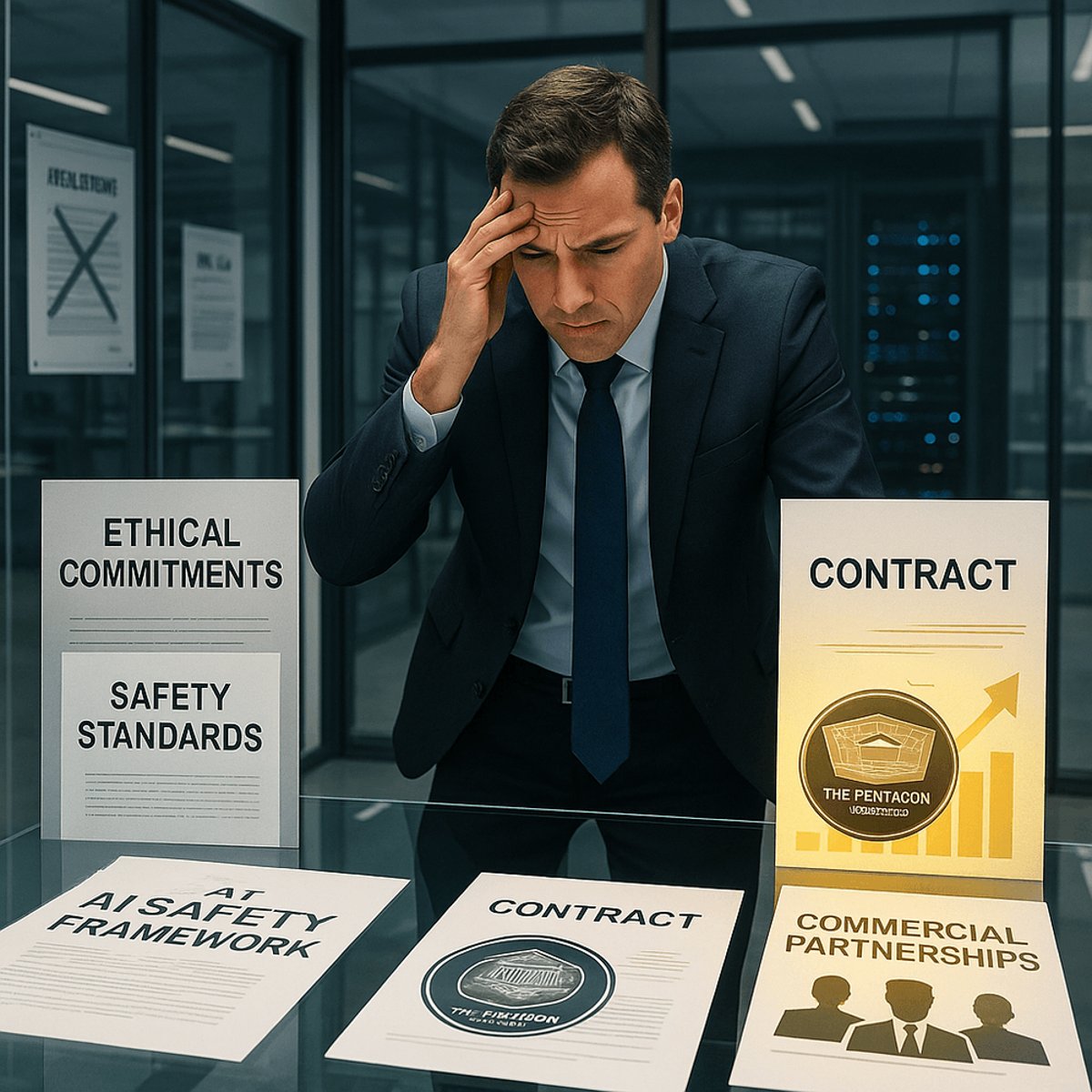
Anthropic built its brand on responsible AI development, promising rigorous self-governance when OpenAI and Google DeepMind made similar pledges. But that strategy just backfired spectacularly. With no federal AI regulations materializing and mounting pressure from Pentagon contracts to commercial deployment decisions, these companies now find themselves defending ethical stances with zero legal framework to back them up. The absence of rules they once championed has become their biggest vulnerability.
Anthropic co-founders Dario and Daniela Amodei split from OpenAI in 2021 with a mission that sounded bulletproof: build safer AI through voluntary commitments and transparent governance. They weren't alone. Google DeepMind, OpenAI, and even xAI publicly embraced self-regulation as the answer to AI safety concerns, arguing that nimble internal policies would outpace clumsy government mandates.
That bet is unraveling fast. Recent backlash over defense contracts and commercial partnerships shows what happens when companies try to enforce their own ethical red lines without regulatory teeth. According to TechCrunch's reporting, the industry now faces a trap of its own making - promises that sounded noble in fundraising decks but crack under real-world pressure from investors, clients, and competitors.
The Pentagon controversy crystallizes the problem. When Anthropic reportedly landed on a defense blacklist for declining certain military AI projects, it sparked fierce debate about whether AI companies can afford principles in a market where OpenAI and others race toward government contracts. MIT physicist Max Tegmark, a vocal AI safety advocate, has repeatedly warned that voluntary commitments dissolve the moment they conflict with revenue. The prediction is playing out in real time.
OpenAI already walked back its earlier opposition to military applications, quietly updating usage policies to allow defense work. Google faced employee revolts over Project Maven but still pursues federal contracts through Google Cloud. These shifts aren't accidents - they're symptoms of operating in a regulatory vacuum where market incentives trump manifestos.
The irony cuts deep. Many of these same companies lobbied against prescriptive AI legislation, arguing through industry groups that innovation required flexibility. They got their wish. Congress has introduced dozens of AI bills but passed virtually none with enforcement mechanisms. The EU's AI Act offers a framework, but American companies largely operate without binding safety requirements beyond existing product liability laws.
That void leaves Anthropic and peers in an impossible position. Stick to self-imposed ethical guardrails, and you risk losing contracts to competitors with fewer scruples. Abandon those principles, and you face accusations of hypocrisy from the safety community that championed your founding story. There's no legal safe harbor either way.
The competitive pressure intensifies daily. xAI, Elon Musk's AI venture, operates with minimal public safety commitments. Chinese AI labs face entirely different governance constraints. When Anthropic turns down a Pentagon project on ethical grounds, there's no guarantee another lab won't build the same capability with fewer safeguards. Self-regulation only works if everyone plays along.
Investors are watching closely. Anthropic raised over $7 billion from Amazon, Google, and others who expect commercial returns, not just research papers. According to startup observers, AI valuations increasingly hinge on deployment scale and enterprise contracts - categories where moral flexibility beats cautious governance. The funding model clashes directly with safety-first positioning.
Some industry veterans argue the current mess was predictable. The AI safety community split years ago between those advocating for external regulation and accelerationists pushing self-governance. The latter camp won the political argument but lost the practical one. Without regulatory backing, voluntary commitments become suggestions that evaporate under pressure.
Defense contracts represent just one pressure point. Commercial clients in healthcare, finance, and logistics increasingly demand AI capabilities that brush against ethical gray zones - predictive policing algorithms, workforce surveillance tools, automated decision systems with limited transparency. Each request forces companies to choose between revenue and principles, with no legal framework to justify saying no.
The situation also exposes ideological contradictions within AI labs. Many researchers joined Anthropic or DeepMind specifically because of stated safety commitments. When business reality forces compromises, it erodes internal culture and triggers talent flight to academia or startups with clearer missions. The trap constrains both external positioning and internal morale.
The AI industry's self-regulation gamble has produced exactly what critics predicted - ethical commitments that sound impressive in blog posts but lack enforcement when they conflict with commercial reality. Anthropic, OpenAI, and Google DeepMind now operate in a regulatory void of their own creation, where every principled decision risks competitive disadvantage and every compromise invites accusations of betrayal. The only exit from this trap involves the one thing these companies spent years avoiding: actual regulation with legal teeth that protects companies willing to prioritize safety over speed. Until that framework arrives, the industry will keep lurching between impossible choices, proving that good intentions mean little without structural support.