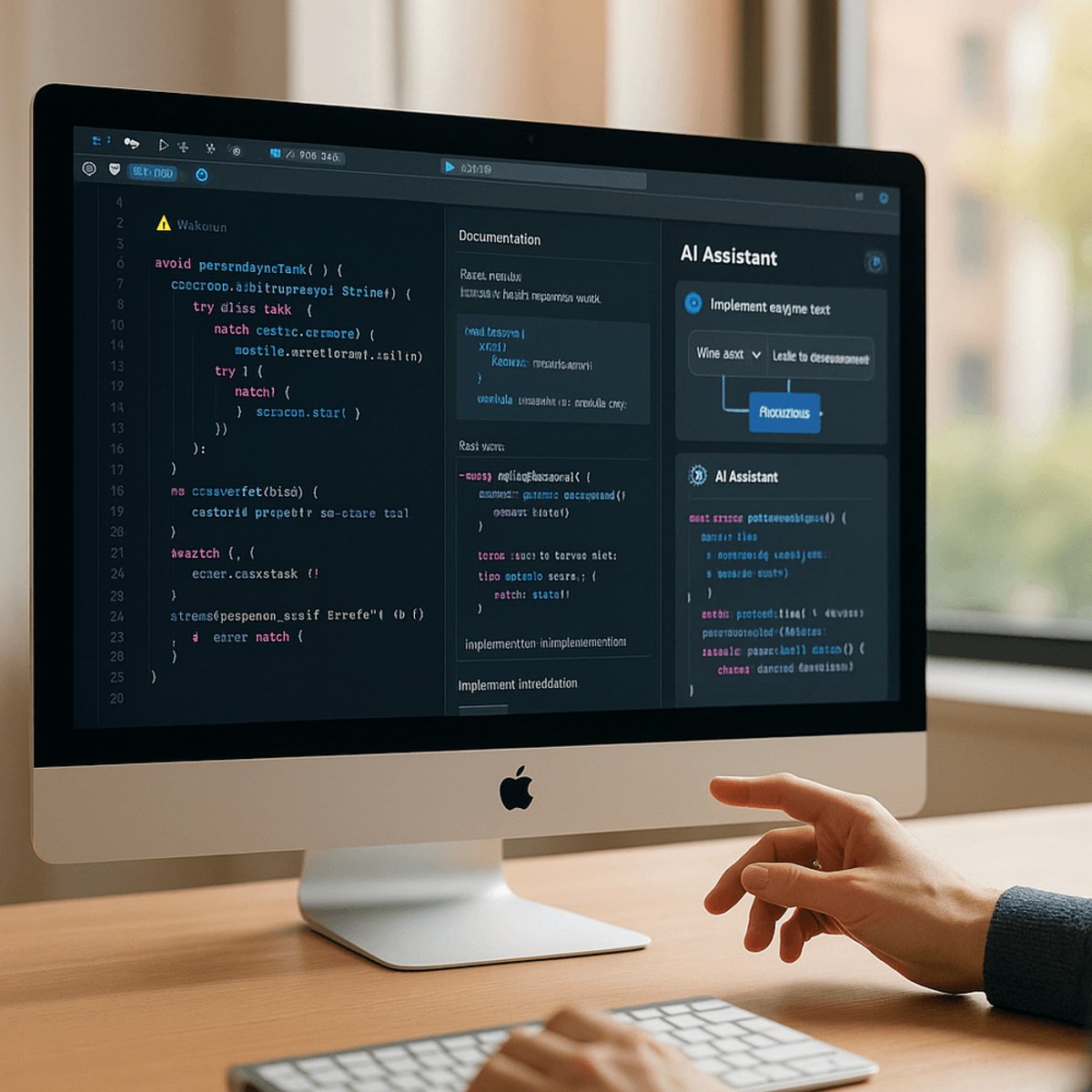
Apple just turned its flagship development environment into an AI-powered coding machine. The company released Xcode 26.3 today, integrating Anthropic's Claude Agent and OpenAI's Codex directly into the IDE used by millions of developers building apps for iPhone, iPad, Mac, and Apple Watch. This isn't just autocomplete - these are full agentic tools that can autonomously explore projects, write code, run tests, and fix errors while developers watch the process unfold in real-time.
Apple just made a decisive move in the AI coding wars. The company dropped Xcode 26.3 today, and it's not just another incremental update - it's a fundamental reimagining of how developers build apps for Apple's ecosystem. Anthropic's Claude Agent and OpenAI's Codex now live directly inside the IDE, capable of autonomously writing, testing, and debugging code while developers supervise.
The Xcode 26.3 Release Candidate hit Apple's developer portal this morning and will roll out to the App Store shortly, according to Apple's official announcement. It's available to all registered Apple Developers immediately.
This builds on last year's Xcode 26 release, which first brought ChatGPT and Claude into the development environment as conversational assistants. But that was just a warm-up. Xcode 26.3 gives these AI models deep access to the IDE's underlying tools and features, transforming them from helpful chatbots into autonomous coding agents that can tackle complex, multi-step development tasks.
The difference is substantial. Instead of generating code snippets on request, these agents can now explore an entire project structure, understand metadata and dependencies, compile builds, execute test suites, identify failures, and iterate on fixes - all without constant human intervention. They tap into Apple's live developer documentation to ensure they're using current APIs and following platform best practices.
Apple worked directly with both Anthropic and OpenAI to optimize the experience, focusing heavily on token efficiency and tool calling to keep the agents running smoothly within Xcode's environment. The company built the integration using Model Context Protocol (MCP), an open standard that lets AI agents communicate with external tools and data sources.
That MCP foundation is key. It means Xcode isn't locked into just Claude and Codex - any MCP-compatible agent can now plug into Xcode's project discovery, file management, preview systems, code snippets, and documentation access. It's a platform play that opens the door for future AI integrations without requiring Apple to rebuild the plumbing each time.
The workflow is straightforward. Developers download their preferred agents from Xcode's settings, authenticate with either a sign-in or API key, then choose which model version to use from a dropdown menu - GPT-5.2, GPT-5.1-mini, or whichever Claude variant they prefer. A prompt box on the left side of the screen accepts natural language commands. Want to add a feature using SwiftUI? Just describe it conversationally, and the agent gets to work.
But here's where Apple's implementation gets interesting - transparency. As the agent operates, it breaks down tasks into discrete steps displayed in a project transcript panel. Developers can watch documentation lookups happen, see code changes highlighted in real-time, and follow the agent's reasoning as it makes decisions. When something goes wrong, the transcript reveals exactly where and why.
That visibility matters, especially for less experienced developers. Apple clearly sees educational potential here. The company is hosting a live "code-along" workshop Thursday where developers can practice using agentic tools in real-time alongside Apple's instructors. It's a signal that Apple views this as democratizing technology, not just a productivity boost for senior engineers.
The agents also verify their own work. After writing code, they compile the project, run tests, and analyze the results. If errors surface, they iterate autonomously to fix them. Apple recommends developers prompt agents to "think through plans" before coding - essentially forcing the AI to articulate its strategy upfront, which tends to produce better results.
And if things go sideways? Xcode creates automatic milestones every time an agent makes changes, so developers can roll back to any previous state instantly. It's a safety net that lets teams experiment aggressively without risking their codebase.
The timing is notable. Microsoft's GitHub Copilot has dominated AI-assisted coding for years, while Anthropic's Claude has made aggressive inroads with its agentic capabilities. By embedding both Claude and Codex natively into Xcode, Apple is betting that tighter integration with its platform-specific tools and documentation will give developers a better experience than generic coding assistants.
It also keeps Apple developers inside Apple's ecosystem. Instead of jumping to third-party tools like Cursor or Replit, they can now access cutting-edge AI agents without leaving Xcode. That stickiness is valuable as competition for developer mindshare intensifies.
The move also positions Apple as an AI platform player, not just a consumer AI company. While much of the AI conversation has focused on consumer-facing features like Siri improvements and photo editing, Xcode 26.3 shows Apple competing directly with Microsoft and Google for enterprise and professional developer tools.
For Anthropic and OpenAI, the integration is a massive distribution channel. Millions of iOS and macOS developers will now have direct access to their models, potentially converting them into paid subscribers for API access. It's a win-win - Apple enhances its developer tools without building AI models from scratch, while AI companies reach a high-value professional audience.
The question now is adoption. Will developers trust AI agents to autonomously modify production code? The transparency features suggest Apple anticipated skepticism. By surfacing every decision and making rollbacks effortless, the company is trying to build confidence that agentic coding is controllable, not chaotic.
Apple's Xcode 26.3 release signals a fundamental shift in how apps get built for its platforms. By embedding agentic AI directly into its official IDE and using open standards like MCP, the company is both empowering its developer community and asserting control over the AI coding narrative in its ecosystem. The transparency features and educational push suggest Apple believes agentic coding is ready for mainstream adoption - but the real test will be whether developers trust these agents enough to hand over meaningful portions of their workflow. With Thursday's workshop and the immediate availability of the Release Candidate, we won't have to wait long to see how the development community responds.