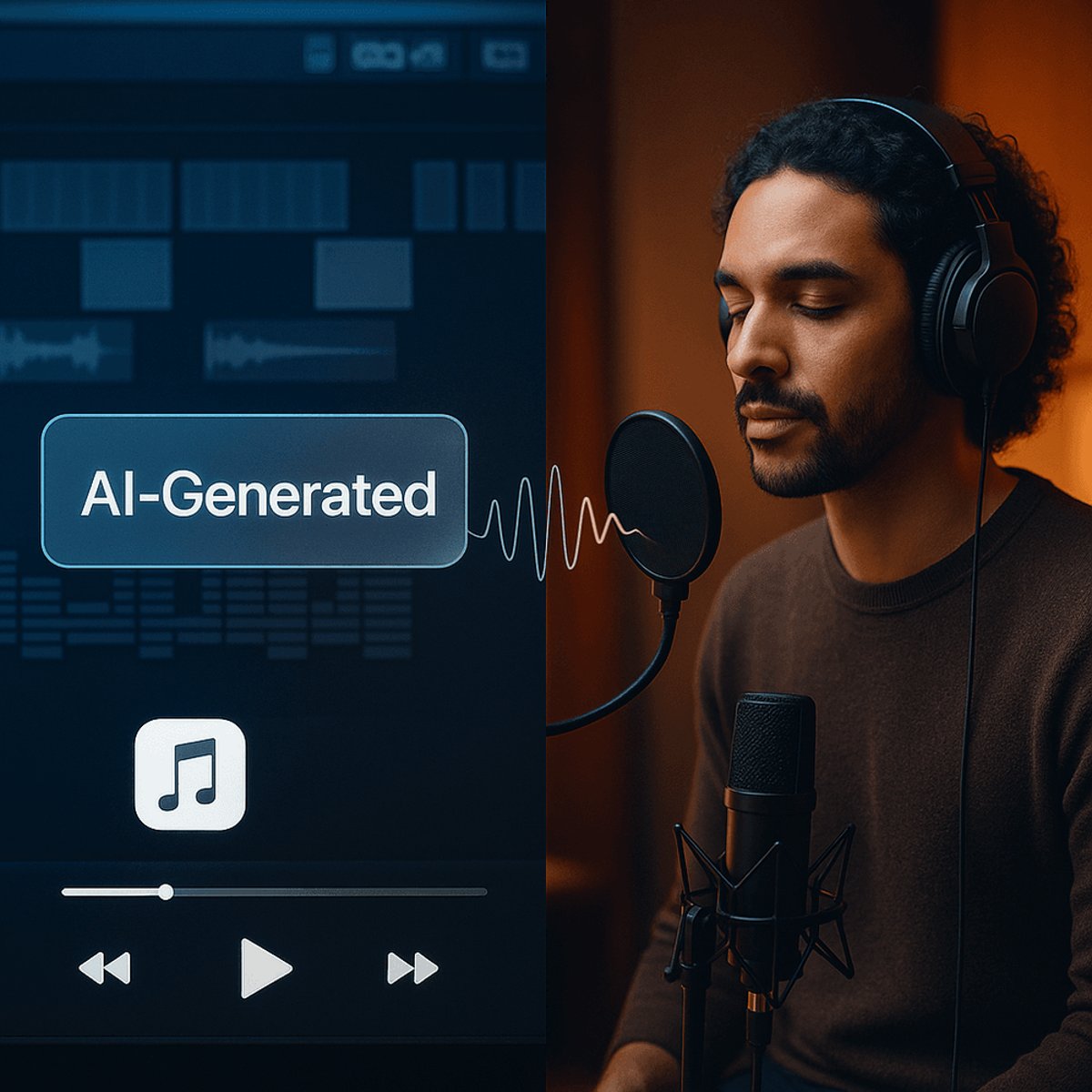
Apple Music is preparing to launch transparency tags that'll distinguish AI-generated music from human-created tracks, according to a TechCrunch report. But there's a catch - labels and distributors have to voluntarily tag their AI music, raising immediate questions about how many will actually play ball. The move puts Apple at the forefront of AI disclosure in streaming, though the opt-in structure could undermine the entire initiative if adoption stays low.
Apple is about to change how listeners discover what's real and what's algorithm on its streaming platform. The company's planning to roll out transparency tags that identify AI-generated music on Apple Music, marking the first time a major streaming service has attempted to systematically label synthetic audio at this scale.
The timing isn't coincidental. AI-generated music has exploded across streaming platforms over the past year, with tracks created by tools like Suno and Udio racking up millions of plays. Some AI tracks have even cracked playlist algorithms, competing directly with human artists for listener attention and royalty dollars. The music industry's been scrambling to figure out disclosure standards, and Apple's apparently decided to make the first move.
But here's where it gets messy. According to the TechCrunch report, the tagging system is completely voluntary. Labels and distributors have to actively choose to mark their music as AI-generated. There's no automatic detection, no mandatory disclosure requirements. It's an honor system in an industry where AI music creators are already gaming recommendation algorithms and generating fake artist personas.
The opt-in structure immediately raises red flags. Why would a label voluntarily tag AI music if it means potentially lower engagement or algorithmic downranking? The financial incentives point in the opposite direction. AI-generated tracks cost almost nothing to produce and can flood platforms with content that generates streaming revenue. Transparent labeling could kill that arbitrage opportunity.
Spotify hasn't implemented similar tags yet, though the company's been publicly wrestling with AI music policies for months. Earlier this year, Spotify removed tens of thousands of AI-generated songs suspected of artificial streaming manipulation, but stopped short of blanket AI music bans or disclosure requirements. YouTube Music has similar detection efforts underway but no formal labeling system.
Apple's approach puts pressure on competitors to follow suit, even if the execution seems half-baked. If Apple Music users start seeing transparency tags - even inconsistently applied ones - they'll notice the absence on other platforms. That creates competitive dynamics that could push industry-wide standards forward, assuming Apple actually launches this thing.
The bigger question is whether voluntary disclosure can ever work in a market where obscuring AI origins provides clear economic advantages. Some legitimate artists using AI tools might tag their work to be transparent with fans. But the flood of low-effort AI content farms that's already cluttering streaming services? Those operations have zero incentive to self-identify.
There's also the definition problem. What counts as AI-generated? A track with AI vocals but human-written lyrics? A human vocal processed through AI mixing tools? A collaboration between an artist and an AI composition assistant? Apple hasn't released specifics on how granular these tags will get or what threshold triggers the AI label.
The music industry's been here before with disclosure debates. When Auto-Tune first went mainstream, nobody required labels identifying pitch correction. When drum machines replaced session players, there were no transparency tags. But AI music generation feels different in scale and speed - entire catalogs can be generated in hours, not months of studio time.
For artists, the stakes are existential. The Musicians' Union and various artist advocacy groups have been pushing for AI disclosure requirements, arguing that listeners deserve to know what they're streaming. But without enforcement mechanisms, voluntary tags might just become another checkbox that gets ignored in the rush to upload content.
Apple hasn't officially confirmed the feature or provided implementation details. The company's historically been cautious about AI - slower to embrace generative features than competitors, more focused on privacy and user control. A transparency tag system fits that brand positioning, even if the opt-in model undermines its practical impact.
What happens next depends on adoption rates once this rolls out. If major labels participate and indie distributors follow, voluntary tagging could establish industry norms. If adoption stays low, it'll be another well-intentioned feature that gets buried in settings menus while AI-generated music continues flooding streaming services unlabeled.
Apple's transparency tags represent the first major platform attempt to bring disclosure to AI-generated music, but the opt-in model looks like a compromise between artist advocacy and industry economics. Unless voluntary participation reaches critical mass or Apple adds enforcement teeth, these tags might end up distinguishing only the most transparent creators while the AI content farms keep churning out unlabeled tracks. The real test comes when this launches and we see whether labels choose transparency or competitive advantage. For now, it's a step toward AI disclosure in streaming, even if it's a cautious one that might not solve the problem it's designed to address.