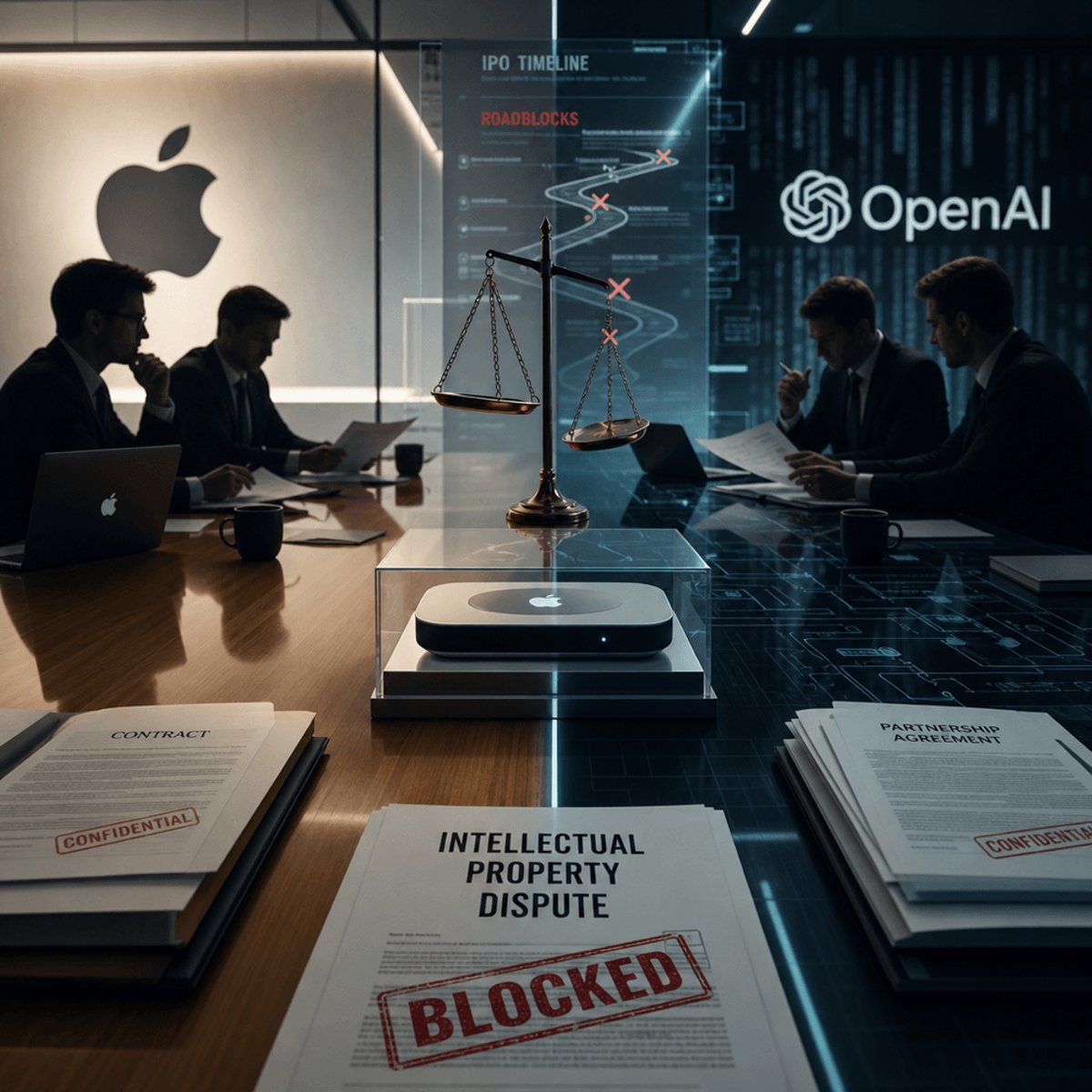
Apple just threw a major wrench into OpenAI's ambitious expansion plans. The iPhone maker's lawsuit arrives at a critical juncture as the ChatGPT creator readies both a hardware debut and a long-anticipated IPO. Industry insiders are now questioning whether the legal battle could derail OpenAI's carefully orchestrated pivot from pure software to consumer devices, potentially reshuffling the entire AI hardware landscape before it even takes shape.
OpenAI finds itself in unfamiliar territory. The company that revolutionized conversational AI with ChatGPT now faces a legal challenge from Apple that threatens to complicate its next act - a move into hardware that could pit it directly against the tech giant.
The timing couldn't be more delicate. OpenAI has been quietly building toward a hardware launch while simultaneously preparing for what would be one of the most closely watched IPOs in tech history. Now both milestones face fresh scrutiny as Apple's legal team enters the picture. According to TechCrunch's Equity podcast, the lawsuit raises fundamental questions about whether OpenAI can execute its dual strategy while defending itself in court.
The hardware push represents a significant gamble for OpenAI. While the company has dominated the large language model space, consumer electronics demands entirely different expertise - supply chains, manufacturing partnerships, retail relationships, and the kind of design prowess Apple has spent decades perfecting. OpenAI's hardware ambitions have been the subject of intense speculation, with reports suggesting devices that could bring AI capabilities directly into users' hands without relying on smartphone intermediaries.
But Apple's lawsuit threatens to bog down those plans in legal complexity. The specifics of Apple's claims remain central to understanding the potential impact. If the suit involves intellectual property, patent infringement, or proprietary technology, OpenAI could face injunctions that delay product launches indefinitely. Even without immediate legal restrictions, the uncertainty alone could spook potential IPO investors who typically prefer clean balance sheets and minimal litigation risk.
The IPO dimension adds another layer of pressure. OpenAI's valuation has soared into the tens of billions, fueled by ChatGPT's explosive growth and Microsoft's multibillion-dollar investment. But public market investors operate under different rules than venture capitalists. They demand predictability, clear paths to profitability, and minimal legal exposure. A protracted battle with one of the world's most valuable companies checks none of those boxes.
Apple, meanwhile, has its own AI hardware strategy to protect. The company has been systematically building AI capabilities across its device ecosystem, from enhanced Siri functionality to on-device machine learning that preserves user privacy. An OpenAI hardware product could threaten that carefully constructed moat, especially if it offers capabilities Apple can't match or undercuts the iPhone's position as the primary AI interface for consumers.
The competitive dynamics extend beyond just these two companies. Google continues developing its Pixel line with integrated AI features, Amazon has Alexa-powered devices throughout millions of homes, and Meta keeps experimenting with AI-enhanced wearables. OpenAI entering this crowded field would intensify an already fierce battle for AI hardware dominance.
For OpenAI's leadership, the lawsuit forces an uncomfortable choice. CEO Sam Altman has championed hardware as essential to OpenAI's mission of ensuring AI benefits humanity. Custom devices could deliver AI experiences impossible on general-purpose smartphones, with optimized chips, specialized interfaces, and privacy protections built in from the ground up. But pursuing that vision while fighting Apple in court requires resources, focus, and risk tolerance that could drain attention from OpenAI's core business.
The IPO calculus grows more complicated by the day. Investment banks that would underwrite the offering need a compelling story to sell institutional investors. "We're being sued by Apple while trying to break into hardware" doesn't top anyone's list of pitch highlights. Delaying the IPO might be prudent, but OpenAI's existing investors and employees holding equity have been waiting years for a liquidity event.
Legal experts note that Apple has a track record of aggressive intellectual property protection. The company famously battled Samsung for years over smartphone patents and has locked horns with countless smaller players it viewed as threats. OpenAI's deep pockets and Microsoft backing give it staying power most Apple adversaries lack, but that same profile makes it a target Apple takes seriously.
The collision between Apple's legal muscle and OpenAI's expansion ambitions will likely define the next chapter of AI hardware competition. Whether OpenAI can navigate this challenge while maintaining momentum toward an IPO and hardware launch remains the central question. For an industry already marked by intense rivalry and rapid innovation, this legal battle adds yet another layer of complexity to an already unpredictable race. Investors, competitors, and consumers will be watching closely to see if OpenAI's hardware dreams survive contact with Apple's attorneys - and whether the broader vision of AI-native devices can emerge from the courtroom intact.