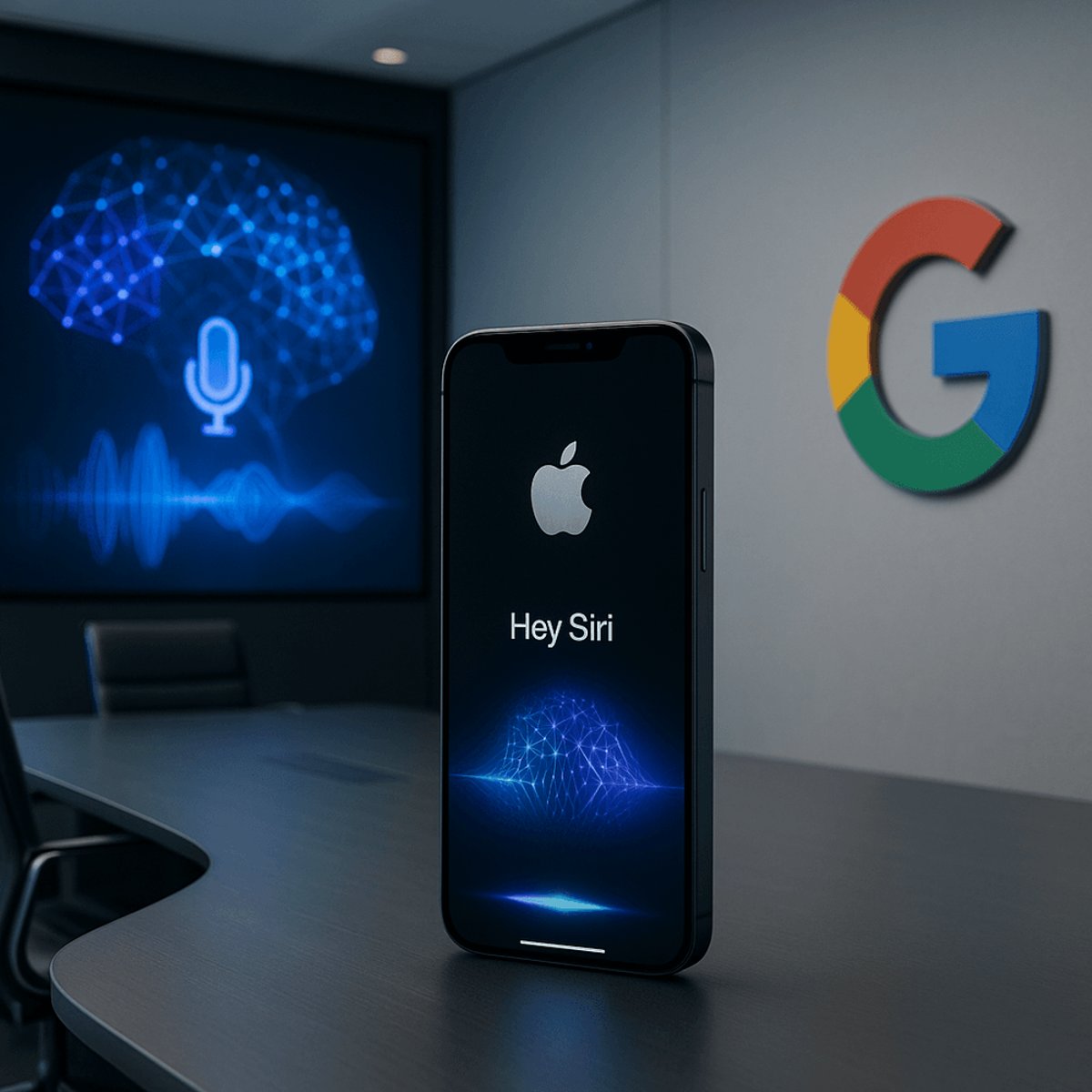
Apple is set to unveil a dramatically overhauled Siri assistant powered by Google's Gemini AI models in the second half of February, marking the first concrete result of the tech giants' recently announced AI partnership. According to Bloomberg's Mark Gurman, this represents Apple's most significant voice assistant upgrade in years - and the company's clearest acknowledgment yet that it needed outside help to catch up in the AI race. For the first time, Siri will reportedly deliver on promises Apple made back in June 2024, with genuine ability to complete tasks using your personal data and on-screen content.
Apple is about to show the world what happens when two tech giants with very different AI strategies decide to join forces. The company plans to unveil a revamped Siri assistant in late February that's powered by Google's Gemini AI models, marking the first tangible outcome of their partnership announced earlier this month.
According to Bloomberg's Mark Gurman, this won't be just another incremental Siri update. The February release represents the first version that can actually deliver on the ambitious promises Apple made when it announced Apple Intelligence back in June 2024. That means genuine ability to complete tasks by tapping into your personal data and understanding what's happening on your screen - capabilities that competitors like ChatGPT and Google Assistant have offered for months.
The timing reveals just how far behind Apple had fallen in the AI race. When the company first teased these features nearly two years ago, the tech world expected quick delivery. Instead, Apple watched as OpenAI, Google, and Microsoft rolled out increasingly sophisticated AI assistants while Siri remained largely stuck in 2016.
But February is just the opening act. Gurman reports that Apple plans an even more dramatic Siri overhaul at its Worldwide Developers Conference in June. That version will reportedly feature ChatGPT-style conversational abilities and could run directly on Google's cloud infrastructure - a stunning departure for a company that's built its brand on processing user data locally on-device.
The shift to Google's backend represents more than just technical architecture. It's Apple publicly acknowledging that its internal AI efforts weren't cutting it. Earlier reports throughout 2025 suggested the company was struggling to get its AI strategy back on track, though Apple pushed back hard on those claims. Gurman notes that Mike Rockwell, an Apple executive, told foundation team members over the summer that one of Gurman's critical reports was "bulls-t."
Yet here we are. The recent departure of Apple's AI chief John Giannandrea in December - replaced by an executive with both Google and Microsoft AI experience - only reinforced that Apple was executing a major course correction.
For Google, the partnership is a massive win. Getting Gemini embedded into Apple's ecosystem means exposure to over 2 billion active devices worldwide. It validates Google's AI models at a time when the company faces intense competition from OpenAI and Anthropic. And it potentially opens revenue streams through whatever licensing arrangement the two companies negotiated.
The consumer impact could be significant. iPhone users have long complained about Siri's limitations compared to Google Assistant or Alexa. If the Gemini integration delivers on its promise, it could finally make Siri competitive - or even superior, given Apple's hardware integration advantages.
But questions remain. How will Apple balance its privacy-first messaging with reliance on Google's cloud infrastructure? Will users need to opt-in to Gemini-powered features? And what happens to Apple's own AI model development - is this partnership a temporary fix or a permanent strategic shift?
The February announcement will likely address some of these concerns, though Apple tends to reveal implementation details gradually. What's clear is that the company decided waiting for its internal teams to catch up wasn't an option. In the AI era, being late to the party matters more than it did in previous technology transitions.
Industry watchers will be looking closely at how Apple positions this partnership. The company rarely admits needing outside help with core technologies. But the AI landscape moved too fast, and Apple's traditional approach of perfecting features internally before release left it dangerously behind.
The real test comes when users actually get their hands on the updated Siri. Previous Apple AI announcements have promised transformative experiences that fell flat in practice. This time, with Google's proven AI models under the hood, expectations are higher - and so are the stakes if it doesn't deliver.
Apple's February Siri unveiling marks a pivotal moment - not just for the company's AI ambitions, but for the entire consumer AI landscape. By partnering with Google instead of going it alone, Apple is betting that delivering powerful AI features now matters more than maintaining complete control over the technology stack. For users, that could mean finally getting a Siri that lives up to years of unfulfilled potential. For the industry, it signals that even the world's most valuable company recognized it couldn't win the AI race on its own. The real question isn't whether this partnership will improve Siri - it almost certainly will - but whether it represents a temporary fix or a fundamental shift in how Apple approaches emerging technologies.