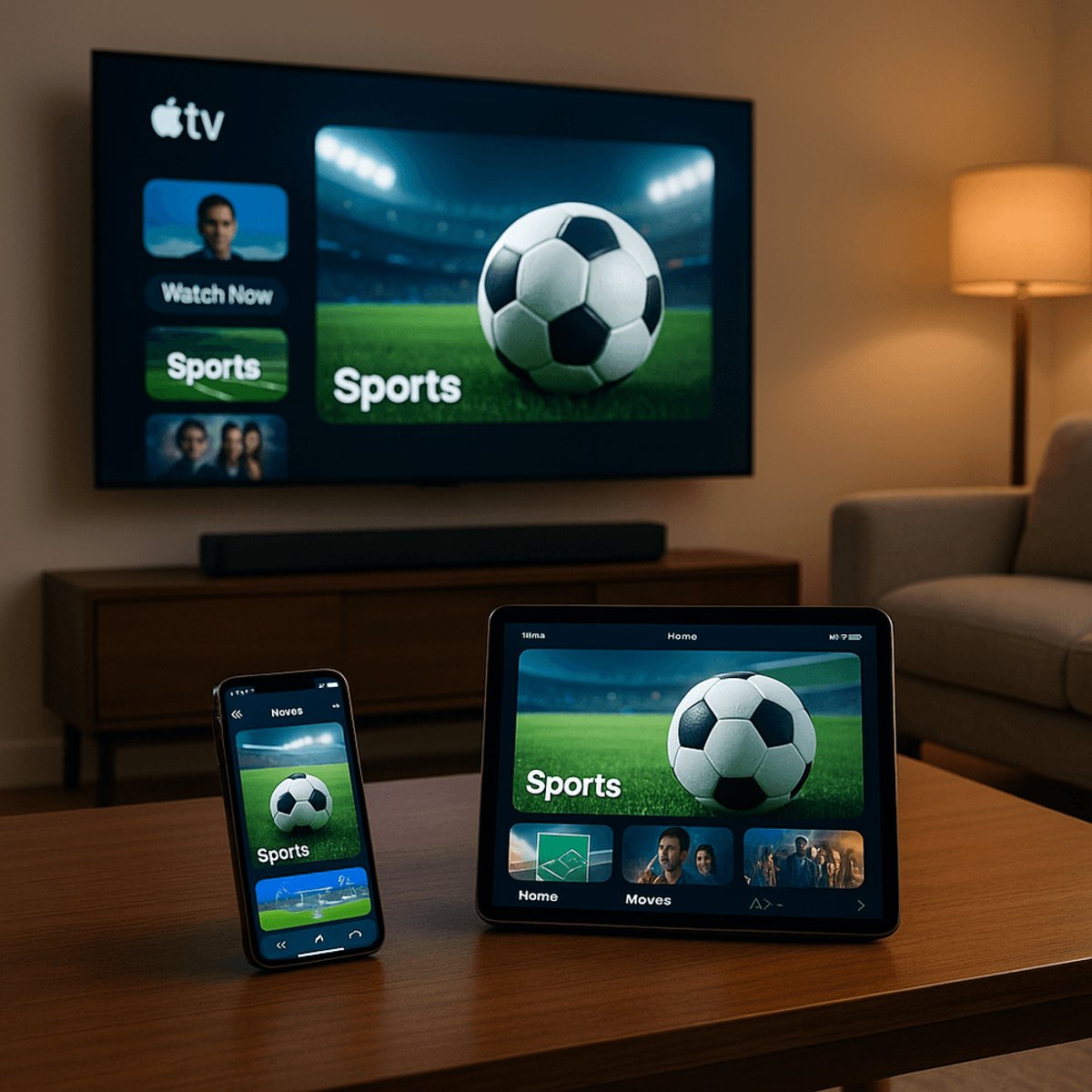
Apple is making a major play in the streaming wars by folding Major League Soccer directly into its flagship Apple TV platform starting in 2026. The move ends the separate $14.99 Season Pass subscription and signals Apple's aggressive push to consolidate sports content as it competes with Netflix and other streaming giants for viewer attention.
Apple just pulled off a strategic streaming pivot that could reshape how Americans watch sports. Starting in 2026, all Major League Soccer games will move from the company's separate Season Pass subscription directly into Apple TV's main platform, ending a three-year experiment with niche sports packaging.
The decision comes as Apple doubles down on sports content to differentiate itself from Netflix and Amazon Prime Video. "They came to us and said, 'Let's put it on Apple TV,' and we said, 'We're all in,'" MLS Deputy Commissioner Gary Stevenson told CNBC. The league had been charging soccer fans an additional $14.99 monthly on top of Apple TV's $12.99 base subscription since 2023.
This consolidation reflects Apple's broader frustration with streaming fragmentation. At an October event, Apple Services SVP Eddy Cue said the current sports landscape has "gone backwards" from the cable era. "You used to buy one subscription, your cable subscription, and you got pretty much everything they had. Now, there's so many different subscriptions, so I think that needs to be fixed," Cue explained during the CNBC panel.
The MLS integration follows Apple's massive Formula 1 coup, where the company secured exclusive U.S. streaming rights for roughly $140 million annually starting next year. Combined with existing MLB content and scripted hits like "Severance," Apple TV is building a content portfolio that could justify higher subscription prices down the line.
Apple's timing isn't coincidental. The 2026 World Cup will take place across North America, potentially driving unprecedented U.S. soccer interest. MLS has already seen attendance spike thanks to Lionel Messi's arrival at Inter Miami, with Commissioner Don Garber telling CNBC that Season Pass subscriptions "exceeded expectations" though he won't release specific numbers.
The tech giant's sports strategy contrasts sharply with Netflix, which has largely avoided expensive live sports rights in favor of documentaries and scripted content. Meanwhile, Amazon has secured Thursday Night Football and select MLB games, creating a three-way battle for streaming supremacy.
While Apple doesn't release Apple TV subscriber counts, Cue has said the platform has "significantly more than 45 million" viewers. That's still dwarfed by Netflix's 280 million global subscribers, but Apple's integration strategy could boost engagement and reduce churn by offering more value within a single subscription.
Industry analysts see this as Apple testing whether premium sports content can drive subscription growth without the additional paywall friction that hurt Season Pass adoption. The company's 10-year MLS deal, signed in 2022, originally positioned soccer as a standalone product to gauge demand for niche sports streaming.
For MLS, the move represents validation that Apple views soccer as mainstream enough to sit alongside baseball and scripted programming. "This was good news for us," Stevenson noted, emphasizing that the shift focuses on "distribution, and how to make it a better and more accessible experience for the fans."
The consolidation also signals Apple's willingness to absorb short-term revenue losses from eliminating Season Pass fees in exchange for longer-term platform stickiness. As streaming services face increasing pressure to demonstrate profitability, bundling premium sports content becomes a key retention strategy rather than a revenue maximization play.
Apple's MLS consolidation represents a broader shift in streaming strategy, where platforms are moving away from a la carte sports subscriptions toward comprehensive content bundles. As the 2026 World Cup approaches and Formula 1 joins the platform, Apple TV is positioning itself as the premium destination for live sports - a direct challenge to traditional cable and competing streaming services. The real test will be whether this integrated approach can drive subscriber growth and justify the significant content investments Apple is making across multiple sports properties.