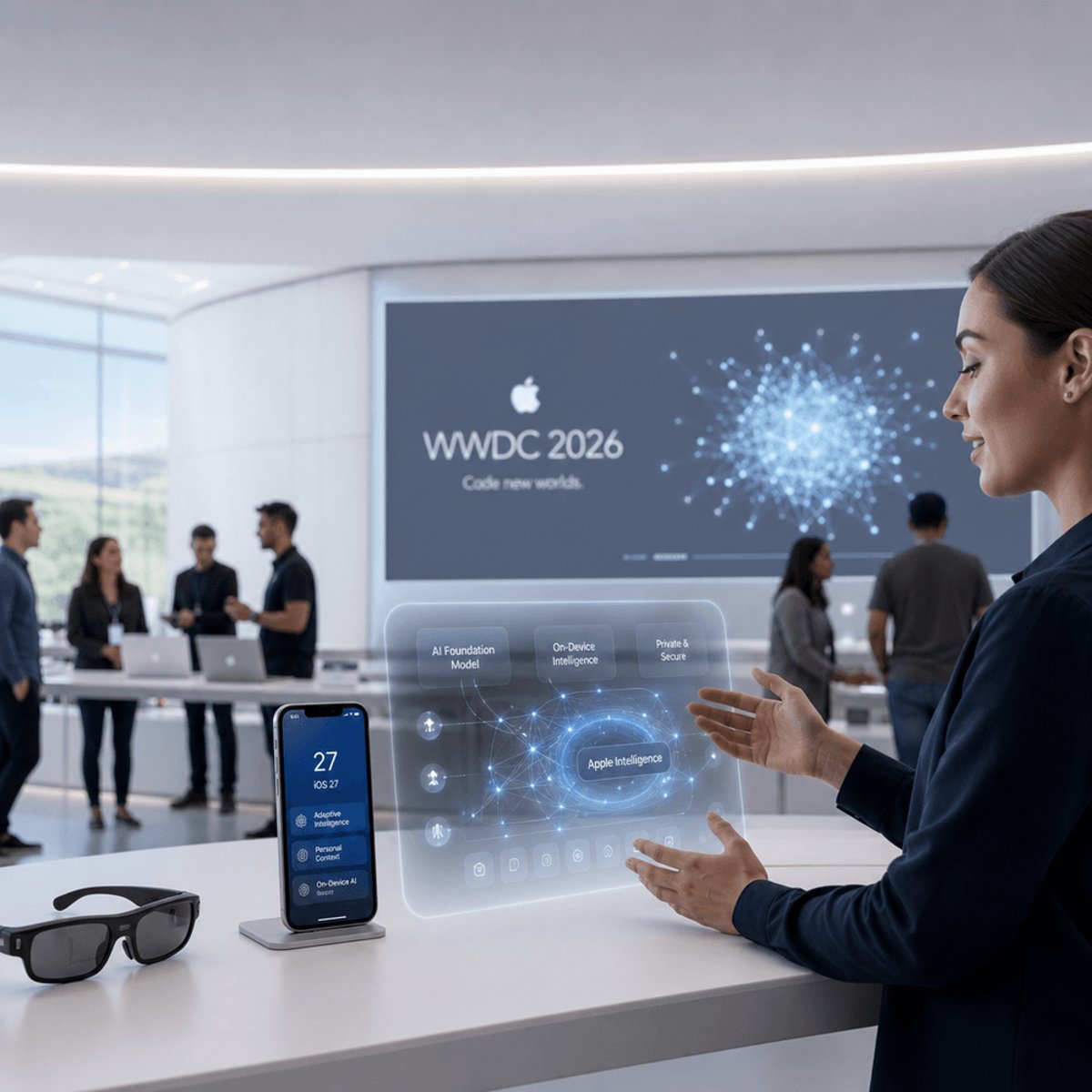
Apple kicks off its annual Worldwide Developers Conference today at Apple Park, with industry watchers expecting the biggest software announcements in years. The company is set to unveil iOS 27 alongside what sources describe as a fundamental rethinking of Siri's AI capabilities, and rumors suggest the first glimpse of Apple's long-awaited smart glasses project. The event comes as Apple races to match competitors in the AI assistant space while maintaining its privacy-first approach.
Apple is pulling back the curtain on its software roadmap at the company's annual developer conference, and the stakes have never been higher. WWDC 2026 kicks off today at Apple Park in Cupertino, with the tech giant expected to address mounting pressure around its AI strategy while unveiling the next generation of its operating systems.
The star of the show appears to be a complete Siri overhaul. Apple's voice assistant has fallen behind competitors like OpenAI's ChatGPT and Google Assistant in conversational capabilities, a gap that's become increasingly glaring as generative AI reshapes user expectations. Sources familiar with the company's plans suggest Siri will receive its most significant update since the feature launched in 2011, potentially integrating large language model capabilities while maintaining Apple's strict privacy standards.
iOS 27 is the other guaranteed centerpiece. Apple typically uses WWDC to preview the next iPhone operating system, which ships alongside new hardware in the fall. This year's version comes as the company attempts to differentiate in a smartphone market that's seen slowing upgrade cycles. The operating system will likely showcase how Apple plans to weave AI features throughout the user experience without compromising the battery life and on-device processing that have become brand hallmarks.
But the real surprise could be smart glasses. Apple has been working on augmented reality projects for years, shipping the Vision Pro mixed reality headset in 2024 to mixed reviews due to its $3,499 price tag. A lighter-weight glasses product would put Apple in direct competition with Meta's successful Ray-Ban collaboration, which has sold over 700,000 units according to industry estimates. The question is whether Apple will show actual hardware or simply preview the software framework developers need to build AR experiences.
The competitive pressure is real. Meta continues to pour billions into Reality Labs, Google recently revived its Google Glass project under a new name, and startups like Snap are iterating on their Spectacles platform. Apple's advantage has traditionally been its ability to arrive late but execute flawlessly - the iPhone wasn't the first smartphone, and the Apple Watch wasn't the first wearable.
Developers are watching the AI announcements most closely. Apple's ecosystem includes over 30 million registered developers who build apps generating over $1 trillion in economic activity according to the company's own figures. Those developers need AI tools and frameworks that work across iPhone, iPad, Mac, and potentially new hardware categories. The challenge is giving developers powerful capabilities while maintaining the App Store review process and privacy guardrails that differentiate Apple's platform.
The timing is strategic. Apple typically holds WWDC in early June, giving developers the summer to build apps for new OS features before the fall iPhone launch. This year that cycle becomes even more critical as Apple attempts to spark upgrade demand in a market where consumers are holding phones longer than ever. The average iPhone ownership period has stretched to over four years, up from three years in 2020.
Wall Street is paying attention too. Apple's stock has underperformed the broader tech sector over the past year as investors question whether the company can maintain its growth trajectory. A compelling AI story could shift that narrative, especially if Apple can demonstrate a privacy-preserving approach that addresses growing consumer concerns about data collection. The company's market cap of over $3 trillion makes it the world's most valuable company, but maintaining that position requires constant innovation.
The conference format itself has evolved. Apple shifted to a primarily virtual event during the pandemic and has maintained that approach, with a smaller in-person component for select developers and press. The keynote presentation typically runs about two hours, followed by a week of technical sessions where Apple engineers detail the APIs and frameworks developers will use to build next-generation apps. It's during these technical sessions that the real capabilities often emerge, beyond the polished keynote demos.
Apple's WWDC 2026 represents a pivotal moment as the company attempts to redefine its AI strategy while maintaining the privacy principles that differentiate its platform. The combination of iOS 27, a revamped Siri, and potential smart glasses shows Apple isn't content to simply iterate - it's pushing into new territory while competitors circle. For the 30 million developers in Apple's ecosystem, today's announcements will shape the apps and experiences they build for the next year. For consumers, it's a preview of how AI will actually work in their pockets without turning their personal data into a product. The real test won't be what Apple shows on stage, but whether it can ship these features at scale without the bugs and privacy compromises that have plagued competitors.