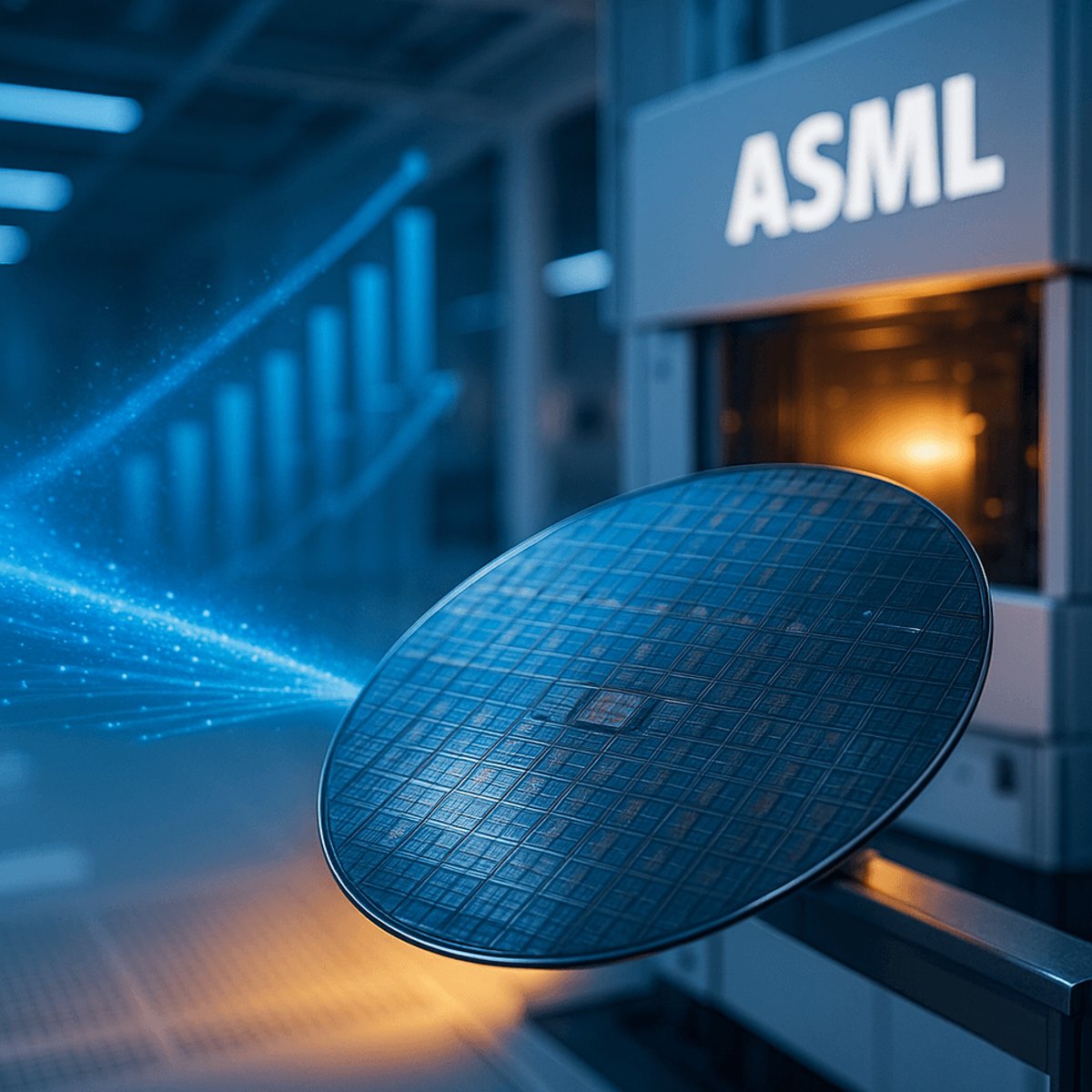
ASML just delivered the kind of blowout quarter that sends shockwaves through the semiconductor industry. The Dutch chip equipment giant posted record bookings of €13.2 billion ($15.8 billion) in Q4 2025, more than doubling analyst expectations of €6.32 billion and marking its strongest order quarter ever. With 2026 revenue guidance coming in ahead of estimates and a massive €12 billion share buyback announced, ASML's results confirm what industry insiders have been whispering for months: the AI infrastructure buildout isn't slowing down, it's accelerating.
ASML just proved the AI chip gold rush has plenty of fuel left in the tank. The company posted €13.2 billion in fourth-quarter bookings on Wednesday, obliterating the €6.32 billion analysts were expecting and setting a company record. It's the kind of number that makes CFO Roger Dassen's job easy when he tells investors the outlook is getting brighter, not dimmer.
The headline figure tells only part of the story. ASML's 2026 revenue guidance landed between €34 billion and €39 billion, with the midpoint sitting comfortably above the €35.1 billion consensus estimate. More telling: the company previously said it didn't expect 2026 sales to fall below 2025 levels. This new forecast represents clear growth, marking a notable upgrade from that cautious stance just months ago.
Wall Street noticed. ASML shares have climbed nearly 30% in 2026 alone, riding a wave of optimism around AI infrastructure that shows no signs of cresting. The company sweetened the deal with a €12 billion share buyback program running through December 2028, signaling management's confidence in the business trajectory.
The orders aren't coming from nowhere. Taiwan Semiconductor Manufacturing Co. (TSMC), ASML's biggest customer and the world's leading chipmaker, posted another record profit jump in Q4, manufacturing chips for everyone from Nvidia to AMD. When TSMC prints money, ASML prints orders.
But the real story is playing out in memory chips. The semiconductor industry is facing an unprecedented shortage of memory components, with prices spiking and supply expected to stay tight through 2027. That's forcing the world's biggest memory makers, Samsung and SK Hynix, to open their wallets for capacity expansion. Barclays analysts expect SK Hynix alone to order 12 of ASML's extreme ultraviolet lithography (EUV) machines in 2026, the most advanced chipmaking tools on the planet.
"I think it's primarily on the basis of the more robust view that they have when it comes to demand for AI, which seems to be more sustainable from their vantage point," Dassen said in a video interview transcript. "That recognition has led some of our customers to really invest in capacity and gear up their plans for medium-term capacity expansion."
ASML's customers have gotten "more positive in their assessment of the medium-term market perspectives," according to Dassen. Translation: chipmakers are betting big that AI demand isn't a flash in the pan. They're committing billions to new fabrication capacity, and every new fab needs ASML's machines.
The Q4 numbers themselves came in solid if not spectacular on the bottom line. Net sales hit €9.7 billion ($11.6 billion), just ahead of the €9.6 billion expected. Net profit of €2.84 billion missed estimates of €3.01 billion, but investors are clearly looking past the earnings beat to focus on what matters more: forward momentum.
There's one cloud on an otherwise sunny horizon: China. ASML expects Chinese revenue to account for just 20% of total sales in 2026, down sharply from 33% in 2025. Export restrictions prevent the company from shipping its most advanced EUV machines to Chinese customers, and that policy bite is getting harder. ASML warned last year that China sales would decline significantly in 2026 compared to the prior two years, and Wednesday's guidance confirmed that reality.
Still, the China headwind is being overwhelmed by tailwinds everywhere else. First-quarter 2026 revenue is expected to land between €8.2 billion and €8.9 billion, keeping the growth story intact as the year kicks off. The memory shortage, AI infrastructure buildout, and customer confidence are aligning in ASML's favor.
The semiconductor supply chain runs through ASML in a way few companies can claim in their industries. You can't make cutting-edge chips without ASML's EUV lithography machines, which use extreme ultraviolet light to etch impossibly tiny circuits onto silicon wafers. The company holds a monopoly on EUV technology, making it the ultimate picks-and-shovels play on the AI revolution.
With record orders in hand and customers lining up for 2026 capacity, ASML is cementing its position as the critical enabler of the next generation of AI infrastructure. The question isn't whether demand will hold up, it's whether ASML can manufacture machines fast enough to meet it.
ASML's record quarter isn't just about one company's strong performance - it's a bellwether for the entire AI infrastructure buildout. With memory chip shortages forcing capacity expansion, TSMC hitting record profits, and customers committing to multi-year investments, the semiconductor ecosystem is firing on all cylinders. The China headwinds are real, but they're being drowned out by demand everywhere else. For investors watching the AI space, ASML's results confirm the infrastructure layer is alive and well, with the picks-and-shovels supplier to the entire industry posting numbers that suggest we're still in the early innings of this buildout cycle.